
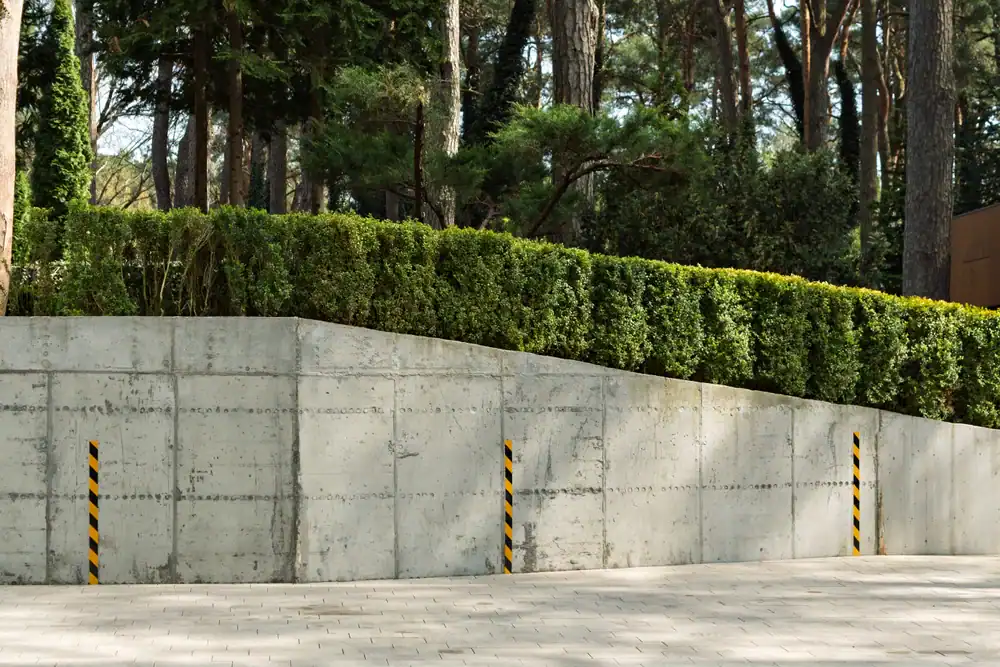

A retaining wall that’s built right does more than hold back dirt. It stops water from pooling near your foundation. It turns that unusable slope into garden beds, patio space, or level lawn your kids can actually play on.
You’re also protecting what you’ve already invested in. Erosion doesn’t just ruin landscaping—it undermines driveways, cracks patios, and destabilizes anything downhill. A concrete retaining wall blocks that damage before it starts.
And if you’re thinking about selling, buyers notice. Properties with functional retaining walls and proper drainage consistently appraise higher than homes with visible erosion or grading issues. It’s not just about curb appeal—it’s about showing the property is maintained and stable.
We’ve spent nearly twenty years working on residential and commercial projects across New Jersey. We’re certified contractors who follow state construction codes, and we’ve seen what happens when walls are built wrong—so we make sure ours aren’t.
East Hanover properties deal with specific challenges. Older homes built in the late ’70s and early ’80s often have mature landscaping that’s shifted over time. Slopes that were stable thirty years ago aren’t anymore. We assess your property’s drainage, soil composition, and grade before recommending a solution.
We’re not the cheapest option, and that’s intentional. You’re paying for proper drainage systems, quality materials, and installation that lasts decades—not a wall that bows or cracks in five years because someone skipped the backfill or used the wrong base.

We start with a site assessment. That means looking at your slope, checking drainage patterns, and testing soil stability. If your property has clay-heavy soil or poor drainage, we need to know before we dig.
Next comes excavation and base prep. The foundation is everything. We excavate below the frost line, compact the base, and install drainage systems—usually a combination of gravel backfill and perforated pipe. This is where most DIY jobs and cheap contractors fail. Water pressure is the number one reason retaining walls fail, so we design for it from the start.
Then we install the wall itself. Depending on your property and preferences, that might be concrete retaining wall blocks, natural stone, or segmental retaining wall (SRW) systems. Each course is leveled, backfilled, and compacted. If the wall is over four feet, we may use geogrid reinforcement for added stability.
Finally, we finish the top course, backfill behind the wall, and grade the area for proper runoff. You’re left with a wall that’s engineered to handle water, freeze-thaw cycles, and decades of pressure.

Ready to get started?
Every project includes a full site evaluation and custom design based on your property’s grade, soil type, and drainage needs. We’re not installing the same wall on every lot—East Hanover’s topography varies, and so do our solutions.
You’ll get proper drainage systems built into the wall. That means weep holes, gravel backfill, and perforated drainage pipe where needed. We also handle grading and runoff management so water moves away from your foundation, not toward it.
Material options depend on your budget and aesthetic preferences. Concrete retaining wall blocks are durable and cost-effective. Natural stone offers a high-end look that fits well with East Hanover’s established neighborhoods. Segmental retaining wall systems work well for taller installations or properties that need reinforced soil retention.
We also handle repairing retaining walls that are showing signs of failure—cracks, bulging, tilting, or separation. Sometimes a wall can be reinforced. Other times it needs to be rebuilt. We’ll tell you which one applies to your situation and why.

A properly installed retaining wall can last fifty to a hundred years. That’s longer than most roofs, driveways, or even the siding on your house. But that lifespan depends entirely on three things: drainage, materials, and installation quality.
Drainage is the biggest factor. Walls fail when water builds up behind them and creates hydrostatic pressure. If your contractor skips the gravel backfill, doesn’t install weep holes, or ignores drainage pipe, you’re looking at failure within a decade. We build every wall assuming New Jersey’s freeze-thaw cycles and heavy spring rains are going to test it—because they will.
Materials matter too. Concrete retaining wall blocks are engineered for this exact purpose and hold up well. Natural stone is even more durable if it’s installed correctly. Timber walls look nice but rot out in fifteen to twenty years. We’ll walk you through the pros and cons of each option based on your property and budget, but we won’t install something we know won’t last.
Poor drainage causes about 90% of retaining wall failures. When water saturates the soil behind a wall, it gets heavy. Really heavy. That pressure pushes against the wall constantly, and if there’s no way for the water to escape, the wall eventually bows, cracks, or collapses.
The other common issue is improper base preparation. If the foundation isn’t compacted correctly or the wall wasn’t built below the frost line, freeze-thaw cycles will shift it over time. You’ll see the wall lean forward, develop gaps between blocks, or start separating from the soil it’s supposed to be retaining.
Sometimes it’s a design issue. Walls over four feet tall need reinforcement—either through geogrid systems or engineered setbacks. If someone built a tall wall without accounting for soil pressure and load, it’s going to fail. That’s why we assess your property’s specific conditions before recommending a design. What works on a flat lot with sandy soil won’t work on a steep clay slope.
It depends on the height and location of the wall. In most New Jersey municipalities, including East Hanover, retaining walls over a certain height—usually three to four feet—require a building permit and engineered drawings. If the wall is near a property line, there may be additional setback requirements.
Permits exist for a reason. They ensure the wall is designed to handle the load it’s retaining and that it won’t create drainage problems for neighboring properties. Inspectors check that the base is properly prepared, drainage systems are installed, and the wall meets structural codes. Skipping the permit might save time upfront, but it creates liability if the wall fails or if you ever sell the property.
We handle the permit process as part of the project. That includes working with engineers when needed, submitting plans to the township, and coordinating inspections. You don’t have to deal with the paperwork, and you know the wall is built to code. If you’re repairing an existing wall, permits may or may not be required depending on the scope of work—we’ll let you know what applies to your situation.
Most residential retaining wall projects in East Hanover range from $5,000 to $25,000 depending on height, length, materials, and site conditions. A simple two-foot garden wall with concrete blocks costs less than a six-foot engineered wall with natural stone and complex drainage.
Material choice is one of the biggest cost factors. Concrete retaining wall blocks are the most cost-effective and still offer decades of durability. Natural stone costs more but delivers a high-end aesthetic that fits well in established neighborhoods. Timber is cheaper upfront but doesn’t last as long, so you’re often replacing it within twenty years.
Site conditions also affect price. If your property has poor drainage, steep slopes, or difficult access, that adds complexity and labor. Walls that require engineering, geogrid reinforcement, or extensive excavation cost more than straightforward installations. We provide free estimates that break down exactly what you’re paying for—materials, labor, drainage systems, permits, and any site-specific challenges. No surprises, no hidden fees.
It depends on what’s failing and why. If the wall has minor cracks, a few loose blocks, or surface damage, repair is usually possible. But if the wall is leaning, bulging, or showing signs of structural failure, replacement is often the safer and more cost-effective option.
Here’s the reality: if the wall is failing because of poor drainage or an inadequate foundation, patching it won’t solve the problem. You’ll spend money on a repair that buys you a few years at best. Then you’re back to square one, except now the damage is worse and the repair costs more. We’d rather tell you upfront that the wall needs to be rebuilt than sell you a temporary fix.
When we assess a failing wall, we’re looking at the foundation, the drainage system, and the structural integrity of the materials. If the base is solid and the failure is isolated, repair makes sense. If the wall was built wrong from the start—no drainage, poor compaction, inadequate reinforcement—you’re better off replacing it and doing it right. We’ll walk you through what we find and explain why we’re recommending one option over the other.
A gravity wall relies on its own weight to hold back soil. These are typically shorter walls—under four feet—built with heavy materials like concrete blocks or natural stone. They work well for garden beds, terraced landscaping, or gentle slopes where soil pressure is manageable.
Reinforced retaining walls use geogrid or other reinforcement systems to handle taller heights and greater loads. The geogrid extends back into the soil behind the wall, essentially anchoring it and distributing pressure over a larger area. This allows you to build taller walls—six feet or more—without needing massive amounts of material or an oversized base.
Which one you need depends on your property. If you’re retaining a two-foot grade change for a flower bed, a gravity wall is fine. If you’re cutting into a steep slope to create a level patio or driveway, you’ll likely need reinforcement. We evaluate your site’s soil type, slope angle, and the height of the wall you need, then recommend the system that’s going to be stable and cost-effective. There’s no point over-engineering a small garden wall, and there’s definitely no point under-building a wall that’s holding back your driveway.
Other Services we provide in East Hanover