
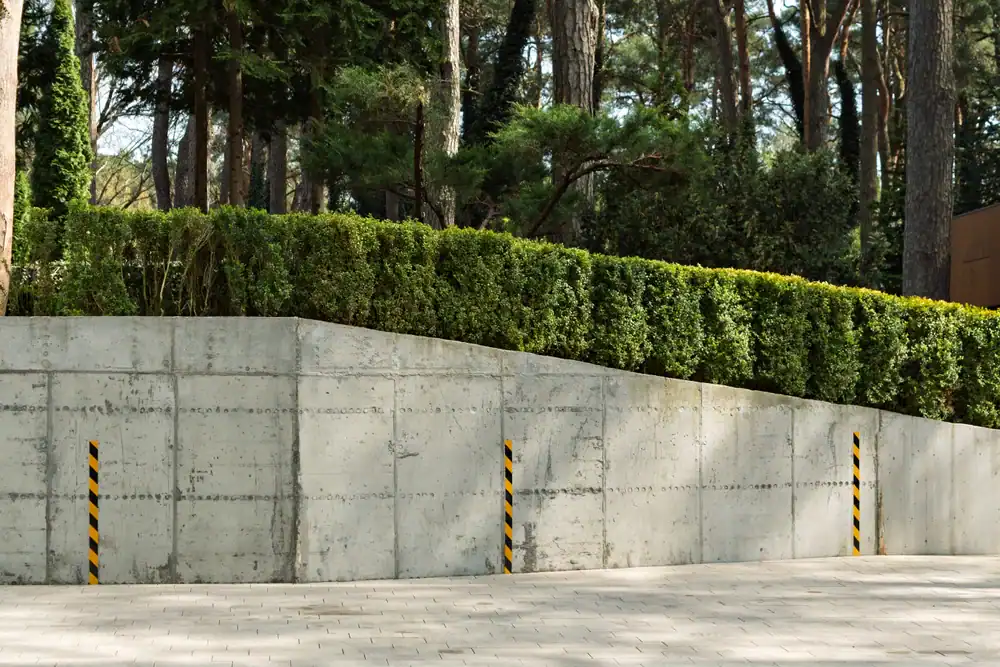

You’re watching soil wash away after every heavy rain. Your yard slopes where you need it flat. Or you’re sitting on a beautiful property that’s losing value because the grading is working against you.
A properly built retaining wall stops all of that. It holds your soil where it belongs, creates usable space on your property, and prevents the kind of erosion damage that turns into emergency repairs. In Florham Park, where properties average over $700K, protecting that investment isn’t optional.
The right wall does more than hold dirt. It adds functional outdoor space, improves drainage across your property, and gives you peace of mind when the forecast calls for storms. You’re not just preventing problems—you’re adding a feature that buyers actually look for.
We’ve spent nearly two decades working on properties across New Jersey. We’re certified contractors who understand local building codes, soil conditions, and what it takes to build a retaining wall that doesn’t fail in five years.
We’re not the cheapest option in Florham Park—and that’s intentional. You’re paying for proper drainage systems, engineered solutions, and materials that match your property value. We handle permits, site prep, and every detail that separates a wall that holds from one that doesn’t.
Florham Park homeowners deal with varied terrain and weather that tests every structure. We’ve seen what happens when walls are built without proper drainage or when contractors skip the engineering. Our approach is straightforward: assess your property, design for your specific slope and soil, and build it right the first time.

We start with a site visit to look at your slope, drainage patterns, and soil conditions. This isn’t a quick walk-around—we’re checking what’s happening with water flow, how much retention you actually need, and whether your project requires engineering or permits.
Once we understand your property, we’ll walk you through material options. Concrete retaining wall blocks offer strength and longevity for taller walls. Natural stone gives you aesthetics that match high-end landscaping. Modular blocks provide a cost-effective solution that still looks sharp. We’ll explain what works for your specific situation and why.
After you approve the estimate, we handle permits if your wall height requires them. Then we prep the site—proper excavation, gravel base, and drainage installation behind the wall. This is where most failures happen, so we don’t rush it. We install your retaining wall blocks with attention to level, backfill correctly, and make sure water has a path that doesn’t build pressure behind your wall.
You’ll see progress daily, and we clean up as we go. When we’re done, you have a wall that’s engineered to last 50-plus years.

Ready to get started?
Every project includes a customized estimate based on your property’s specific needs. We’re looking at wall height, length, material choice, and site access. In Florham Park, we’re often working with established landscaping and tight lot lines, so planning matters.
You get proper drainage solutions built into every wall. That means weep holes, drainage pipe, and gravel backfill that prevent hydrostatic pressure from building up behind your wall. About 30% of retaining walls fail within a few years because this step gets skipped or done poorly.
We handle all permits and engineering requirements. Florham Park has specific codes, and taller walls need engineered plans. We manage that process so you don’t have to figure out what the township requires. We also coordinate with your existing landscaping or hardscaping, whether you’re adding wall landscaping on top or integrating with patios and walkways.
If you’re dealing with an existing wall that’s failing, we offer repairing retaining wall services. We’ll assess whether you need a full replacement or if targeted repairs can extend the life of your current structure.

Most retaining wall projects in Florham Park run between $4,000 and $15,000, but your actual cost depends on height, length, materials, and site conditions. A short decorative wall using modular blocks costs less than a tall engineered wall in natural stone.
Material choice makes a significant difference. Concrete retaining wall blocks typically cost $20-$40 per square foot installed. Natural stone runs $25-$75 per square foot depending on the stone type. Timber is usually $15-$25 per square foot but doesn’t last as long. Brick falls in the $25-$45 range.
Site access and prep also affect pricing. If we’re working on a steep slope with limited access, or if your soil requires extra excavation and base prep, costs go up. But cutting corners on foundation work is exactly how walls fail early. We’ll give you a detailed estimate that breaks down what you’re paying for and why each element matters for long-term performance.
It depends on your wall height, budget, and aesthetic goals. For taller walls that need serious strength, concrete retaining wall blocks or poured concrete are your best options. They handle the load and last 50-100 years with minimal maintenance.
Natural stone gives you the best look if aesthetics matter and budget allows. It’s ideal for visible walls on high-value properties where curb appeal counts. Stone weathers well in New Jersey’s freeze-thaw cycles when installed correctly with proper drainage.
Modular interlocking retaining wall blocks offer a middle ground—they’re engineered for strength, cost less than natural stone, and still look clean. They’re a smart choice for most residential applications in Florham Park. Timber is the budget option, but it rots over time and typically needs replacement in 15-20 years. For properties in your price range, timber usually doesn’t make sense unless it’s a small decorative application.
In most cases, yes—especially if your wall is over a certain height. Florham Park, like most New Jersey municipalities, requires permits for retaining walls that exceed specific height thresholds, typically around 3-4 feet. Walls that affect drainage patterns or property lines also usually need permits regardless of height.
The permit process involves submitting plans and sometimes engineering drawings that show your wall can handle the soil load and water pressure. This isn’t red tape—it’s protection. Engineered plans ensure your wall won’t fail and cause property damage to your home or your neighbor’s.
When you work with us, we handle the permit process. We know what Florham Park requires, what documentation the building department needs, and how to get approvals without delays. Trying to skip permits is a risk—if the township finds out, you may have to remove the wall and start over, this time with proper approvals. It’s not worth it.
A properly built retaining wall should last 50-100 years depending on materials and drainage conditions. Concrete and stone walls hit the higher end of that range. Timber walls typically last 15-25 years before rot becomes an issue.
The lifespan depends almost entirely on two things: drainage and installation quality. If water builds up behind your wall because drainage wasn’t installed correctly, you’ll see failure in just a few years. Hydrostatic pressure will bow the wall, crack it, or push it over entirely.
That’s why we don’t skip the drainage step. Every wall we build includes proper backfill, weep holes, and drainage pipe that directs water away from the wall. We also make sure the base is properly compacted and level. These aren’t extras—they’re requirements for a wall that lasts. When you see retaining walls failing after 5-10 years, it’s almost always because these fundamentals were ignored during installation.
Watch for bulging or bowing in the wall face—that means pressure is building behind it and the wall is losing the fight. Leaning or tilting is another red flag, especially if it’s getting worse over time. Cracks in concrete or stone, particularly horizontal cracks, indicate structural stress.
You might also notice soil washing out from behind the wall, water pooling at the base, or sections of the wall separating. If you see any of these signs, you need an assessment soon. Retaining wall failure accelerates once it starts—a small bow becomes a collapse.
According to the American Society of Civil Engineers, about 30% of retaining walls fail within a few years of construction due to poor design or installation. Most failures trace back to inadequate drainage or improper base preparation. If your wall is showing warning signs, we can evaluate whether you need repairing retaining wall sections or a full replacement. Catching it early usually means less expensive fixes.
Technically, yes—but the gap between knowing how in theory and executing it correctly is huge. Small decorative walls under two feet might be manageable for an experienced DIYer. Anything taller or load-bearing is a different story.
The risk isn’t just wasted money on materials. A failed retaining wall can cause serious property damage, erosion that undermines structures, and even injury if it collapses. You’re dealing with soil loads, water pressure, proper compaction, drainage systems, and grading—all of which have to work together.
Even if you think you understand the process, the nuances matter. How much base material? What compaction level? Where do drainage pipes go? How do you tie in rows of block wall retaining wall sections? Small mistakes compromise the entire structure. For most homeowners in Florham Park with significant property investments, the cost of professional installation is worth avoiding the risk of failure and the expense of doing it twice.
Other Services we provide in Florham Park