
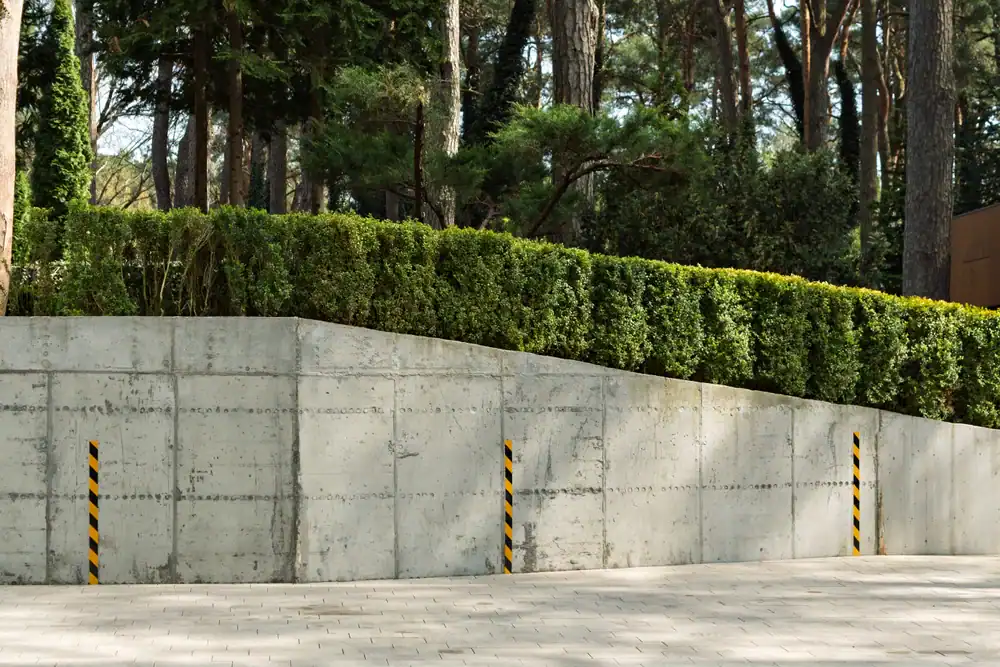

Water stops pooling near your foundation. The soil on that slope stays put during storms instead of ending up in your driveway or neighbor’s yard.
You get flat, usable space where there was only a steep grade before. That means room for a patio, garden beds, or just a yard your kids can actually play in without rolling downhill.
The cracks in your basement wall stop getting worse because the pressure from saturated soil gets redirected. Your property value goes up because buyers see a well-maintained landscape that won’t need major work in five years. Most quality retaining walls return 100-200% of what you put in when it’s time to sell.
This isn’t about making things pretty. It’s about keeping water away from your house and making sure your land doesn’t disappear every spring.
We handle the exterior work that actually matters in Hanover, NJ. We’re licensed, insured, and we’ve dealt with enough clay soil and slope issues in Morris County to know what works and what’s a waste of money.
We don’t subcontract the hard parts. Our crew handles the excavation, the base prep, the block installation, and the drainage work. You deal with one company from estimate to cleanup.
Hanover properties deal with heavy rainfall, mixed soil types, and enough freeze-thaw cycles to crack poorly built walls in a few seasons. We account for that in every job because we’ve seen what happens when corners get cut.

We start with a site visit to look at your slope, drainage patterns, and soil type. You’ll get a free estimate that breaks down materials, labor, and timeline. No hidden charges that show up later.
Once you approve the plan, we excavate to stable soil and build a compacted gravel base. This part matters more than most homeowners realize because a bad base means a failed wall in 3-5 years. We use concrete retaining wall blocks or natural stone depending on what your property needs and what you want it to look like.
Each course gets leveled and set properly. We install drainage behind the wall so water doesn’t build up and push the structure forward. Then we backfill with gravel, compact it in layers, and finish the top.
The whole process usually takes a few days to a week depending on wall height and length. You’ll see progress every day, and we clean up the site before we leave.

Ready to get started?
You get a custom-designed retaining wall built for Hanover’s soil conditions and weather patterns. That includes proper excavation depth, a drainage system that actually works, and materials that hold up to New Jersey winters.
We handle concrete retaining wall blocks, natural stone, and decorative block options. The choice depends on your budget, the height you need, and how the wall fits with your existing landscaping. Concrete blocks work well for taller walls and cost less. Stone looks better but takes more labor.
Morris County requires permits for walls over a certain height, and we handle that paperwork. We also make sure the grading around your property directs water away from your foundation, not toward it. That’s often half the problem with erosion in the first place.
You’re not just getting a wall. You’re getting a system that manages water, holds soil in place, and lasts 20-30 years if it’s built right.

Most residential retaining walls in Hanover run between $3,000 and $15,000 depending on height, length, and material. A basic 3-foot concrete block wall costs less than a 6-foot natural stone wall because of material and labor differences.
Height matters more than most people think. Walls under 4 feet usually don’t need engineering or special permits. Anything taller requires more excavation, a deeper base, and sometimes geogrid reinforcement to handle the soil pressure.
The other cost factor is site access. If we can get equipment to the work area, the job goes faster and costs less. If everything has to be hand-carried to a backyard with no access, labor costs go up. We’ll tell you exactly what your property needs during the estimate so there are no surprises.
Concrete retaining wall blocks hold up best in New Jersey’s freeze-thaw cycles if they’re rated for your climate zone. Look for blocks with less than 5% water absorption because water gets in, freezes, expands, and cracks the block over time.
Segmental retaining wall blocks interlock without mortar, which actually helps in cold climates. When the ground shifts during freeze-thaw, the blocks can move slightly without cracking. Mortared walls tend to crack because they’re rigid.
Natural stone lasts decades but costs more upfront. It handles weather better than most manufactured materials, but installation takes longer. If budget matters and you want 20-30 years of life, quality concrete blocks with proper drainage behind them will do the job.
Hanover Township typically requires permits for retaining walls over 4 feet tall, but it’s worth checking before you start any project. Walls near property lines or in flood zones might have additional requirements regardless of height.
The permit process exists because tall retaining walls can fail if they’re not engineered properly, and that affects neighboring properties. You’ll need a site plan, engineering specs for taller walls, and approval before construction starts.
We handle permit applications as part of the job because we know what the township wants to see. It adds a week or two to the timeline but keeps you from dealing with code enforcement issues later. Some homeowners skip permits on smaller walls, but that can cause problems when you sell the property.
Most residential retaining walls in Hanover take 3-7 days from excavation to final grading. A simple 20-foot block wall might be done in three days. A 50-foot stone wall with multiple tiers could take two weeks.
Weather affects the timeline more than most people expect. We can’t pour bases or compact backfill in heavy rain because it compromises the structure. Spring and fall usually have the fewest weather delays in Morris County.
The timeline also depends on what we find when we dig. If the soil is mostly clay or we hit ledge rock, that adds time. We’ll give you a realistic schedule during the estimate, but some factors only show up once excavation starts.
Sometimes yes, sometimes no. It depends on why the wall is failing and how bad the damage is. If a few blocks are loose or cracked but the base is still solid, repairs might work. If the whole wall is leaning forward or the base has washed out, you’re better off rebuilding.
Walls fail for specific reasons. Poor drainage is the most common – water builds up behind the wall, pressure increases, and the structure shifts forward. If we can add drainage and stabilize the base, repairs can buy you 5-10 more years.
But if the wall was built without a proper base or drainage system in the first place, repairs are just delaying the inevitable. We’ll tell you honestly whether a repair makes sense or if you’re throwing money at a problem that needs a real fix.
Block walls use interlocking concrete retaining wall blocks stacked without mortar. They’re faster to install, easier to repair, and they handle ground movement better because each block can shift slightly without cracking the whole structure.
Poured concrete walls are solid and work well for basements or commercial applications, but they cost more and take longer. You need forms, rebar, and time for the concrete to cure. If the wall cracks, repairs are harder because you’re dealing with one solid piece.
For residential landscaping in Hanover, segmental block walls make more sense in most situations. They’re strong enough for typical heights, they look good, and they’re more forgiving when the ground freezes and thaws every winter. Poured walls are overkill unless you’re dealing with extreme height or commercial load requirements.
Other Services we provide in Hanover