

Your yard shouldn’t be working against you. When soil washes away after every heavy rain, when your slope makes half your property unusable, when water pools where it shouldn’t—that’s not just annoying. It’s costing you.
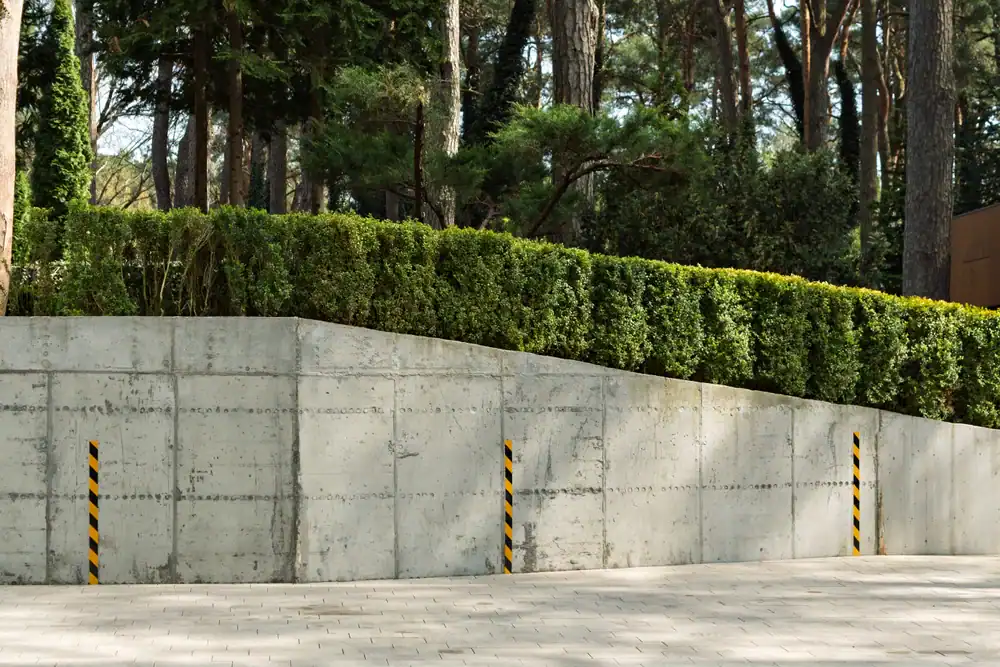
A properly built retaining wall stops erosion in its tracks. It redirects water where it needs to go. It turns that steep, unusable hillside into level ground you can actually use—for a patio, a garden, a play area, whatever you’ve been putting off because the terrain won’t cooperate.
You’re not just getting concrete retaining wall blocks stacked up. You’re getting a structure engineered to handle Montville’s freeze-thaw cycles, our heavy rainfall, and the specific soil conditions that make drainage such a headache around here. The result is a yard that works for you instead of against you, and a home that’s protected from the kind of slow, expensive damage that happens when water and soil go where they want.
We know Montville properties. We’ve worked on enough sloped lots and drainage problems in Morris County to understand exactly what your property is dealing with—and what it takes to fix it right.
Our team consists of certified experts who follow New Jersey’s construction codes and regulations. We don’t cut corners, and we don’t leave you guessing about costs. Every project starts with a free estimate that’s customized to your specific situation—your slope, your soil, your drainage issues.
When we say we’ll finish on time and on budget, that’s what happens. We manage every aspect of the job ourselves, from the initial site assessment through the final inspection. You get a retaining wall built to last 50 to 100 years when properly constructed, not something that’ll need major repairs in five.

First, we come out to look at your property. We assess the slope, check the soil, identify drainage patterns, and figure out what’s actually causing your erosion or water problems. This isn’t a quick glance—we need to understand what we’re working with.
Then we design a solution that fits your specific situation. That includes choosing the right retaining wall blocks, determining the proper height and length, and planning the drainage system that’ll keep water from building up behind the wall. We walk you through the plan and give you a detailed estimate with no hidden charges.
Once you’re ready to move forward, we handle the permits if your wall height requires them. Then we prep the site, excavate to the proper depth, and build a solid base—because that’s where most retaining wall failures start. We install the concrete retaining wall blocks with proper drainage built in, backfill correctly, and compact everything to spec.
The timeline depends on your project size, but you’ll know the schedule upfront. We show up when we say we will, and we don’t leave until the job’s done right.

Ready to get started?
You get concrete masonry units specifically designed to handle New Jersey’s weather. These aren’t decorative blocks—they’re engineered to withstand freeze-thaw cycles, heavy stormwater runoff, and the kind of water exposure that destroys weaker materials. They come in various shapes and finishes, so your retaining wall doesn’t have to look industrial if that’s not what you want.
The drainage system is built into every wall we construct. Water needs somewhere to go, and if it builds up behind your retaining wall, that wall will fail eventually. We install proper drainage so water moves through and away from the structure, not against it.
In Montville, where properties often deal with significant elevation changes and Morris County’s heavy rainfall patterns, this matters more than in flatter, drier areas. Your retaining wall needs to handle spring runoff, summer thunderstorms, and winter freeze-thaw cycles without shifting or cracking. That requires proper engineering, proper materials, and proper installation—all of which you get with our service.
We also handle repairing retaining walls that weren’t built right the first time. If your existing wall is showing cracks, bulging, or tilting, we can assess whether it needs repair or replacement and give you an honest answer about which makes more sense.

Most Montville homeowners pay between $4,000 and $15,000 for a retaining wall, but your actual cost depends on several specific factors. Height matters—a three-foot wall costs significantly less than a six-foot wall. Length matters—obviously, 50 linear feet costs more than 20. Site access matters—if we can’t get equipment back to your slope, labor costs go up.
The type of concrete retaining wall blocks you choose affects price too. Basic split-face blocks cost less than premium finishes, though both perform the same structurally. Drainage requirements vary by site—some properties need more extensive drainage systems than others.
We give you a customized free estimate based on your actual property conditions. That estimate includes everything: materials, labor, drainage, site prep, and any required permits. No hidden charges means no surprise costs halfway through the project. You’ll know exactly what you’re paying before we start.
A typical residential retaining wall takes one to two weeks from the day we break ground to the day we finish. Smaller projects—say, a 20-foot wall that’s three feet high—might be done in a few days. Larger projects with significant excavation, complex drainage, or difficult site access take longer.
The timeline also depends on factors outside the actual construction. If your wall height requires a permit, add time for the permit approval process. If we hit unexpected soil conditions or underground utilities, that can add a day or two. Weather delays happen—we’re not pouring concrete in freezing temperatures or working in heavy rain.
What you won’t get from us is a project that drags on for weeks with no communication. We give you a realistic timeline upfront, we show up when scheduled, and we keep you updated if anything changes. Most delays are avoidable with proper planning, which is why we spend time on the front end assessing your site thoroughly before we commit to a schedule.
It depends on the height of your wall. Most New Jersey municipalities, including Montville, require permits for retaining walls over a certain height—typically three to four feet. The exact requirement varies, so we check with the local building department for your specific project.
Permit fees in New Jersey generally range from $50 to $500 depending on the municipality and project scope. The permit process involves submitting plans, getting approval, and scheduling inspections. We handle all of that for you—it’s part of our service.
Some homeowners try to avoid permits by building shorter walls, but that’s not always the smart move. If your property needs a five-foot wall for proper soil retention, building a three-foot wall just to skip the permit leaves you with an inadequate structure that won’t solve your erosion problem. We design for what your property actually needs, get the proper permits, and build it right. That protects you legally and ensures your wall does its job.
Poor drainage causes most retaining wall failures. Water builds up behind the wall, creates hydrostatic pressure, and eventually pushes the wall out. That’s why every retaining wall we build includes a proper drainage system—gravel backfill, drainage pipe, and weep holes that let water escape instead of building up.
Inadequate foundation is the second common failure point. If the base isn’t deep enough, level enough, or compacted properly, the wall will shift over time. We excavate below the frost line, create a compacted gravel base, and make sure the first course of blocks sits level and stable.
Using the wrong materials for the application also leads to failure. Not all concrete retaining wall blocks are created equal. We use blocks rated for the height and load of your specific wall, not whatever’s cheapest at the supply yard.
Finally, improper installation causes problems even when the design and materials are right. Blocks need to be set correctly, backfill needs to be compacted in layers, and drainage components need to be positioned properly. We follow engineering specifications and building codes because that’s what separates a retaining wall that lasts decades from one that fails in a few years.
Sometimes repair works, sometimes replacement is the only real solution. It depends on what’s wrong and why. Minor cosmetic damage—a few cracked blocks, some efflorescence, slight settling—can often be repaired if the wall is structurally sound.
But if your wall is leaning, bulging significantly, or showing major cracks, that usually indicates a structural problem. Most often it’s a drainage failure or foundation issue, and patching the visible damage won’t fix the underlying cause. In those cases, replacement is the honest answer.
We assess your existing wall and tell you which approach makes sense. If repair will actually solve the problem, we’ll repair it. If you’re going to spend money on repairs only to need a replacement in two years anyway, we’ll tell you that too. Our goal is to give you a solution that works long-term, not to sell you the most expensive option.
The assessment is free. We look at your wall, explain what’s happening and why, and give you options with realistic cost estimates for each. Then you decide what makes sense for your property and budget.
Segmental retaining walls use interlocking concrete blocks stacked without mortar. They’re the most common choice for residential properties because they’re cost-effective, durable, and easier to install than poured concrete. The blocks are engineered to work together as a system, and they handle ground movement better than rigid poured walls.
Poured concrete walls are exactly what they sound like—concrete poured into forms to create a solid structure. They can last up to 100 years and work well for certain applications, but they’re more expensive and require more extensive excavation and forming. If they crack, repairs are more complicated.
For most Montville residential applications—typical yard slopes, standard heights, normal drainage situations—segmental retaining walls are the better choice. They perform just as well structurally, cost less, and offer more design flexibility with different block styles and finishes. They also handle our freeze-thaw cycles well because the individual units can move slightly without cracking.
We recommend poured concrete mainly for commercial applications or unusual residential situations where the engineering requirements specifically call for it. For your typical backyard retaining wall project, segmental block systems give you the best combination of performance, longevity, and value.
Other Services we provide in Montville