
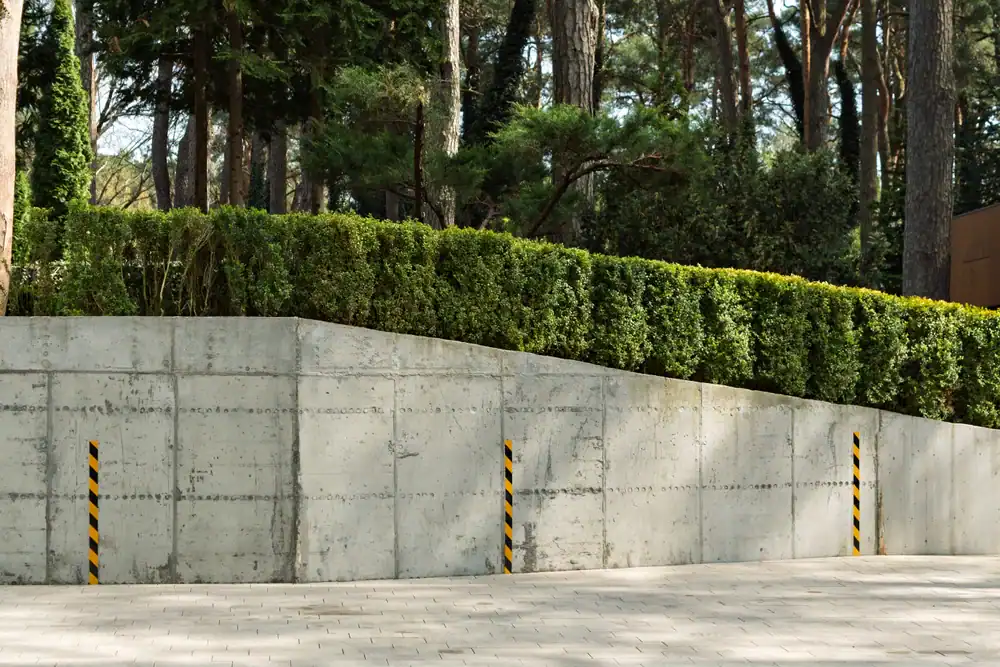

You’re not just holding back dirt. You’re redirecting water away from your foundation before it cracks your basement walls. You’re creating flat, usable space where there was only a slope you couldn’t mow or landscape.
A retaining wall done right stops soil erosion that would otherwise wash out your garden beds, destabilize tree roots, and turn your yard into a maintenance nightmare every time it rains. It also adds real value when you sell—buyers in Morris County know what drainage problems cost, and they’ll pay more for a property that already solved them.
This isn’t cosmetic. It’s structural. And if your property has any kind of grade change, standing water after storms, or foundation moisture issues, you’re already dealing with the problem a retaining wall prevents.
We’ve been working in Morris County long enough to know what happens when water doesn’t drain properly here. The soil conditions, the bedrock, the way slopes behave after heavy rain—it’s all specific to this area.
We’re certified contractors who handle everything from concrete retaining walls to block wall systems, and we don’t hide costs or overpromise timelines. You’ll get a detailed estimate based on your property’s actual conditions, not a generic quote we pulled from a template.
Most of our work comes from referrals, which tells you what you need to know about how we operate. We show up, we do the work right, and we don’t leave until the job is finished the way we said it would be.

First, we come out to look at your property. We’re checking the slope, the soil type, where water flows when it rains, and what’s causing the erosion or drainage issue you’re dealing with. That tells us what kind of wall you actually need—not what looks good in a brochure.
Then we give you a real estimate. No hidden fees, no surprise charges later. We’ll explain what materials make sense for your situation, whether that’s concrete retaining wall blocks, stone, or another system, and why.
Once you approve it, we handle permits if needed, prep the site, and install the wall with proper drainage behind it. That last part matters more than most people realize—if water can’t escape through or behind the wall, pressure builds up and the whole thing fails in a few years.
When we’re done, you’ll have a wall that actually works, not just one that looks finished. And if you ever have questions after the fact, you can reach us.

Ready to get started?
You’re getting a site evaluation that factors in Morris County’s specific soil and drainage challenges—not a one-size-fits-all approach. We’ll identify whether your problem is erosion, foundation water intrusion, or just unusable sloped space, and design the wall accordingly.
The installation includes proper excavation, a gravel base for drainage, the retaining wall blocks or concrete system itself, and backfill with drainage stone so water doesn’t build up behind the wall. We also make sure the grading around the wall directs water where it needs to go.
If your property is in one of the areas with bedrock close to the surface or steep slopes—common in parts of Morris County—we adjust the design to handle that. Some properties need stepped walls, others need deeper footings, and some need drainage pipes integrated into the system. We don’t skip those details to save time.
You’ll also get transparency on cost. Concrete retaining walls typically run $15 to $30 per square foot depending on height and site conditions. Stone runs higher, usually $25 to $40 per square foot. We’ll walk you through what makes sense for your budget and your property’s needs, and we won’t upsell you on features that don’t add real value.

If you’re seeing soil washing away after rainstorms, water pooling near your foundation, or cracks in your basement walls, you likely need one. Sloped yards that are too steep to landscape or use are another clear sign.
Morris County properties deal with a lot of grade changes and drainage issues because of the terrain. If your yard slopes toward your house instead of away from it, that water has nowhere to go but into your foundation. A retaining wall redirects that water and stabilizes the soil before it becomes a bigger, more expensive problem.
Even if you’re not seeing damage yet, erosion doesn’t fix itself. It gets worse every season. If you’re noticing any of these signs, it’s worth having someone look at it before you’re dealing with foundation repairs or a washed-out yard.
Concrete retaining wall blocks are engineered to interlock and handle significant weight and pressure. They’re consistent in size, easier to install correctly, and generally more affordable—usually $15 to $30 per square foot. They’re a solid choice for most residential applications and they last decades when installed properly.
Stone retaining walls have a more natural look and can blend into landscaping better, but they cost more—typically $25 to $40 per square foot. They also require more skill to install because every stone is different, and if the fit isn’t right, the wall won’t hold up long-term.
Both work if they’re built correctly with proper drainage. The choice usually comes down to your budget and what aesthetic you’re going for. We’ll show you examples of both and explain what makes sense for your property and how you plan to use the space.
A well-built retaining wall with proper drainage can last 50 years or more. The key phrase there is “proper drainage.” Most retaining wall failures happen because water builds up behind the wall, creating pressure that eventually pushes it out or causes it to crack.
That’s why we install drainage stone behind every wall and, when needed, perforated pipes that let water escape. Without that, even the best materials will fail within a few years.
The other factor is the foundation. If the base isn’t level and stable, the wall will shift over time. We excavate down to solid ground and use a compacted gravel base to prevent settling. Shortcuts in the prep work are what cause most retaining walls to fail early, and that’s not something you can fix cheaply once the wall is already built.
If the water is coming from surface runoff because your yard slopes toward your house, yes—a retaining wall combined with proper grading will redirect that water away from your foundation. That’s one of the main reasons people in Morris County install them.
But if you’re dealing with groundwater or a high water table, a retaining wall alone won’t solve it. You’d need a drainage system like a French drain or a sump pump to handle water that’s coming up from below.
We’ll assess where your water is actually coming from during the site visit. If it’s a grading problem, the retaining wall fixes it. If it’s subsurface water, we’ll tell you that upfront and explain what else you’d need. We’re not going to install a wall and let you think it’ll solve a problem it can’t.
It depends on the height of the wall and where it’s located on your property. Most towns in Morris County require a permit for retaining walls over a certain height—usually 3 to 4 feet—or if the wall is close to a property line or within a setback area.
Some municipalities also have specific requirements for walls on slopes or near wetlands because of erosion and runoff concerns. Morris County has strict environmental regulations in certain areas, especially where there’s exposed bedrock or steep grades.
We handle permit applications as part of the process when they’re required. We’ll let you know upfront if your project needs one, what the requirements are, and how long approval typically takes. Skipping permits might seem like it saves time, but it can cause major problems if you ever try to sell your property or if a neighbor reports it.
For a standard concrete block retaining wall, you’re looking at $15 to $30 per square foot. A 30-inch high wall that’s 20 feet long would run somewhere between $750 and $1,500 depending on site conditions and materials. Stone retaining walls cost more—usually $25 to $40 per square foot, so that same wall could be $1,250 to $2,000 or higher.
The variables that affect price are height, length, soil conditions, access to the site, and how much excavation or grading is needed. If we have to bring in equipment or deal with bedrock, that adds to the cost. If your property has drainage issues that need to be addressed at the same time, that’s a separate line item but often necessary to make the wall work long-term.
We give you a detailed estimate after we see your property. No ballpark guesses, no ranges so wide they’re meaningless. You’ll know exactly what you’re paying for and why before any work starts.
Other Services we provide in Morris