
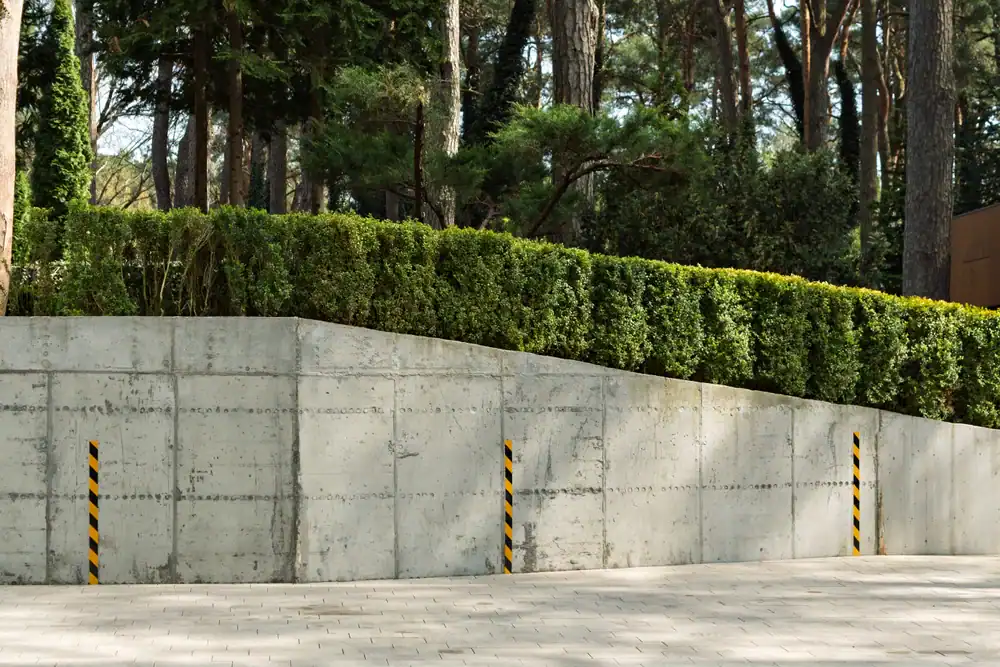

A retaining wall isn’t just stacked blocks. It’s engineered to hold back soil, redirect water away from your foundation, and create usable outdoor space where there was only a slope.
When it’s done right, you stop watching your yard wash away during storms. You stop worrying about foundation cracks from shifting soil. You get flat, stable ground for a patio, garden beds, or just a place your kids can play without rolling downhill.
The difference between a wall that lasts 30 years and one that fails in five comes down to drainage, base preparation, and material choice. Concrete retaining wall blocks offer durability and cost-effectiveness. Natural stone gives you that high-end look. Both work when installed correctly with proper gravel backfill and drainage systems.
In Mount Olive, where properties built in the 70s and 80s often sit on sloped lots, erosion control isn’t optional. It’s about protecting what you’ve already invested in your home.
We’ve spent over 30 years working on properties throughout Mount Olive and Morris County. We’ve seen what happens when walls are built without proper drainage. We’ve repaired the ones that failed because someone skipped the base work.
We’re licensed, insured, and we don’t hide our pricing or add surprise fees halfway through your project. You’ll get an upfront quote based on your property’s specific slope, soil conditions, and the height of wall you actually need.
Mount Olive requires erosion and soil stabilization measures to protect local streams. We handle the permit process when your wall height requires it, and we build to code every time. Not because we have to, but because a wall that fails inspection or collapses in two years doesn’t help anyone.

First, we come out to look at your property. We measure the slope, check soil drainage, and figure out how high your wall needs to be. If you’re dealing with a steep grade or water pooling near your foundation, we’ll talk through whether you need a single-tier wall or a terraced system.
Once you approve the quote, we pull any necessary permits. For walls over four feet, Mount Olive typically requires engineering plans and inspections. We handle that coordination so you’re not calling the township yourself.
The actual installation starts with excavation and base prep. We dig down to stable soil, compact a gravel base, and make sure the first course sits level. Then we build up with your chosen material—interlocking retaining wall blocks, poured concrete, or natural stone. Every few courses, we add drainage pipe and backfill with gravel so water doesn’t build up behind the wall.
After the wall is up, we backfill, compact, and clean up the site. If inspection is required, we schedule it and make sure everything passes. You’re left with a wall that holds back soil, manages water, and doesn’t shift or bow after the first winter freeze.

Ready to get started?
Retaining wall costs in New Jersey typically run $4,000 to $15,000 depending on height, length, and material. A basic 50-foot concrete block wall at four feet tall averages around $8,000. Natural stone costs more—$25 to $75 per square foot—but it lasts just as long and looks better if aesthetics matter to you.
You’re not just paying for blocks. You’re paying for proper excavation, engineered base prep, drainage systems, and labor from people who know how to keep a wall from bowing or cracking. Cheap installs skip the drainage pipe or use insufficient base material. That’s how you end up with a wall that leans forward after one winter.
In Mount Olive, where properties often have mature landscaping and established drainage patterns, we also handle grading adjustments and tie-ins to existing hardscaping. If you’re adding a patio or pool deck on the uphill side of your new wall, we coordinate that work so everything drains correctly.
We also repair and rebuild failing walls. If your old timber wall is rotting or your block wall is leaning, we’ll assess whether it can be reinforced or needs full replacement. Sometimes repairing a retaining wall costs more than starting fresh with modern materials that won’t need attention for decades.

A properly installed concrete retaining wall should last 50 to 100 years in New Jersey’s climate. That assumes correct base preparation, drainage behind the wall, and quality materials.
The biggest threat isn’t the concrete itself—it’s water. If water builds up behind the wall with no way to escape, it creates pressure that causes cracking, bowing, or complete failure. That’s why every wall we install includes drainage pipe and gravel backfill.
Freeze-thaw cycles are the other concern. Water gets into small cracks, freezes, expands, and makes those cracks bigger. Using concrete retaining wall blocks designed for northern climates and sealing joints where needed prevent most of this damage. If you’re looking at a wall that’s already showing cracks or leaning, that’s usually a sign the original install skipped drainage or base work.
It depends on the height. Most towns in Morris County, including Mount Olive, require permits for retaining walls over four feet tall. Some also require permits if the wall is near a property line or affects drainage onto neighboring properties.
Permit fees typically run $50 to $500, and you may need engineered plans for taller walls. The township wants to make sure your wall won’t fail and cause erosion issues downstream, especially near protected waterways.
We handle the permit process as part of our service. We submit the plans, coordinate inspections, and make sure everything meets local erosion and soil stabilization requirements. If your wall doesn’t need a permit, we’ll tell you that upfront. But even without a permit, we still build to the same standards because a wall that collapses doesn’t care whether it had a permit or not.
Interlocking retaining wall blocks are faster to install, easier to repair, and usually cost less than poured concrete. They’re modular, so if one block cracks, you can replace it without tearing out the whole wall. They also come in different colors and textures if you care about appearance.
Poured concrete is stronger for very tall walls or heavy load-bearing applications. It’s a solid mass, so there are no joints to worry about. But it requires formwork, curing time, and more labor, which drives up cost.
For most residential applications in Mount Olive—walls under six feet holding back soil for a patio or garden bed—interlocking blocks are the better choice. They perform just as well, cost less, and give you more design flexibility. If you’re building a tall wall to support a driveway or pool deck, poured concrete might make more sense. We’ll walk through both options during the estimate based on what your property actually needs.
Sometimes. If the wall is only slightly bowed and the base is still solid, we can often reinforce it by adding tiebacks, improving drainage, or rebuilding the top few courses. But if the wall has moved more than a few inches or the base has failed, a full rebuild is usually the safer and more cost-effective option.
Leaning happens when water pressure builds up behind the wall or the base wasn’t compacted correctly during the original install. Cracks can come from freeze-thaw cycles, soil settlement, or using blocks that aren’t rated for retaining wall applications.
When we assess a failing wall, we look at what caused the problem in the first place. If it’s a drainage issue, we can add weep holes and backfill with gravel. If the base is shot, we’re tearing it out and starting over. Repairing a retaining wall that’s going to fail again in two years doesn’t help you, and we’re not going to sell you a temporary fix when you need a permanent solution.
Wall landscaping—plantings, mulch, and grading around your new retaining wall—typically adds $1,000 to $3,000 depending on the size of the area and what you want planted. This is separate from the wall installation cost but worth doing at the same time since the ground is already disturbed.
Plants at the base of a retaining wall help with erosion control and make the wall look intentional instead of like a concrete barrier. We usually recommend low-maintenance perennials or ground cover that won’t require constant watering or create root issues near the wall.
If you’re terracing multiple walls, landscaping between tiers creates usable garden space and helps manage water runoff. We can handle basic grading and planting as part of the project, or you can bring in a landscaper after the wall is done. Either way, don’t skip this step—bare soil around a retaining wall just washes away and defeats part of the purpose.
For steep slopes, interlocking concrete retaining wall blocks or natural stone are your best options. Both can handle the load and allow for proper drainage, which is critical when you’re holding back a lot of soil.
Timber walls aren’t ideal for steep grades because they rot faster under constant soil pressure and moisture. Poured concrete works but costs significantly more and doesn’t offer much advantage over high-quality blocks for residential applications.
On very steep slopes—anything over a 45-degree angle—you might need a terraced system with multiple shorter walls instead of one tall wall. This distributes the load, improves drainage, and often looks better than a single imposing structure. In Mount Olive, where lot grading varies widely, we design the wall system based on your specific slope and soil conditions. A steep yard doesn’t mean you can’t have a retaining wall; it just means the design needs to account for the extra pressure and water flow.
Other Services we provide in Mount Olive