
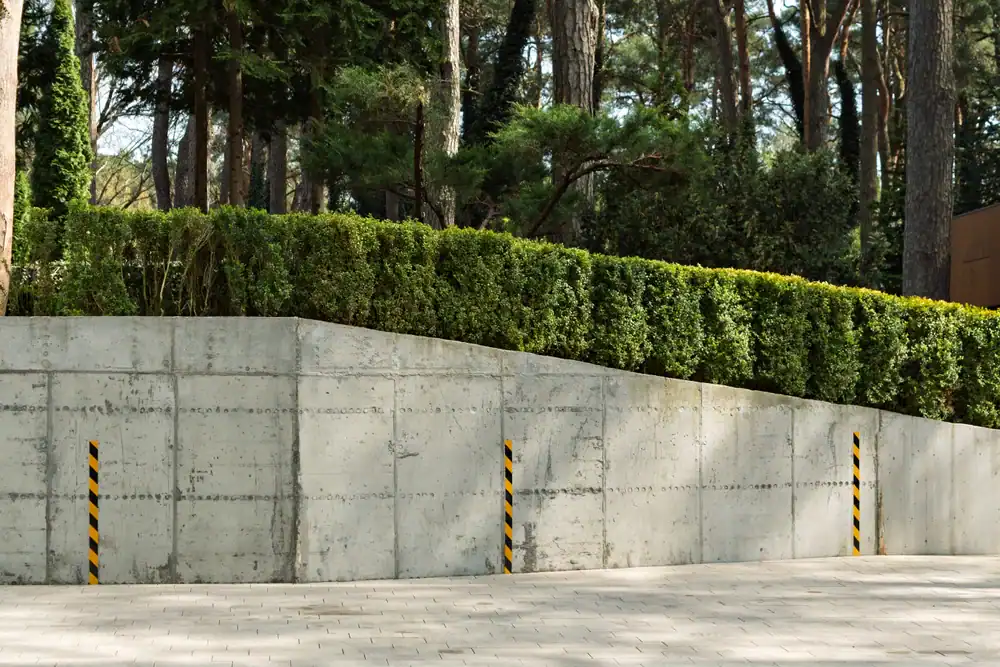

A retaining wall that’s built right stops soil from sliding into your driveway, keeps water from pooling near your foundation, and creates usable space where you only had a slope before.
You’re not just stacking blocks. You’re engineering a structure that holds back literal tons of soil while managing water pressure that builds up during freeze-thaw cycles. That’s why drainage systems, proper backfill, and geogrid reinforcement matter more than the wall material itself.
When the job’s done correctly, you get flat, functional yard space. Your landscaping stays in place. Water drains where it should. And you stop worrying every time a storm rolls through Nutley.
We’ve been handling retaining wall projects across Nutley and Essex County for years. We’ve seen what happens when walls are built without proper drainage, when contractors skip the gravel base, or when homeowners try to DIY a structure that needed engineering from the start.
Most retaining wall failures come down to water. Hydrostatic pressure builds up behind the wall, and without weep holes or drainage aggregate, that pressure cracks, bows, or topples the structure within a few seasons. We build walls that account for New Jersey’s weather, your property’s slope, and the soil conditions specific to Nutley.
You’re working with people who pull permits when required, follow building codes for walls over four feet, and don’t cut corners on the parts you can’t see.

First, we assess your property. That means looking at the slope, drainage patterns, soil type, and what’s causing erosion or water issues. We measure, calculate load requirements, and determine if you need a permit based on wall height.
Next comes excavation and base prep. We dig below the frost line, compact the soil, and lay a gravel base that provides stability and drainage. This foundation work determines whether your wall lasts five years or fifty.
Then we build the wall itself using concrete retaining wall blocks, natural stone, or whatever material makes sense for your project and budget. We install drainage systems behind the wall, backfill with gravel, and add geogrid reinforcement if the wall’s over a certain height. Every course gets leveled. Every block gets checked.
Finally, we backfill, compact, and clean up. You’re left with a wall that does its job without you thinking about it.

Ready to get started?
You get a retaining wall designed for your specific property conditions. That includes site evaluation, material recommendations based on your soil and slope, and a drainage system that prevents hydrostatic pressure buildup.
Nutley homes were largely built between the 1940s and 1960s, and many properties have slopes that weren’t properly addressed during original construction. With the median home now valued at $628K, you’re protecting a significant investment. A failing retaining wall doesn’t just look bad—it leads to foundation damage, driveway cracks, and landscape erosion that costs far more to fix than building it right the first time.
We handle permit applications for walls over four feet, source materials that withstand New Jersey’s freeze-thaw cycles, and install weep holes and drainage aggregate that most homeowners never see but absolutely need. Whether you need a segmental block wall, poured concrete, or natural stone, the engineering principles stay the same.

Cost depends on wall height, length, material choice, and site conditions. A basic segmental block wall might run differently than a natural stone wall with complex drainage requirements.
Walls under four feet typically need zoning permits in Nutley, while anything four feet or higher requires a building permit and sometimes engineering stamps. That adds to the cost but ensures the wall won’t fail. Excavation difficulty matters too—if we’re dealing with rocky soil or limited access, that affects labor.
Most homeowners in Nutley invest in retaining walls that range from smaller garden walls to larger terraced systems that create multiple levels of usable yard space. We provide free estimates that break down material, labor, drainage systems, and permit costs so you know exactly what you’re paying for before work starts.
Concrete retaining wall blocks and natural stone hold up best against New Jersey’s freeze-thaw cycles. Wood looks good initially but rots within 10-15 years, especially with our wet winters and humid summers.
Segmental retaining wall systems using concrete blocks offer flexibility, strength, and built-in drainage options. They’re engineered to interlock, which distributes weight and allows for slight movement without cracking. Natural stone costs more but lasts indefinitely if installed with proper drainage.
Poured concrete works for taller walls that need maximum strength, but it requires more extensive formwork and curing time. For most residential applications in Nutley, segmental block systems provide the best balance of durability, cost, and installation speed. The material matters less than the drainage system behind it—that’s what actually determines how long your wall lasts.
Yes, most retaining walls in Nutley require at least a zoning permit. Walls under four feet typically need zoning approval, while walls four feet or taller require a full building permit and sometimes engineering plans.
The permit process exists because retaining walls are structural elements that affect drainage, property lines, and safety. A wall that fails can damage neighboring properties or create erosion problems beyond your yard. Nutley’s building department reviews plans to ensure walls meet code requirements for setbacks, height restrictions, and structural integrity.
Skipping permits might seem like a shortcut, but it creates problems when you sell your home or if the wall fails and causes damage. We handle permit applications as part of the project, pulling what’s needed based on your wall’s specifications and location on your property.
Poor drainage causes most retaining wall failures. Water builds up behind the wall, creating hydrostatic pressure that bows, cracks, or topples the structure. This happens when contractors skip the gravel backfill, don’t install weep holes, or use solid soil instead of drainage aggregate.
We prevent failure by building proper drainage into every wall. That means a gravel base below the first course, drainage aggregate behind the wall, weep holes or drainage pipe at the base, and proper backfill that allows water to escape instead of building pressure.
The second most common failure point is inadequate foundation prep. If the base isn’t level, compacted, and below the frost line, the wall shifts as ground freezes and thaws. We excavate properly, compact the base, and use crushed stone that won’t shift. For taller walls, we add geogrid reinforcement that anchors into the soil behind the wall, distributing load and preventing forward movement.
Most residential retaining walls in Nutley take anywhere from three days to two weeks, depending on wall length, height, site access, and weather conditions.
A straightforward 20-foot wall that’s three feet high might take three to five days—one day for excavation and base prep, two to three days for wall construction and drainage installation, and a final day for backfill and cleanup. Larger projects with multiple tiers, extensive drainage work, or difficult access take longer.
Weather affects timelines more than most homeowners expect. We can’t pour concrete bases in freezing temperatures, and heavy rain turns excavation sites into mud pits. That’s why spring and fall are ideal for retaining wall construction in New Jersey—ground conditions are workable and weather is more predictable. We’ll give you a realistic timeline during the estimate based on your specific project scope.
It depends on what’s failing and why. Minor cosmetic issues like loose cap stones or small cracks can often be repaired. But if the wall is leaning, bowing, or showing significant structural movement, repair usually just delays the inevitable.
Walls fail because of drainage problems or foundation issues. If we repair the visible damage without fixing the underlying cause, you’re throwing money at a temporary fix. A wall that’s leaning more than a few inches typically needs replacement because the foundation has shifted or drainage pressure has compromised structural integrity.
We’ll assess your existing wall honestly. Sometimes repairing retaining wall damage makes sense—replacing a section that was damaged by a fallen tree, for example. But if the entire wall is failing due to poor original construction, rebuilding with proper drainage and foundation work is the only solution that actually solves the problem. We’ll walk you through what’s realistic for your situation during the site visit.
Other Services we provide in Nutley