
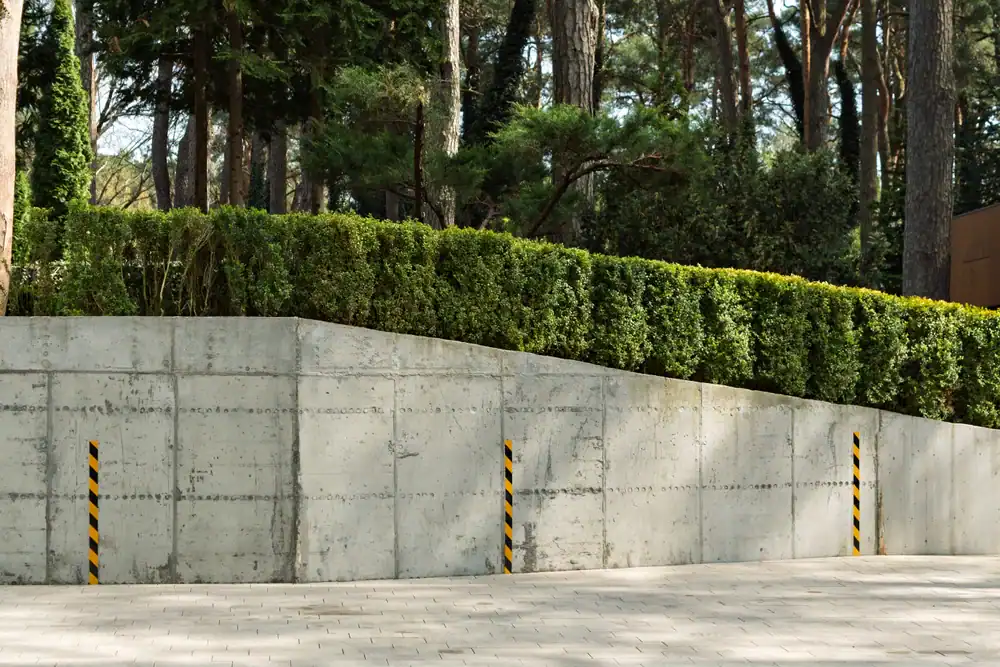

You’re not dealing with standing water in your yard after it rains. The soil stays where it belongs instead of ending up in your driveway or against your foundation. Your lawn is level enough to actually use, and you’re not watching chunks of your property disappear downhill every spring.
A proper block wall retaining wall does more than hold back dirt. It redirects water away from areas that matter, creates usable outdoor space where there was only slope, and stops the kind of erosion that leads to foundation cracks and drainage disasters.
When the wall is engineered right and built with the correct materials, you’re looking at decades of performance with almost no maintenance. That’s the difference between a retaining wall that works and one that leans, cracks, or fails within five years.
We’ve been handling residential and commercial projects across New Jersey for nearly two decades. We’re not new to Pequannock’s soil conditions, drainage challenges, or the way properties here handle heavy rainfall.
You’re working with certified contractors who understand construction codes and know what actually holds up in this climate. We’ve built retaining walls on properties with steep grades, clay-heavy soil, and water issues that required more than just stacking blocks.
Our approach is straightforward. We assess your property, explain what needs to happen, give you an upfront price with no hidden fees, and complete the work on schedule. You get a wall that’s built to code and designed to last.

We start with a site evaluation. That means looking at your slope, checking soil composition, identifying where water flows during storms, and measuring the area that needs retention. This tells us what type of wall you need, how deep the footer has to go, and whether you need additional drainage solutions.
Next comes the design and material selection. You’ll see options for concrete retaining wall blocks, natural stone, or other materials that fit your budget and aesthetic. We’ll explain the structural differences, show you what works best for your specific grade and soil type, and give you a detailed quote.
Once you approve the plan, we handle permits if required, excavate the site, and prepare the base. The footer and drainage system go in first because that’s what prevents future failure. Then we build the wall in courses, backfill properly, and install drainage behind the wall to manage hydrostatic pressure.
After construction, we walk you through what to watch for and answer any questions about maintenance. Most walls need very little attention, but knowing what’s normal and what’s not saves you from small issues becoming expensive ones.

Ready to get started?
You’re getting a complete installation that starts below ground. We excavate to the proper depth, compact the base, and install a gravel footer that provides stable footing. Drainage is built into the system with weep holes, gravel backfill, and sometimes perforated pipe depending on your water situation.
The wall itself is constructed with materials chosen for your specific application. Concrete block retaining walls are common here because they handle Pequannock’s freeze-thaw cycles and provide excellent strength at a reasonable cost. Natural stone is an option if you want that high-end look, and segmental retaining walls work well for terraced designs or curved layouts.
We’re also handling wall landscaping integration if that’s part of your plan. Retaining walls often create planting beds, seating areas, or define different zones in your yard. If your existing wall is failing, we do retaining wall repair work, but often the better move is rebuilding it correctly so you’re not paying twice.
Pequannock properties deal with a lot of water runoff due to elevation changes and soil composition. That’s why proper drainage isn’t optional here. We see too many walls that were built without it, and they don’t last. You’re paying for a solution that accounts for the specific conditions your property faces.

Most retaining wall projects in Pequannock run between $4,000 and $15,000 depending on height, length, material, and site conditions. A basic 50-foot concrete block wall that’s four feet tall typically costs around $8,000 including labor and materials.
Your actual cost depends on what you’re dealing with. Steep slopes require more excavation and engineering. Poor drainage means adding systems to manage water. Difficult access increases labor time. Natural stone costs more than concrete blocks but delivers a different aesthetic.
We give you an upfront quote after evaluating your site. No surprises, no hidden fees. You’ll know exactly what you’re paying for and why before any work starts.
Improper drainage is the number one cause of retaining wall failure. Water builds up behind the wall, creates hydrostatic pressure, and eventually pushes the wall forward. You’ll see bowing, cracking, or complete collapse if the drainage wasn’t designed correctly.
Other common failures come from inadequate footers, poor soil compaction, or using the wrong materials for the wall height and soil type. Walls built without proper base preparation settle unevenly and develop structural issues within a few years.
We prevent failure by engineering the wall for your specific conditions. That means deep enough footers, proper drainage with gravel backfill and weep holes, correct material selection, and building to code. You’re getting a wall designed to handle Pequannock’s soil and weather, not just a generic installation.
Most residential retaining wall installations take one to two weeks from start to finish. Smaller walls under 30 feet might be done in a few days. Larger projects with multiple tiers, extensive drainage work, or difficult site access can take three weeks or more.
The timeline depends on excavation requirements, whether we’re removing an old wall first, weather conditions, and permit approval if needed. We’re not rushing through your project to get to the next one. Proper base prep and drainage installation take time, and that’s where the long-term performance comes from.
We’ll give you a realistic schedule during the estimate phase. If something changes, you’ll know immediately. Most delays come from weather or unexpected site conditions we discover during excavation, and we’ll explain what’s happening and why.
Pequannock typically requires permits for retaining walls over a certain height, usually four feet, though requirements can vary based on location and property specifics. Walls near property lines, in flood zones, or on steep slopes often have additional regulations.
We handle the permit process if your project requires it. That includes submitting engineered plans, coordinating inspections, and making sure the work meets local building codes. Skipping permits when they’re required creates problems when you sell your property or file an insurance claim.
During your site evaluation, we’ll tell you whether permits are necessary for your specific wall. If they are, that’s factored into the timeline and quote. If they’re not, we’ll explain why and document that for your records.
Concrete retaining wall blocks are the most common choice in New Jersey because they handle freeze-thaw cycles well, provide excellent structural strength, and cost less than natural stone. They’re engineered specifically for retaining wall applications and come in various colors and textures.
Natural stone delivers a high-end appearance and lasts indefinitely when installed correctly, but you’re paying significantly more. Segmental retaining wall systems work well for curved designs or terraced layouts. Poured concrete is an option for taller walls that need maximum strength.
The right material depends on your wall height, soil conditions, budget, and aesthetic preferences. We’ll show you what works for your specific situation and explain the structural and cost differences. You’re not locked into one option, but some materials perform better than others given Pequannock’s climate and typical soil composition.
It depends on what’s causing the problem and how far it’s progressed. Minor cosmetic issues like loose caps or small cracks can often be repaired. Walls that are leaning, bulging, or showing significant structural movement usually need replacement because the failure is below ground.
If the footer is inadequate, drainage is missing, or the wall wasn’t built correctly from the start, repairs are temporary fixes. You’ll spend money now and still face the same problem in a year or two. Replacement costs more upfront but solves the actual issue.
We’ll assess your existing wall and tell you honestly whether repair makes sense or if you’re better off rebuilding it right. Sometimes the answer is repair. Often it’s not. Either way, you’ll understand what you’re dealing with and what your options actually cost.
Other Services we provide in Pequannock