
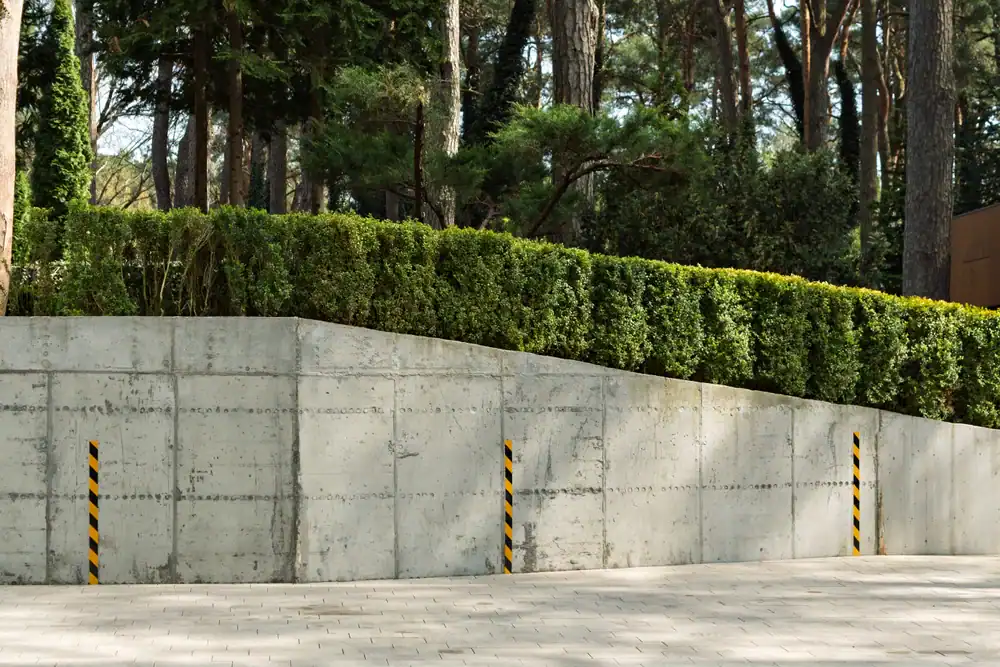

Your slope is washing out after every heavy rain. Soil’s piling up against your foundation. Or maybe you’ve got an old wood wall that’s rotting and leaning—and you know it’s only getting worse.
A properly built retaining wall stops all of that. It holds back soil, redirects water away from your foundation, and creates usable space where you currently have a muddy hillside. You’re not just fixing a drainage problem—you’re protecting one of the biggest investments you’ll ever make.
The difference between a wall that lasts 30 years and one that fails in five comes down to three things: foundation depth, drainage design, and material choice. Miss any of those, and you’re looking at expensive repairs or a full rebuild. Get them right, and you won’t think about that wall again.
We’ve been handling hardscaping projects across Essex County for years. We’re not the cheapest option in Roseland, NJ—and that’s intentional. Cutting corners on a retaining wall means you’ll pay twice: once for the install, and again when it fails.
We use interlocking concrete retaining wall blocks designed for Northern New Jersey’s weather. That means materials that can handle freeze-thaw cycles, heavy spring rains, and shifting soil without cracking or bowing. Every wall we build includes proper drainage systems, compacted base material, and engineered backfill—because those are the parts that actually matter.
Roseland homeowners deal with sloped properties, high water tables, and strict local codes. We handle the permits, the engineering, and the installation so you don’t have to figure it out yourself.

First, we assess your property. That means looking at soil type, drainage patterns, slope angle, and how much pressure the wall will need to hold back. If your wall needs to be over four feet, we’ll handle the permit process with Essex County and make sure everything meets code.
Next, we excavate and build the foundation. This isn’t just digging a trench—it’s about creating a compacted gravel base that won’t shift or settle. The foundation determines whether your wall stays level or starts leaning in year two.
Then we install the blocks, layer by layer, with drainage pipe and gravel backfill behind the wall. Water pressure is the number one reason retaining walls fail, so we make sure water has a way out. Once the wall is up, we backfill, compact, and grade everything so water flows away from the structure.
You’ll know exactly what’s happening at each step. No surprises, no shortcuts.

Ready to get started?
Every retaining wall we build in Roseland, NJ includes engineered drainage systems. That means perforated pipe, gravel backfill, and grading that directs water away from both the wall and your foundation. Without proper drainage, even the best materials will fail.
You’ll get concrete retaining wall blocks that interlock and distribute weight evenly. These aren’t decorative—they’re structural. We use blocks rated for the load they’ll actually carry, and we install them with the geogrid reinforcement needed for taller walls or heavy soil pressure.
We also handle all the prep work: excavation, base compaction, and site grading. If your project requires permits, we pull them. If it needs engineering stamps, we coordinate that too. Roseland has specific requirements for retaining walls depending on height and location, and we make sure everything is compliant before we start.
The end result is a wall that holds back soil, manages water, and doesn’t require you to think about it again. It should blend into your landscaping and do its job quietly for decades.

A properly built concrete block retaining wall in Roseland, NJ should last 30 to 50 years—sometimes longer if the drainage system is maintained. The lifespan depends almost entirely on three factors: foundation quality, drainage design, and material choice.
Concrete retaining wall blocks are built to handle freeze-thaw cycles, which is critical in Northern New Jersey. Cheaper materials or improper installation will lead to cracking, shifting, or bowing within the first five to ten years. Walls that fail early almost always have drainage problems—water pressure builds up behind the wall, and eventually the structure can’t hold it back.
If you’re replacing an old wood retaining wall, you’re probably dealing with rot, insect damage, or structural failure. Wood walls typically last 10 to 20 years depending on the type of wood and how well they were built. Concrete blocks outlast wood by decades and require far less maintenance.
In Roseland, NJ and throughout Essex County, you’ll need a permit if your retaining wall is over four feet tall. Permit requirements also depend on whether the wall is near a property line, in a flood zone, or part of a larger landscaping project that changes drainage patterns.
Even if your wall is under four feet, it’s worth checking with the local building department. Some municipalities have stricter rules, especially if the wall affects neighboring properties or stormwater runoff. Permit fees in New Jersey typically range from $50 to $500 depending on the scope of work.
If your project requires engineering, we coordinate that as part of the process. Engineered walls include stamped drawings that show load calculations, soil pressure, and drainage design. This isn’t just bureaucracy—it’s proof that the wall is built to handle the conditions on your property. Skipping permits might save money upfront, but it creates problems if you ever sell your home or if the wall fails and causes damage.
Poor drainage is the number one cause of retaining wall failure. When water builds up behind the wall, it creates hydrostatic pressure that pushes the structure forward. Over time, that pressure causes leaning, cracking, or complete collapse.
The second most common issue is an inadequate foundation. If the base isn’t deep enough or properly compacted, the wall will settle unevenly. This is especially common in New Jersey where freeze-thaw cycles cause soil to expand and contract. A shallow or poorly prepared foundation can’t handle that movement.
The third issue is using the wrong materials or skipping reinforcement. Retaining walls need to be engineered for the load they’re holding back. Taller walls or walls on steep slopes require geogrid reinforcement or tie-backs to distribute pressure. If those aren’t included, the wall won’t hold up under normal conditions—let alone during heavy rain or freeze-thaw cycles. Repairing a retaining wall that’s already failing is often more expensive than building it right the first time.
Retaining wall costs in Roseland, NJ typically range from $30 to $100 per square foot depending on height, materials, site conditions, and whether engineering is required. A basic 3-foot wall with standard concrete blocks will cost less than a 6-foot engineered wall with premium stone veneer.
Site access and soil conditions also affect price. If we need to excavate through rock, bring in equipment through a narrow side yard, or deal with high water tables, that adds time and cost. Walls that require permits, engineering, or significant grading work will be on the higher end of the range.
Most residential retaining wall projects in Roseland fall between $8,000 and $25,000 depending on length and complexity. That includes excavation, materials, drainage systems, and installation. It’s not a small investment, but it’s one that protects your property and adds value. A failing retaining wall can cause foundation damage, flooding, and erosion that costs far more to fix than building the wall correctly in the first place.
Interlocking concrete retaining wall blocks are the best choice for most residential projects in Roseland, NJ. They’re engineered to handle freeze-thaw cycles, they don’t rot or rust, and they’re available in a range of colors and textures that look natural.
Concrete blocks distribute weight evenly and allow for proper drainage when installed with gravel backfill and perforated pipe. They’re also modular, which means repairs are straightforward if damage ever occurs. Compared to poured concrete, they’re more flexible and less prone to cracking as the ground shifts.
Natural stone is another option, but it’s more expensive and requires more skilled labor to install correctly. Wood retaining walls are cheaper upfront but don’t last as long—most wood walls need replacement within 10 to 20 years due to rot and insect damage. For the combination of durability, cost, and appearance, concrete blocks are hard to beat in Northern New Jersey’s climate.
It depends on what’s causing the problem. If your retaining wall is leaning more than a few inches, has large cracks, or is separating at the joints, it usually needs to be replaced. Those are signs of foundation failure or drainage issues that can’t be fixed with surface repairs.
Minor issues like small cracks, surface damage, or a few loose blocks can often be repaired. We’ll assess the wall’s structure, check the drainage system, and determine whether a repair will actually hold up or if you’re just delaying the inevitable.
If the wall is old and showing multiple signs of failure—leaning, cracking, water pooling behind it—replacement is almost always the better investment. Repairing a failing wall might buy you a year or two, but you’ll end up paying for a full replacement anyway. A new wall built with proper drainage and a solid foundation will last decades and give you peace of mind that the problem is actually solved.
Other Services we provide in Roseland