
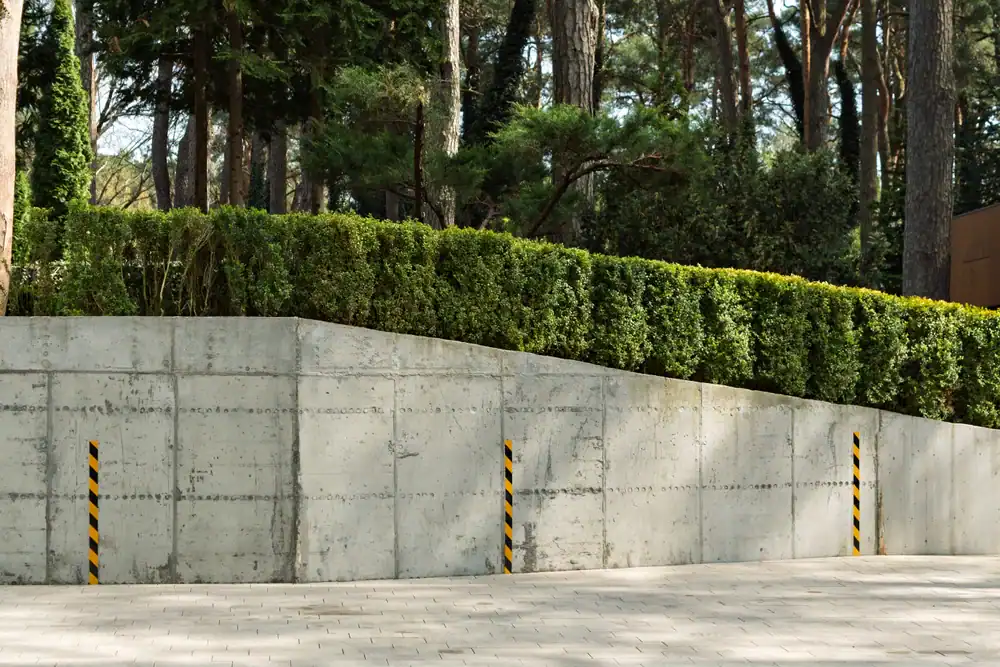

A retaining wall isn’t just stacked blocks. It’s engineered to hold back soil, redirect water away from your foundation, and prevent the kind of erosion that leads to cracked driveways, sunken patios, and foundation problems.
When done right, you get a structure that lasts decades with minimal maintenance. Your sloped yard becomes usable space—flat areas for gardens, seating, or just safer access around your property.
You also get drainage control. Water doesn’t pool where it shouldn’t. It doesn’t undermine your driveway or seep toward your basement. A well-designed retaining wall manages runoff before it becomes a problem, which is critical in Silver Lake, NJ where seasonal rain and freeze-thaw cycles put constant pressure on soil stability.
And if your property already has a failing wall—one that’s leaning, cracking, or bulging—repairing a retaining wall now prevents a much bigger (and more expensive) issue down the road. Walls don’t fix themselves. They fail faster once the process starts.
We’ve been working on residential and commercial properties across New Jersey since the mid-2000s. We’ve built retaining walls on steep lakefront lots, repaired failing structures that were installed poorly the first time, and helped Silver Lake, NJ homeowners turn unusable slopes into functional outdoor spaces.
We’re not a landscaping company that dabbles in walls. We’re contractors who understand soil mechanics, drainage, and the specific challenges that come with building on sloped terrain in this area. Our team is licensed, and we follow New Jersey construction codes because shortcuts lead to failures.
You’ll get a free estimate based on your property’s specific conditions. No hidden fees. No upselling materials you don’t need. Just a transparent breakdown of what it takes to build or repair your wall correctly.

First, we assess your property. We look at the slope, soil type, drainage patterns, and what’s causing the erosion or instability. If you have an existing wall that’s failing, we figure out why—poor drainage, inadequate foundation, wrong materials, or just age.
Next, we design the solution. That might mean a gravity wall using concrete retaining wall blocks, a tiered system for steeper slopes, or a cantilever design if the height requires it. We also plan for drainage—this is the part most DIY jobs and cheap contractors skip, and it’s why walls fail. Water pressure behind a wall will destroy it faster than anything else.
Then we excavate and prepare the base. A retaining wall is only as strong as what it sits on. We dig down to stable soil, compact the base, and install proper drainage materials before the first block goes in.
After that, we build the wall using the right materials for your situation—whether that’s concrete retaining wall blocks, natural stone, or another system. Each course is leveled and secured. Drainage pipes and gravel backfill go in as we build, not after.
Finally, we backfill, compact, and finish the top. You’re left with a structure that’s built to handle water, soil pressure, and New Jersey weather for decades.

Ready to get started?
When we build a retaining wall, you’re getting more than stacked blocks. You’re getting a system designed to handle the specific conditions on your property.
That includes a properly compacted base—the foundation that keeps everything stable. It includes drainage solutions like perforated pipes and gravel backfill that prevent hydrostatic pressure from building up behind the wall. And it includes materials that fit your budget and aesthetic goals, whether that’s concrete retaining wall blocks, natural stone, or timber for shorter walls.
In Silver Lake, NJ, properties near the lake or on slopes face unique challenges. Soil composition varies. Water tables shift. Freeze-thaw cycles are harsh. We account for all of it when designing your wall, because a generic approach leads to failures within a few years.
You also get wall landscaping integration if you want it. Retaining walls don’t have to be purely functional. Tiered walls with planted terraces, integrated lighting, or stone steps can turn a problem slope into one of the best features of your property. We’ve done it plenty of times, and the difference in curb appeal and usability is significant.
If you’re dealing with a failing wall, repairing a retaining wall means identifying the root cause—usually drainage or foundation issues—and rebuilding the compromised sections correctly. Patching cracks or pushing a leaning wall back into place doesn’t work. You fix the cause, or it fails again.

A properly built retaining wall using quality materials and correct drainage can last 50 years or more. That’s not an exaggeration—it’s what happens when the structure is designed to handle water pressure, soil movement, and freeze-thaw cycles.
The problem is that most walls aren’t built properly. About 30% of retaining walls fail within the first few years because of poor drainage, inadequate foundations, or shortcuts during construction. If water has no way to escape from behind the wall, hydrostatic pressure builds up and pushes the wall out. That’s the most common cause of failure.
Concrete retaining wall blocks are durable and low-maintenance, which is why they’re a popular choice in this area. Natural stone lasts even longer but costs more upfront. Timber walls are cheaper but have a shorter lifespan—usually 10 to 20 years depending on the wood treatment and soil conditions.
If your wall was built right the first time, you shouldn’t need major repairs for decades. If it wasn’t, you’ll know within a few years when it starts leaning, cracking, or separating.
Water pressure is the biggest culprit. When water saturates the soil behind a wall and has no drainage path, it creates hydrostatic pressure that pushes outward. Even a well-built wall can’t handle that kind of constant force without proper drainage systems in place.
Poor foundation is the second most common issue. If the base wasn’t excavated deep enough, compacted properly, or built on stable soil, the wall will shift over time. This is especially true on slopes where soil naturally wants to move downhill.
Soil movement and erosion also cause problems. If the soil behind the wall erodes or shifts due to runoff, the wall loses support and starts to lean. Freeze-thaw cycles in New Jersey make this worse—water gets into cracks, freezes, expands, and pushes the wall out of alignment.
Sometimes it’s just poor construction. Walls built without engineering, using the wrong materials, or skipping steps like backfill compaction will fail faster. If you’re seeing bulging, tilting, or cracks in your wall, those are signs of structural failure that need professional attention before the wall collapses completely.
It depends on the height and location of the wall. In most New Jersey municipalities, retaining walls over a certain height—usually 3 to 4 feet—require a building permit and sometimes an engineered design. Walls near property lines, easements, or bodies of water may have additional restrictions.
Silver Lake, NJ has specific zoning and construction codes, and it’s worth checking with the local building department before starting any project. If your wall is close to the lake or on a steep slope, there may be environmental or safety regulations that apply.
We handle permit applications as part of the process when required. It’s not complicated, but it does add time to the project timeline. Skipping permits might seem easier, but if the wall fails or you try to sell your property later, unpermitted work becomes a liability.
For shorter walls—under 3 feet and not supporting a significant load—you usually don’t need a permit. But even then, building it correctly with proper drainage and a solid foundation is critical. A permit doesn’t make a wall safe. Proper construction does.
Cost depends on height, length, materials, and site conditions. A basic concrete block retaining wall might run $25 to $40 per square foot. Natural stone costs more—$50 to $100+ per square foot depending on the stone type and complexity. Timber walls are cheaper upfront but don’t last as long.
Taller walls cost more per square foot because they require stronger foundations, more materials, and sometimes engineered designs. Walls over 4 feet often need additional reinforcement or a cantilever design, which increases labor and material costs.
Site access and soil conditions also affect price. If we need to excavate through rock, bring in equipment on a steep slope, or deal with poor drainage conditions, that adds to the project cost. Every property is different, which is why we do a site assessment before giving you a quote.
Repairing a retaining wall is usually less expensive than building new, but it depends on how much of the wall has failed. If the foundation is compromised or large sections need to be rebuilt, the cost can approach that of a new installation. We’ll give you an honest assessment of whether repair or replacement makes more sense for your situation.
You can build a short wall yourself if you have the skills, tools, and time—but most homeowners underestimate what’s involved. A retaining wall isn’t just stacking blocks. It’s excavation, base preparation, drainage installation, proper backfill, and making sure every course is level and stable.
For walls over 3 feet, or walls on steep slopes, hiring a contractor isn’t optional—it’s necessary. Taller walls require engineering to handle soil pressure and water loads. If the wall fails, you’re looking at property damage, erosion problems, and the cost of rebuilding it correctly.
Even for shorter walls, mistakes are expensive. Skipping drainage, using the wrong base material, or not compacting the backfill leads to failure within a few years. We’ve repaired plenty of DIY walls that looked fine at first but started leaning or cracking once the soil settled and water pressure built up.
If you’re considering a DIY approach, ask yourself: do you know how to calculate soil load, design drainage systems, and handle excavation on a slope? If the answer is no, the cost of hiring a contractor is a lot less than the cost of fixing a failed wall later.
Concrete retaining wall blocks are the most common choice because they’re durable, affordable, and come in different styles and colors. They’re engineered to interlock, which makes them stable and relatively easy to install correctly. They also handle freeze-thaw cycles well, which matters in New Jersey.
Natural stone is the premium option. It looks better, lasts longer, and blends into landscaping more naturally. But it costs significantly more and requires more labor to install because each stone is different. If aesthetics and long-term value are priorities, stone is worth considering.
Timber walls are an option for shorter walls or budget-conscious projects, but they don’t last as long—usually 10 to 20 years depending on the wood treatment and soil conditions. They’re also more prone to rot and insect damage over time.
Segmental retaining wall (SRW) systems are another option. These are modular block systems designed for taller walls or more complex projects. They’re engineered for strength and drainage, and they’re a good middle ground between basic concrete blocks and natural stone in terms of cost and performance.
The best choice depends on your budget, the wall’s height and purpose, and how important aesthetics are to you. We’ll walk you through the options based on what your property actually needs.
Other Services we provide in Silver Lake