
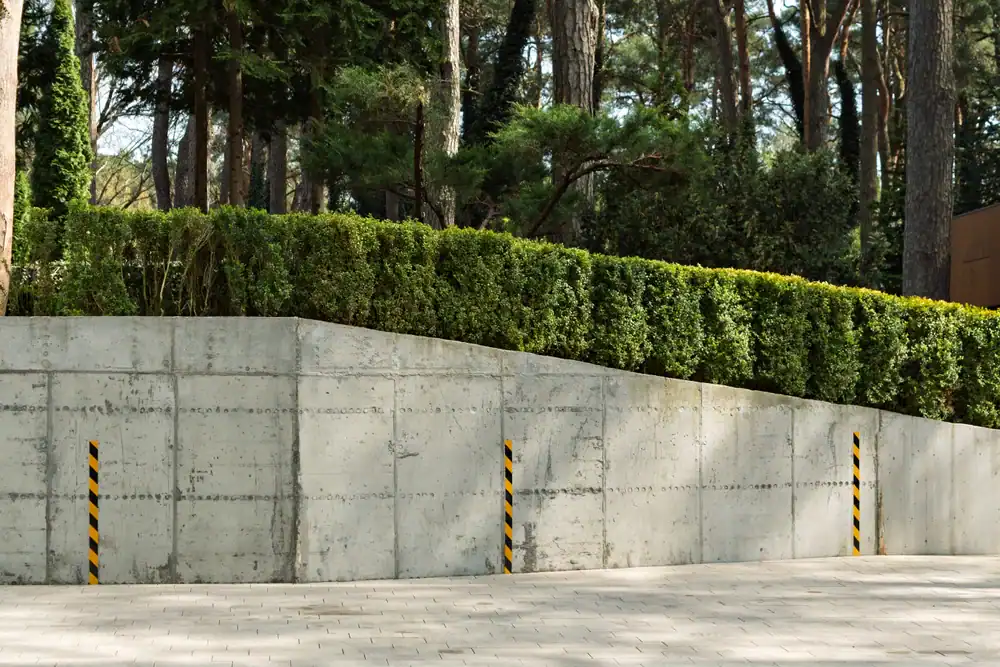

A retaining wall isn’t decoration. It’s structural. When it’s done right, it stops soil from sliding onto your driveway, redirects water away from your foundation, and turns a sloped mess into usable yard space.
You’re not just fixing a cosmetic issue. You’re preventing foundation damage, basement flooding, and the kind of erosion that eats away at your property value every time it rains.
In South Orange Village, where properties sit on varied terrain and drainage matters, a failing retaining wall doesn’t just look bad—it creates liability. Cracked concrete retaining wall blocks, bowing stone, or walls leaning outward are signs the structure is losing the fight against soil pressure. That’s when small problems become expensive ones.
We’ve been handling masonry and structural work across South Orange Village for years. We’re a licensed New Jersey home improvement contractor, and we don’t cut corners on drainage, base prep, or material selection.
Most retaining wall failures happen because someone skipped a step. Poor compaction. No drainage stone. Undersized footings. We’ve torn out enough bad walls to know what not to do.
South Orange Village homeowners deal with steep grades, older properties, and strict local codes. We know what the township requires, and we know how to build walls that pass inspection and actually last.

First, we assess your site. Slope angle, soil type, drainage patterns, and whether you need a permit. In New Jersey, walls over four feet typically require engineering. We’ll tell you upfront if that’s the case.
Next, we excavate and prep the base. This is where most DIY projects and cheap contractors fail. The base needs to be level, compacted, and built with the right stone. If the foundation shifts, the whole wall goes with it.
Then we install the retaining wall blocks or stone, tier by tier, with proper backfill and drainage stone behind the wall. Drainage is everything. Without it, water pressure builds up and pushes the wall out. We use perforated pipe, gravel, and filter fabric to move water away from the structure.
Finally, we backfill, compact, and finish the top. You’re left with a wall that’s level, stable, and built to handle the load it’s holding back.

Ready to get started?
We work with concrete retaining wall blocks, natural stone, and poured concrete depending on your site and budget. Each material has pros and cons, and we’ll walk you through what makes sense for your property.
Concrete blocks are cost-effective, durable, and available in different styles. Stone gives you a more natural look but requires more labor. Poured concrete works for taller walls or commercial applications where engineering is involved.
In South Orange Village, most residential projects use segmental block wall systems. They’re strong, they drain well, and they don’t require mortar, which means less cracking over time. We also handle repairing retaining walls that are leaning, cracking, or showing signs of failure. Sometimes a wall can be reinforced. Other times, it needs to be rebuilt.
Every project includes proper drainage installation, compacted base stone, and geogrid reinforcement if the wall height or soil conditions require it. You’ll also get a free estimate with transparent pricing—no surprises halfway through the job.

Most residential retaining walls in South Orange Village run between $4,000 and $12,000 depending on height, length, material, and site conditions. A basic 3-foot block wall might cost $40 to $60 per square foot. Taller walls, stone veneer, or projects requiring engineering will cost more.
Labor and materials in the Northeast run higher than the national average. Add in excavation, drainage, and disposal, and the price reflects the actual work involved. If someone quotes you half what everyone else does, they’re either skipping steps or underestimating the job.
We give free estimates with a full breakdown. No hidden fees. You’ll know what you’re paying for before we start.
It depends on the height and location. In New Jersey, retaining walls over four feet typically require a permit and engineering. Some towns have stricter rules, especially if the wall is near a property line or affects drainage.
South Orange Village follows state building codes, and the local building department will want to see plans if your wall is tall or close to a structure. We handle permit applications as part of the process if your project requires one.
Even if a permit isn’t required, the wall still needs to be built right. Permits exist to make sure walls don’t fail and cause damage to your property or your neighbor’s. Skipping the permit doesn’t mean you can skip the engineering—it just means you’re taking on the liability yourself.
Concrete retaining wall blocks are the most common choice for residential projects in New Jersey. They’re durable, affordable, and handle freeze-thaw cycles better than poured concrete. They also drain well, which matters in a climate where water and frost are constant issues.
Natural stone looks great and lasts forever, but it costs more and takes longer to install. Poured concrete works for taller walls or commercial applications, but it’s prone to cracking if the ground shifts or water gets behind it.
For most South Orange Village homeowners, segmental block systems offer the best balance of cost, durability, and appearance. We’ll recommend what makes sense based on your site, budget, and how the wall needs to perform.
A typical residential retaining wall takes anywhere from three days to two weeks depending on size, height, and site access. A simple 20-foot block wall might take a few days. A terraced wall with multiple tiers, drainage work, and grading could take longer.
Weather plays a role too. Rain delays excavation and compaction. Frozen ground stops work entirely. We’ll give you a realistic timeline during the estimate and keep you updated if anything changes.
The timeline also depends on whether permits or engineering are required. If the township needs to review plans or inspect the footing, that adds time. We build that into the schedule so you’re not left waiting.
Poor drainage is the number one cause. When water builds up behind a wall, it creates hydrostatic pressure that pushes the wall outward. Over time, that pressure causes cracks, bowing, or complete collapse.
The second most common issue is a weak or improperly compacted base. If the foundation settles or shifts, the wall goes with it. Undersized footings, shallow excavation, or skipping the gravel base all lead to failure.
Other causes include using the wrong materials for the soil type, not installing geogrid reinforcement on tall walls, or building without accounting for the load. If your wall is leaning, cracking horizontally, or showing signs of movement, it’s not going to fix itself. The longer you wait, the more expensive the repair.
It depends on the damage. Minor cracks in concrete retaining wall blocks can sometimes be patched or reinforced. If the wall is leaning slightly and the base is still solid, we might be able to add tiebacks or drainage to stabilize it.
But if the wall is bowing outward, the blocks are separating, or the footing has failed, rebuilding is usually the only real fix. Patching a failing wall is like putting a band-aid on a broken bone—it might hold for a while, but it’s not addressing the root problem.
We’ll assess the wall and tell you honestly whether repair makes sense or if you’re better off rebuilding. Sometimes spending a little more upfront saves you from doing the job twice.
Other Services we provide in South Orange Village