
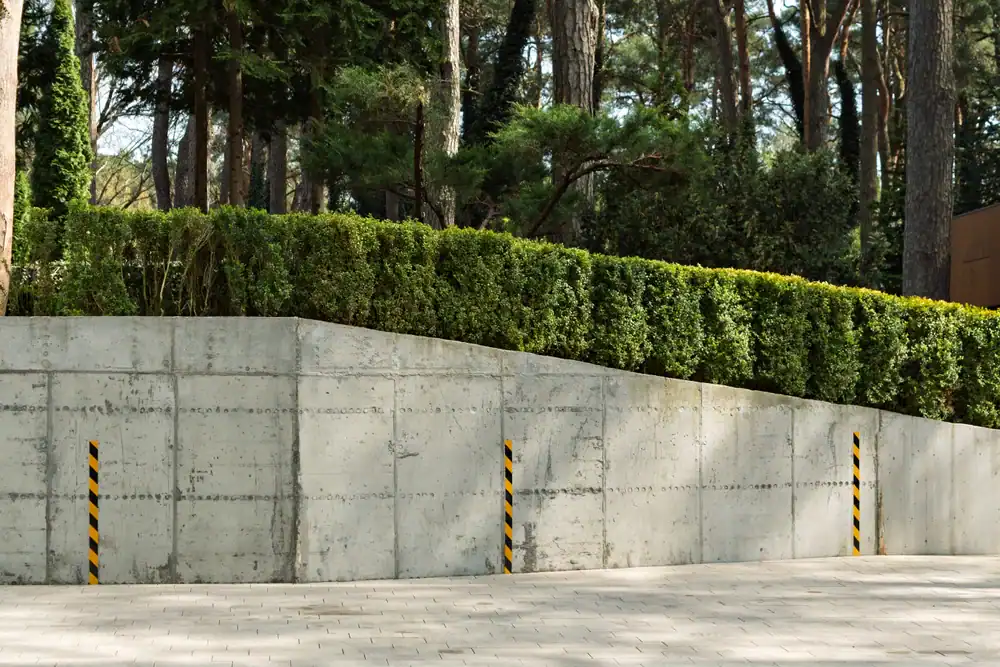

That slope in your yard isn’t just an eyesore. It’s wasted space where your kids could be playing, where you could be grilling, or where a garden bed could be growing. Every rain washes more soil toward your foundation, and every season that passes makes the problem worse.
A properly built retaining wall stops the erosion immediately. It creates level ground where there was none. You get back square footage you’re already paying property taxes on—space for a patio, a fire pit, raised garden beds, or just a flat lawn that’s actually usable.
The difference isn’t subtle. Homeowners in Succasunna with median property values around $483,000 can’t afford to let drainage issues or unusable slopes drag down their home’s value. A well-designed block wall or stone retaining wall doesn’t just hold back dirt—it adds dimension, curb appeal, and functional outdoor living area that buyers notice.
We’ve been handling masonry and retaining wall projects across Succasunna and Morris County for years. We’re not the guys who show up, slap down some blocks, and disappear. We’re the ones who come back to check on jobs years later and find them still standing strong.
Most wall failures happen because of poor drainage. We’ve repaired enough collapsing walls to know exactly what goes wrong when corners get cut. That’s why every retaining wall we build includes proper drainage systems—lateral drains, gravel backfill, and engineered base prep that handles New Jersey’s freeze-thaw cycles.
You’re working with licensed contractors who understand local soil conditions, permit requirements for walls over four feet, and how to build structures that won’t bulge or lean after the first heavy rain. Succasunna homeowners expect quality work, and that’s what we deliver.

First, we come out to look at your property. We’re checking slope angles, soil type, drainage patterns, and what you actually want to use the space for. A wall that’s holding back a garden bed is different from one that needs to support a parking area for an RV.
Next comes the base work. This is where most DIY jobs and cheap contractors fail. We excavate below the frost line, compact the subgrade, and install a gravel base that drains water away from the wall. If your wall needs to be over four feet or handle vehicle loads, we’ll make sure it’s engineered and permitted correctly.
Then we build. Whether you choose concrete retaining wall blocks, natural stone, or segmental block systems from manufacturers like Techo-Bloc, every course gets leveled and backfilled properly. We install drainage pipe behind the wall and use the right backfill material—not the clay soil that came out of the hole.
You end up with a wall that’s built to last decades, not just seasons. And you get your yard back.

Ready to get started?
Concrete retaining wall blocks are the most common choice in Succasunna for good reason. They’re engineered for strength, come in dozens of styles and colors, and install faster than poured concrete or natural stone. Brands like Cambridge and Techo-Bloc offer block wall systems that look natural but perform like engineered structures.
Natural stone walls have that high-end look that fits right into North Jersey’s established neighborhoods. Real stone weathers beautifully, grows moss over time, and creates that sense of permanence that makes a property feel grounded. The trade-off is cost and installation time, but if you’re after that classic estate look, nothing else compares.
For properties with serious slope issues—eight feet or more of grade change—you might need a mechanically stabilized earth wall or an engineered cantilever system. These aren’t DIY projects. They require calculations for surcharge loads, soil bearing capacity, and drainage design. If your wall is creating a new driveway or supporting a structure, this is the level of engineering you need.
Wall landscaping matters too. The right plantings at the top and base of your retaining wall soften the look and help with erosion control. We can coordinate with your landscaper or handle the full project if you want one crew managing everything.

Most residential retaining walls in Succasunna run between $25 and $75 per square foot, depending on materials and site conditions. A basic segmental block wall on level ground with good access costs less than a natural stone wall on a steep slope with limited equipment access.
Height matters. A three-foot garden wall is straightforward. A six-foot wall requires engineering, permits, and more substantial base preparation. If we’re excavating through rock or dealing with high water tables, costs go up because the work gets more complex.
The real cost isn’t just installation—it’s what happens over the next twenty years. A properly built wall with good drainage lasts decades without issues. A cheap wall that skips the base prep or drainage will start failing in three to five years, and repairing retaining wall problems costs more than building it right the first time. Given that Succasunna homes average nearly half a million in value, protecting that investment with quality construction makes sense.
In most New Jersey municipalities, including Succasunna, retaining walls four feet and taller require a building permit. Walls over six feet almost always need both a permit and an engineered design stamped by a licensed professional engineer.
Even if your wall is under four feet, local building codes still apply. The wall needs proper setbacks from property lines, adequate drainage, and construction that meets structural requirements. Some homeowner associations have additional restrictions on materials and appearance.
Here’s what most people miss: if your wall fails and causes damage to a neighbor’s property, you’re liable. If it was built without required permits, your homeowner’s insurance might not cover the damage. We handle permit applications as part of the project because we’d rather do it right than have you deal with code enforcement or insurance headaches later.
Poor drainage is the number one killer of retaining walls. When water builds up behind a wall, it creates hydrostatic pressure—basically, thousands of pounds of force pushing outward. Even a well-built wall can’t handle that pressure indefinitely. You’ll see bulging first, then cracks, then eventual collapse.
Inadequate base preparation is the second most common failure. If the foundation isn’t compacted properly or doesn’t extend below the frost line, the wall shifts when the ground freezes and thaws. New Jersey’s freeze-thaw cycles are brutal on structures that aren’t built for them.
Using the wrong materials or skipping steps to save money catches up fast. Backfilling with clay soil instead of gravel, not installing drainage pipe, or using blocks without proper geogrid reinforcement on tall walls—these shortcuts might save a few hundred dollars upfront, but they guarantee problems within a few years. Most of the repairing retaining wall work we do is fixing walls that were built cheap the first time.
A typical residential retaining wall takes anywhere from three days to two weeks, depending on size and complexity. A simple 30-foot garden wall that’s three feet tall might be done in three to four days. A large tiered wall system with multiple levels, stairs, and extensive drainage work could take two weeks or more.
Weather affects the timeline. We can’t pour footings or compact base material in heavy rain. We won’t set blocks when temperatures are below freezing because mortar and adhesives don’t cure properly. Spring and fall are ideal for wall construction in North Jersey—the ground isn’t frozen, and you’re not working in July heat.
Site access matters too. If we can get equipment right to the work area, things move faster. If we’re hauling materials through your backyard by hand because there’s no access for a skid steer, that adds time. We’ll walk your property during the estimate and give you a realistic timeline based on actual site conditions, not best-case scenarios.
Sometimes yes, sometimes no. If the wall is bulging slightly but hasn’t collapsed, and the problem is limited to a small section, we might be able to rebuild just that portion. If the entire wall is leaning or there’s widespread failure, you’re usually better off replacing it completely.
Here’s the issue with repairs: if the wall failed because of poor drainage or inadequate base work, fixing the visible damage doesn’t solve the underlying problem. You’ll just end up with another failure in a different spot. We’d rather be honest about that upfront than charge you for a repair that’s going to fail again in two years.
When we evaluate a failing wall, we’re looking at what caused the failure, how much of the structure is compromised, and whether the existing base and drainage can be salvaged. Sometimes the most cost-effective solution is tearing out the old wall and building a new one correctly. That might sound like bad news, but it’s better than throwing money at temporary fixes that don’t last.
A gravity wall uses its own weight to hold back soil. These are typically shorter walls—under four feet—built with heavy materials like natural stone or large concrete blocks. They rely on mass and a slight backward lean to resist the pressure from the soil behind them. No reinforcement needed.
A reinforced wall uses geogrid or other reinforcement materials that extend back into the soil behind the wall. This creates a much larger mass of reinforced earth that resists pressure. These walls can go much taller—eight, ten, even fifteen feet—because the reinforcement distributes the load over a larger area. Most segmental block retaining wall systems over four feet use this method.
For homeowners in Succasunna dealing with significant slopes, reinforced walls are usually the answer. They’re engineered, they’re code-compliant for tall applications, and they perform reliably even with heavy surcharge loads. If you’re creating a level pad for a patio or driveway on a steep lot, this is likely what you need. We’ll assess your specific site and recommend the right system based on actual engineering requirements, not just what’s easiest to install.
Other Services we provide in Succasunna