
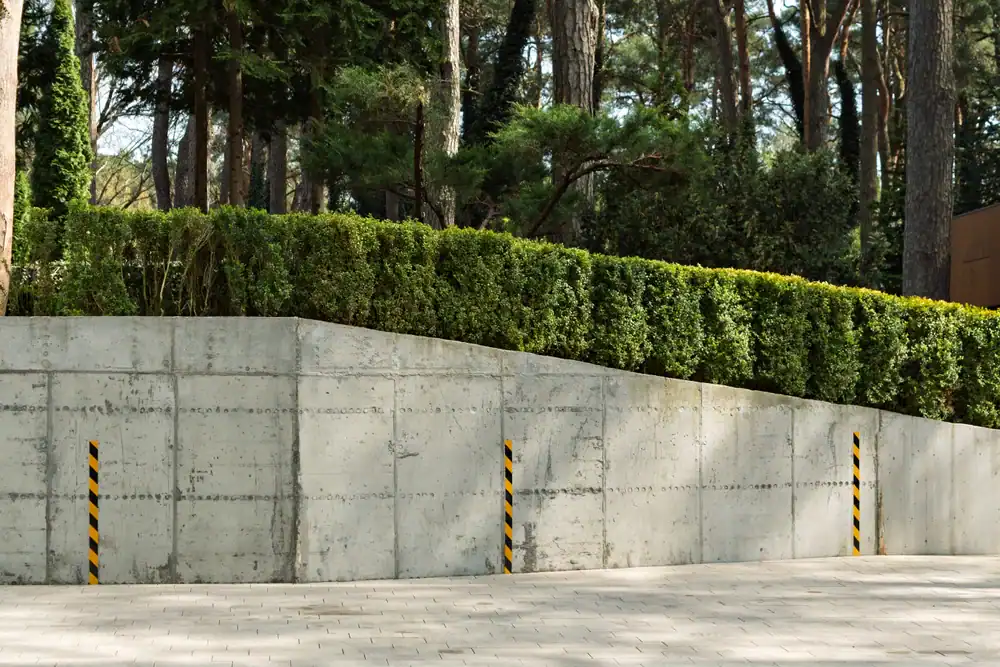

You get flat, usable outdoor space where there used to be a slope you couldn’t do anything with. That means room for a patio, garden beds that don’t wash away, or just a yard your kids can actually play on.
You stop soil from sliding downhill every time it rains. That protects your foundation, your driveway, and anything else sitting below the grade. One heavy storm can undo years of landscaping if the soil isn’t held in place.
And your property value goes up. Buyers see a well-built retaining wall and know the home has been maintained. They see a yard that’s been engineered, not just mowed. That’s the kind of detail that closes deals in Upper Montclair, NJ, where homes are investments and curb appeal matters.
We handle retaining wall projects across Upper Montclair and the surrounding area. We’re based in Garfield, licensed in New Jersey, and we know what it takes to build a wall that holds up to weather, soil movement, and time.
Upper Montclair has older homes, steep lots, and soil that shifts when it rains. We’ve worked on properties with elevation changes that require engineering, drainage planning, and materials that can handle pressure. That’s not something you wing.
You’re not hiring a crew that learned this last year. You’re hiring people who understand grading, drainage, and how to keep a wall from bowing or cracking three years down the line.

First, we come out and look at your property. We measure the slope, check the soil, and figure out how much wall you actually need. If it’s over four feet, we bring in an engineer because that’s what New Jersey requires. No shortcuts.
Next, we dig down to stable ground and build a base that won’t shift. That’s usually crushed stone, compacted in layers. Then we set the first course of blocks or stone, making sure everything is level and properly aligned. Each row gets set with drainage behind it so water doesn’t build up and push the wall forward.
Once the wall is up, we backfill with gravel, install drainage pipe if needed, and finish the top. You’re left with a structure that’s built to code, engineered to last, and ready to handle whatever the weather throws at it. The whole process usually takes a few days to a week depending on size.

Ready to get started?
You’re getting a wall built with materials that match your property. That could be concrete retaining wall blocks, natural stone, or segmental block systems. We’ll walk you through what works best for your slope, your budget, and the look you’re going for.
You’re also getting proper drainage. Every retaining wall we build includes backfill drainage and, when needed, perforated pipe to move water away from the wall. Without that, you’re just waiting for the wall to fail.
In Upper Montclair, most of the properties we work on have elevation changes that require walls between three and six feet. That’s the range where engineering starts to matter. We handle the permit process, coordinate with engineers when required, and make sure everything is up to code before we pour the first footer. You don’t have to call the township or figure out what’s allowed—we do that.
And if your existing wall is leaning, cracking, or starting to bow, we handle repairs too. Sometimes that means rebuilding a section. Other times it means adding drainage or reinforcing what’s already there.

Most retaining walls in this area run between $4,000 and $15,000 depending on height, length, and materials. A standard 50-foot wall that’s four feet tall usually comes in around $8,000 to $10,000 with materials and labor included.
Concrete blocks are the most affordable option, running about $20 to $40 per square foot. Natural stone costs more—usually $25 to $75 per square foot—but it also lasts longer and looks better on historic properties. Brick falls somewhere in the middle at $25 to $45 per square foot.
If your wall is over four feet, you’ll need an engineer to sign off on the design. That adds to the cost, but it’s required by New Jersey code and it’s not optional. We handle that coordination so you don’t have to track down an engineer yourself.
If your wall is over four feet tall, yes. You need a construction permit and the design has to be stamped by a licensed engineer. That’s state law in New Jersey under the Uniform Construction Code.
Walls under four feet usually don’t require a permit, but there are exceptions depending on where the wall sits on your property and what’s around it. If it’s near a property line, a driveway, or a structure, the township may still want to review it.
We handle the permit process as part of the job. That means pulling the permit, submitting plans, and making sure inspections happen on schedule. You don’t need to go to the municipal building or figure out what forms to fill out—that’s on us.
Concrete retaining wall blocks are the most common choice because they’re strong, affordable, and easy to work with on steep grades. They interlock, which adds stability, and they come in different styles so you’re not stuck with one look.
Natural stone works well if you want something that blends into the landscape. It’s more expensive and takes longer to install, but it holds up better over time and it fits the aesthetic of older homes in Upper Montclair. Stone also handles freeze-thaw cycles better than some other materials.
Timber is an option for smaller walls, but it doesn’t last as long. You’ll get 10 to 15 years out of treated wood before it starts to rot or shift. For anything over three feet or anything that’s holding back serious soil pressure, we usually recommend concrete or stone.
Most residential retaining walls take three to seven days to complete. That includes excavation, base prep, wall installation, backfill, and drainage work. Larger projects or walls that require engineering can take up to two weeks.
Weather plays a role. If it rains during excavation or base work, we have to wait for the ground to dry out before we can compact and build. Rushing that part leads to settling and cracks later, so we don’t cut corners just to finish faster.
If permits are required, add another week or two for plan review and approval before we start. Once we’re on site, though, the work moves quickly. You’ll see progress every day, and we clean up as we go so your yard isn’t a mess for weeks.
Poor drainage is the number one reason retaining walls fail. When water builds up behind the wall, it creates pressure that pushes the wall forward. Over time, that causes bowing, cracking, or complete collapse.
A weak or shallow foundation is the second most common issue. If the base isn’t deep enough or isn’t compacted properly, the wall will settle unevenly. That leads to leaning, especially after heavy rain or freeze-thaw cycles.
Using the wrong materials or skipping steps during installation also causes problems. Walls that aren’t backfilled with gravel, walls that don’t have drainage pipe, or walls built without engineering on tall slopes—those are the ones that fail within a few years. That’s why hiring someone who knows what they’re doing matters more than finding the cheapest bid.
It depends on what’s wrong with it. If the wall is leaning slightly or has a few cracked blocks, we can often repair it by adding drainage, reinforcing the base, or replacing damaged sections. That’s usually cheaper and faster than a full rebuild.
If the wall is leaning more than a few inches, bulging in the middle, or showing major cracks, it probably needs to be rebuilt. At that point, the structure has failed and patching it won’t fix the underlying issue. Rebuilding lets us address the drainage, foundation, and design problems that caused the failure in the first place.
We’ll come out and assess what’s going on before recommending a repair or replacement. You’ll get a straight answer about what’s fixable and what’s not, along with pricing for both options so you can make the call.
Other Services we provide in Upper Montclair