
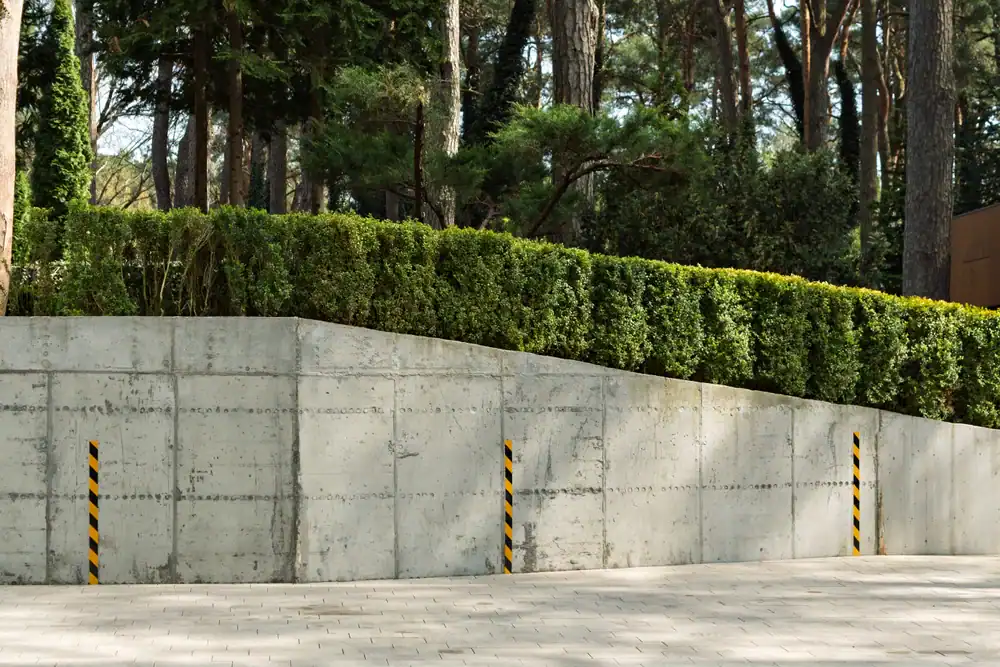

A well-built retaining wall stops soil from sliding into your driveway, pooling water against your foundation, or washing away every time it rains. That’s the baseline.
Beyond erosion control, you’re looking at real property improvements. Flat, usable yard space where there was only a slope. Defined garden beds and landscaping that actually stays in place. Water that flows where it should instead of into your basement.
The difference between a retaining wall that works and one that fails in five years comes down to drainage. Hydrostatic pressure—water building up behind the wall—causes most failures. Proper installation means drainage pipes, weep holes, and grading that prevent water from turning your wall into a dam. When done right, concrete retaining wall blocks or natural stone can last decades with almost no maintenance.
Property values in Verona and Essex County have jumped over 6.9% recently. Homes with functional outdoor spaces and zero drainage issues sell faster and for more. Your retaining wall isn’t just fixing a problem—it’s an investment that shows.
We’ve been handling residential and commercial projects across New Jersey for nearly twenty years. We’ve seen what works in Verona’s soil conditions and what fails after the first winter freeze.
Our team knows the local building codes, understands how water moves through Essex County properties, and has installed everything from segmental block walls to custom natural stone terracing. We’re not the cheapest option in town—and that’s intentional. Cheap retaining walls crack, bow, and collapse. Ours don’t.
Every project starts with a free consultation where we assess your property’s grade, drainage patterns, and soil composition. No hidden fees, no upselling services you don’t need. Just transparent pricing and work that holds up.

First, we evaluate your property. Slope angle, soil type, existing drainage issues, and how much usable space you want to create. This determines wall height, material choice, and whether we need engineered drainage solutions.
Next comes excavation and base preparation. The foundation is everything. We dig below the frost line, compact the base, and install drainage pipes before the first block goes down. Skipping this step is why most DIY retaining walls fail within three years.
Then we build. Concrete retaining wall blocks go up in courses, each one slightly set back for stability. Natural stone gets mortared and fitted. Every few feet, we install weep holes and backfill with gravel to keep water moving away from the wall. The cap goes on last—it’s not just decorative, it protects the top course from water infiltration and freeze damage.
After construction, we grade the area behind the wall and make sure runoff flows where it should. You’ll see the difference immediately, but the real test comes during the first heavy rain. That’s when proper drainage proves itself.

Ready to get started?
Concrete blocks dominate the retaining wall market for good reason—they’re durable, cost-effective, and handle New Jersey’s freeze-thaw cycles without cracking. Segmental retaining walls using interlocking blocks work well for curves and terraced designs. They’re also easier to repair if settling ever occurs.
Natural stone costs more but offers a different aesthetic. If your property has existing stonework or you’re going for a more organic look, stone retaining walls blend better with landscaping. They require more skilled installation since each piece needs to fit properly, but the result is unique.
Verona properties often deal with significant elevation changes. Hilly terrain means water runoff hits hard during storms. We design every wall with this in mind—proper grading behind the wall, drainage pipes that actually work, and materials that won’t deteriorate when water freezes in the joints. Height matters too. Walls over four feet typically need engineering approval and reinforcement. We handle the permits and make sure everything meets code.
Repairing retaining walls is common here. Older walls built without drainage fail predictably. We can assess whether yours needs full replacement or if targeted repairs will buy you more years.

Cost depends on height, length, material choice, and site access. A basic concrete block retaining wall runs differently than a natural stone wall with complex drainage work.
For a standard residential project—say, a 3-foot-high wall that’s 20 feet long—you’re looking at a range that factors in excavation, materials, labor, and drainage installation. Walls over 4 feet cost more because they need engineering and reinforcement. Difficult access (like a backyard with no equipment entry) adds to labor costs.
We provide free estimates after seeing your property. No two yards are identical, and quoting over the phone leads to surprises nobody wants. Our pricing includes everything: permits, drainage, materials, labor, and cleanup. No hidden charges that show up later.
Drainage failure causes most retaining wall collapses. Water builds up behind the wall, creates hydrostatic pressure, and eventually pushes the wall out. You’ll see bowing, cracking, or complete failure.
Prevention starts with proper drainage design. We install perforated pipes behind the wall that channel water away. Weep holes every few feet let water escape instead of building pressure. Gravel backfill behind the wall creates a drainage zone. The soil behind gets graded so water flows away from the wall, not toward it.
Poor base preparation is the second biggest cause. If the foundation isn’t compacted and level, the wall settles unevenly and cracks. We dig below frost line and build a solid base before the first block goes down. Cheap installations skip this step—it’s expensive and time-consuming, but it’s the difference between a wall that lasts 20 years and one that fails in three.
A typical residential retaining wall takes anywhere from three days to two weeks, depending on size and complexity. Small, straightforward projects move faster. Large walls with multiple tiers, difficult access, or extensive drainage work take longer.
Weather affects timelines. We can’t pour footings or set blocks in heavy rain or freezing temperatures. New Jersey weather being what it is, we build buffer time into schedules. Permit approval can add a week or two for taller walls that need engineering review.
We’ll give you a realistic timeline during the estimate. Once we start, we work efficiently without cutting corners. Rushing a retaining wall installation leads to the drainage and foundation problems we just talked about. You want it done right more than you want it done fast.
Depends on what’s failing and why. If the wall is bowing or leaning significantly, that usually means foundation or drainage failure. Full replacement is often the only real fix because the underlying problem will keep causing issues.
Minor cracking, loose blocks, or cosmetic damage can sometimes be repaired. We assess the wall’s structural integrity, check for drainage problems, and determine if repairs will actually solve the issue or just delay the inevitable. There’s no point spending money on repairs if the wall needs replacement within two years anyway.
Older walls built without proper drainage almost always need replacement. Adding drainage after the fact is difficult and often costs nearly as much as rebuilding correctly. We’ll be honest about what makes sense for your situation and budget. If repairs will work, we’ll tell you. If they won’t, we’ll explain why replacement is the better investment.
Concrete blocks are uniform, interlock for stability, and install faster. They handle curves well and come in different colors and textures. Cost is lower, and repairs are straightforward since blocks are standardized. They’re the practical choice for most residential projects.
Natural stone looks more organic and blends with existing landscaping. Each wall is unique since stones vary in size and shape. Installation takes longer because each piece needs to be fitted and mortared properly. Cost runs higher due to material expense and skilled labor requirements.
Both options last decades when installed correctly with proper drainage. The choice usually comes down to aesthetic preference and budget. Concrete blocks dominate the market—over 60% of retaining walls use them—because they deliver durability and function at a reasonable price. Stone makes sense when appearance is the priority and budget allows for the premium.
Verona typically requires permits for retaining walls over a certain height—usually 4 feet, though regulations can vary based on location and property specifics. Walls near property lines, in floodplains, or on steep slopes may have additional requirements regardless of height.
Taller walls often need engineered drawings showing the design can handle soil pressure and drainage loads. This isn’t just bureaucracy—engineering ensures the wall won’t fail and cause property damage or safety issues. We handle permit applications and work with engineers when needed.
Building without required permits creates problems if you ever sell the property. Inspectors can flag unpermitted work, and you’ll end up paying to bring everything up to code anyway. We pull the necessary permits, schedule inspections, and make sure everything meets local building codes. It adds time to the project but protects your investment and keeps everything legal.
Other Services we provide in Verona