

You stop watching soil wash away every time it rains. The water that used to pool near your foundation gets redirected where it belongs. Your yard becomes something you can actually use instead of just mow around.
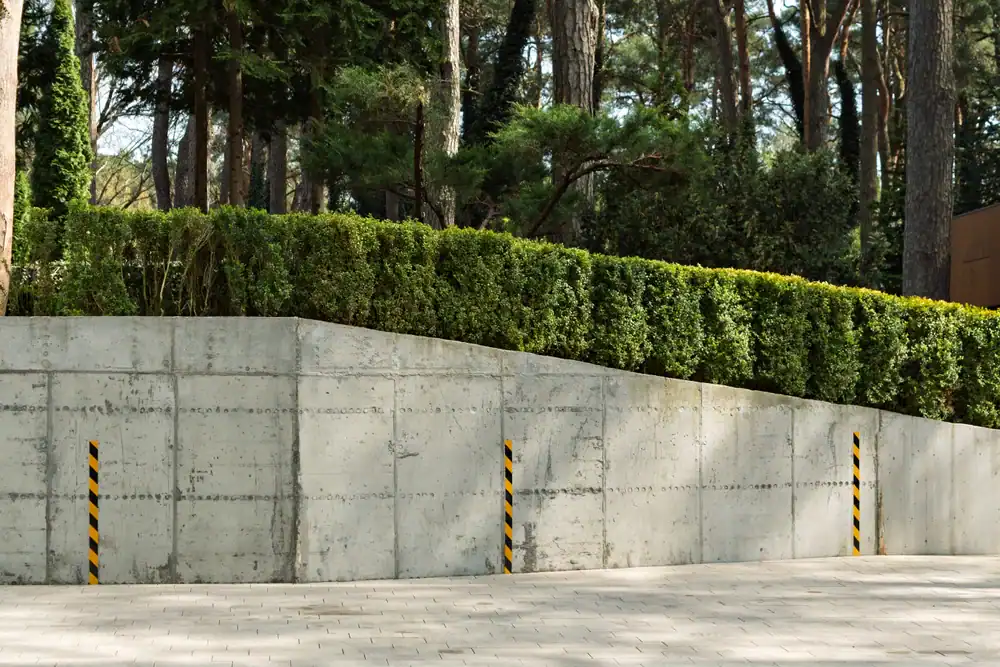
Concrete retaining wall blocks create level terraces where steep grades used to make everything difficult. You get garden space, seating areas, or just flat ground that doesn’t turn into a mudslide when the weather turns.
The right wall does more than hold back dirt. It includes drainage systems that prevent hydrostatic pressure from building up behind the blocks. Weep holes, gravel backfill, and proper grading keep water moving away from both the wall and your home. That’s what separates a retaining wall that lasts from one that fails in five years.
We’ve spent nearly two decades working on properties throughout White Meadow Lake and the surrounding Morris County area. We know the soil conditions here. We know how water moves through these hillside lots. We know what fails and what holds.
You’re not getting a crew that learned masonry from YouTube. You’re getting certified contractors who’ve built hundreds of retaining walls on terrain just like yours. We handle everything from small garden walls to engineered structures that require permits and site plans.
We don’t disappear after the job. We’re local, we’re established, and we’ll be here if you ever need us again.

We start with a site visit to look at your slope, drainage patterns, and soil conditions. If your wall needs to be over four feet, we’ll discuss engineering requirements and permits. You’ll get a detailed estimate that breaks down materials, labor, and timeline.
Once you approve, we excavate and prepare a proper base. This isn’t optional—the foundation determines whether your wall stands for decades or starts leaning in three years. We use compacted gravel and ensure proper depth based on wall height.
Then we install the retaining wall blocks with integrated drainage systems. Perforated pipes, filter fabric, and gravel backfill go in as we build. Each course gets leveled and secured. For taller walls, we add geogrid reinforcement that ties the structure into the slope behind it.
The final step is backfilling, compacting, and grading the area so water flows away from the wall. You get a structure that’s engineered to handle both soil pressure and water management.

Ready to get started?
Most residential projects in White Meadow Lake use segmental retaining wall blocks—interlocking concrete units that don’t require mortar. They’re engineered for strength, they come in multiple colors and textures, and they’re built to last 50+ years when installed correctly.
For properties with specific aesthetic goals, we also work with natural stone. It costs more and takes longer, but it gives you that high-end look that fits with the lakefront homes in this area. Either way, you’re getting materials that can handle Morris County winters without cracking or shifting.
Every installation includes proper drainage. That means weep holes every few feet, gravel backfill behind the wall, and perforated drain pipes at the base. Water is what destroys retaining walls—not time. We design systems that move water away from the structure and your foundation.
You also get transparent pricing. We discuss costs upfront based on wall height, length, site access, and material choice. No surprise charges when the job’s done.

Expect to pay between $35 and $65 per square foot for a professionally installed block retaining wall in White Meadow Lake. That range accounts for wall height, site conditions, drainage complexity, and material selection.
A basic three-foot wall with standard blocks runs on the lower end. Taller walls that require engineering, permits, and geogrid reinforcement cost more. Difficult site access or significant excavation also increases the price.
Most contractors have a minimum project cost between $1,500 and $3,000. Small garden walls might hit that minimum even if the square footage math suggests less. Get a detailed estimate that breaks down materials, labor, drainage components, and any site-specific challenges before you commit.
Any retaining wall over four feet tall typically requires a permit and engineered plans in Morris County. Walls under four feet usually don’t, but local ordinances can vary.
If your wall is close to a property line, near a wetland, or part of a larger site alteration, you might need permits regardless of height. Morris County has specific regulations about grading, drainage, and soil disturbance that can trigger review.
We handle permit applications and work with engineers when your project requires it. It adds time to the schedule, but it’s not optional. Unpermitted walls can create liability issues and problems when you sell your property.
Segmental concrete retaining wall blocks last 40 to 75 years when installed with proper drainage and base preparation. Natural stone walls can last even longer—some over a century.
The lifespan depends almost entirely on installation quality. Walls without adequate drainage fail early because water pressure builds up behind them. Walls built on insufficient bases start settling and leaning within years.
Morris County’s freeze-thaw cycles are hard on any structure. Water that gets trapped behind a wall expands when it freezes, creating pressure that pushes blocks out of alignment. That’s why drainage systems aren’t optional—they’re what keeps your wall standing through decades of weather.
Sometimes. If the wall is leaning slightly or has a few damaged blocks, repairing retaining wall sections can work. But if the structure is significantly bowed, sinking, or built without proper drainage, you’re usually better off replacing it.
We assess the foundation, check for drainage systems, and look at the overall stability. If the base is compromised or water has been pooling behind the wall for years, repairs are just delaying the inevitable.
A failing wall is a safety issue. Soil pressure and water weight can cause sudden collapse, especially after heavy rain. If your wall is showing serious signs of failure, we’ll tell you honestly whether repair makes sense or if replacement is the smarter investment.
Interlocking concrete blocks are the most practical choice for most sloped properties in White Meadow Lake. They’re engineered for structural performance, cost less than natural stone, and install faster. You still get design flexibility with different colors and textures.
Natural stone works well if aesthetics are your priority and budget isn’t a constraint. It takes more labor to fit and set each stone, but the result has a custom, high-end look that fits with luxury properties around the lake.
Poured concrete walls are an option for commercial projects or extreme slopes, but they’re overkill for most residential applications. They cost more, require forms and curing time, and don’t offer the flexibility of segmental systems. For typical yard grading and wall landscaping projects, concrete blocks give you the best combination of strength, cost, and appearance.
A properly built retaining wall redirects water away from your foundation by changing how runoff moves across your property. The drainage system behind the wall—perforated pipes, gravel, and weep holes—captures water before it can pool or saturate the soil near your house.
Without a retaining wall, water flows downhill and collects at the lowest point, which is often right against your foundation. That leads to basement seepage, soil erosion under footings, and hydrostatic pressure that can crack foundation walls.
The wall itself creates a barrier that holds back soil, but the drainage components are what manage water. We install filter fabric to prevent soil from clogging the system, slope the drain pipes away from the structure, and ensure weep holes are positioned to release pressure. It’s a complete water management system, not just a stack of blocks.
Other Services we provide in White Meadow Lake