
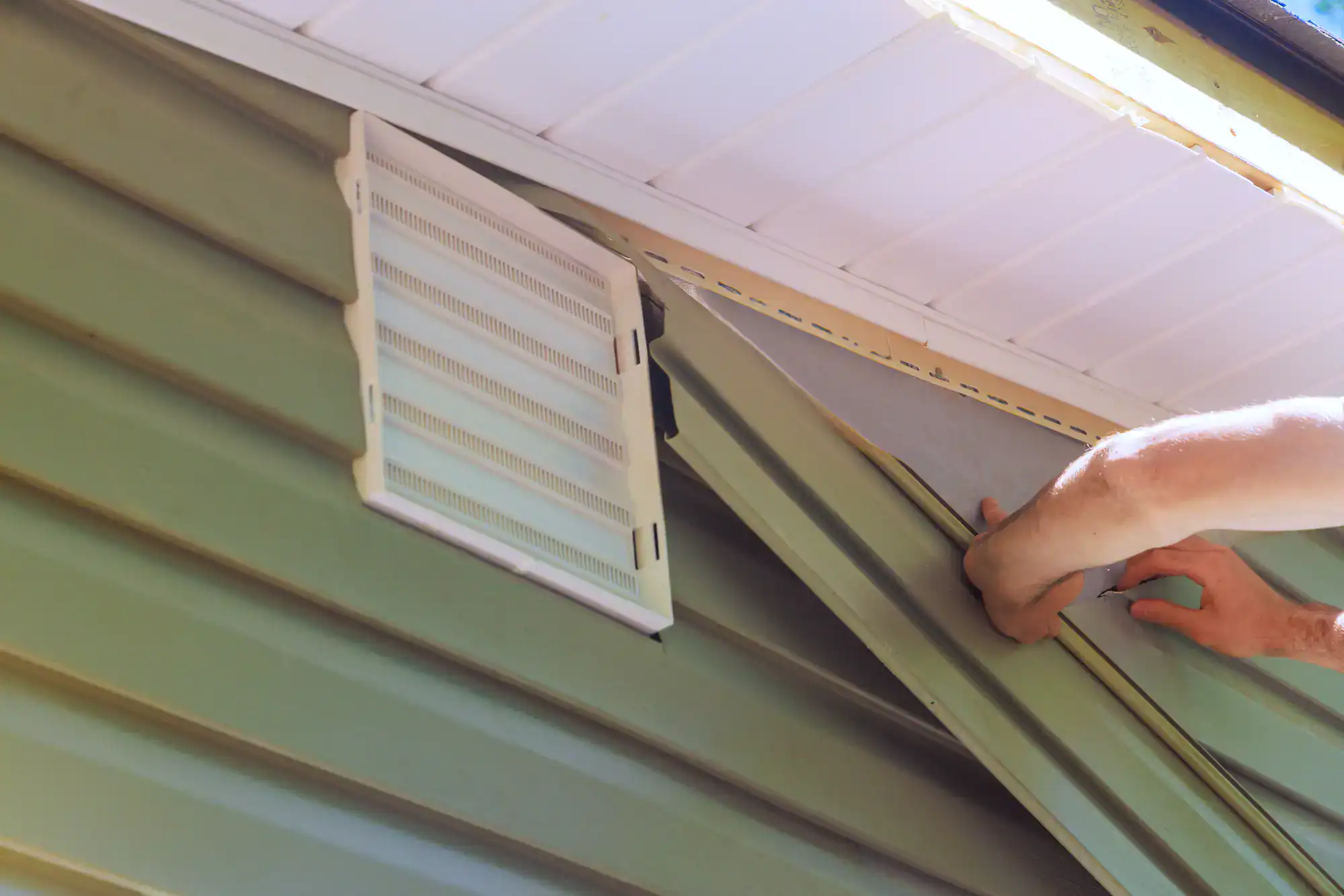
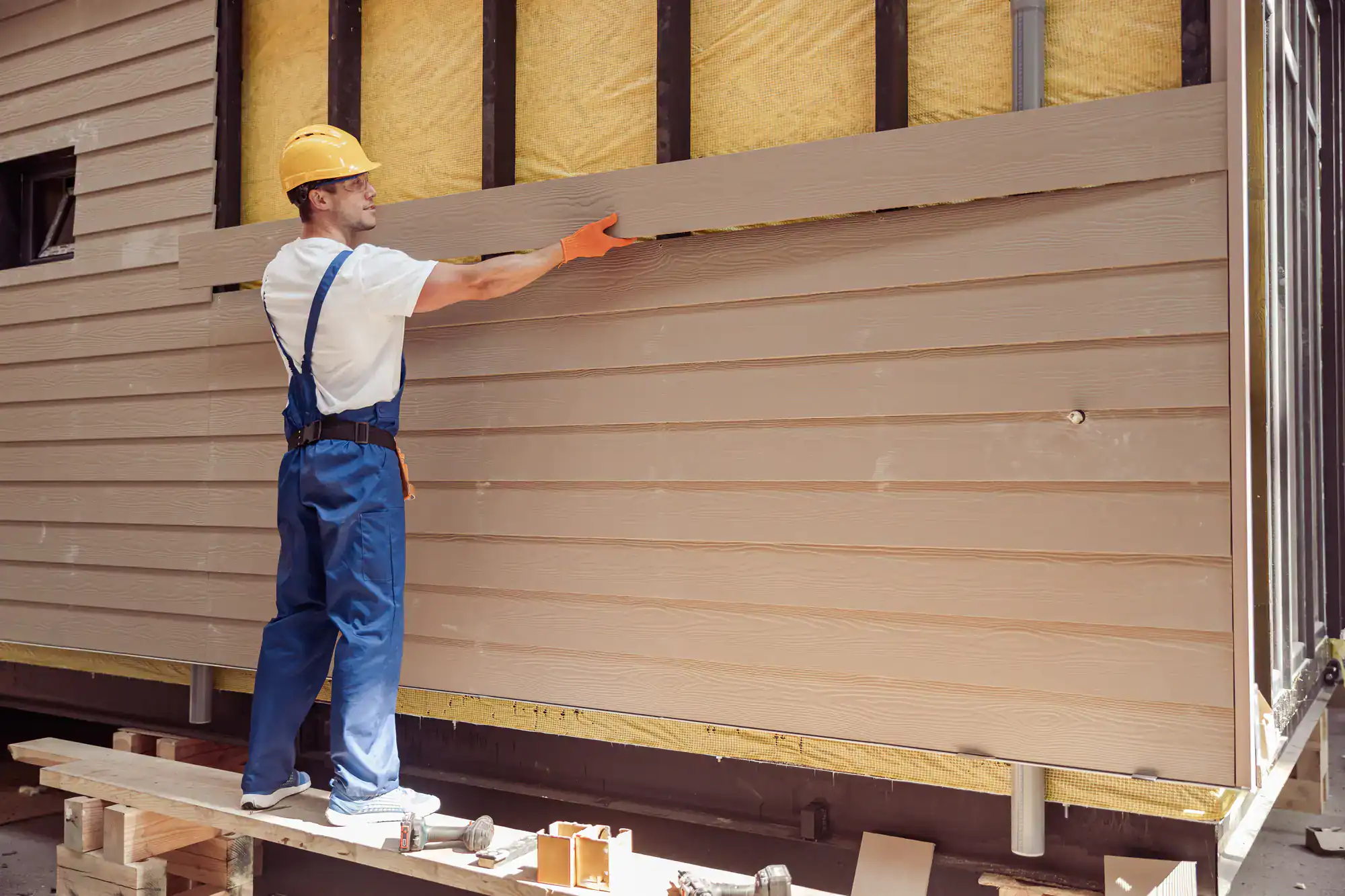
Most homeowners in Lincoln Park don’t call about siding until something forces the issue a panel that’s cracked after a hard winter, discoloration that won’t wash off, or a draft that showed up somewhere it didn’t used to be. By then, the damage underneath is usually worse than what’s visible on the surface. That’s the part most contractors skip over. We don’t.
Lincoln Park’s position at the Two Bridges confluence where the Pompton and Passaic rivers meet means your home’s exterior is exposed to moisture levels that most of Morris County never deals with. Persistent humidity, recurring flood events, and freeze-thaw cycles that hit harder near river corridors all accelerate the breakdown of siding materials, especially in homes built in the 1960s through 1980s that make up a large portion of the borough’s housing stock. When new siding goes on over compromised sheathing or a failed moisture barrier, you’re not solving the problem you’re hiding it.
What you actually get from a proper siding job here is peace of mind that goes beyond aesthetics. Your home holds its value and in a market where Lincoln Park homes are selling and buyers are paying attention to exterior condition, that matters. You stop worrying about what’s happening behind the walls every time it rains. And if you’re in a neighborhood near the river, you’re working with a contractor who understands that this isn’t a standard siding job it’s an exterior system that has to perform under real pressure.
We’re a family-owned contracting company based in northern New Jersey, serving Lincoln Park and the surrounding Morris County area since 2018. We hold NJ Home Improvement Contractor Business license #13VH09838700 the same registration Lincoln Park’s own Building Department requires before any contractor can legally perform siding work in the borough. That’s not a technicality. It’s the baseline, and not every contractor you’ll find online meets it.
We’re BBB Accredited and a GAF Preferred Contractor. Both of those take real vetting they’re not self-assigned labels. Every project we take on is backed by a full warranty covering materials and workmanship, and we offer free consultations with no pressure and no obligation. You get a straight answer about what your home actually needs, not a pitch designed to sell you the biggest job possible.
We also handle roofing, gutters, chimney, and masonry which means if your siding project uncovers something else going on with your exterior, you’re not left coordinating a second contractor to finish the job.
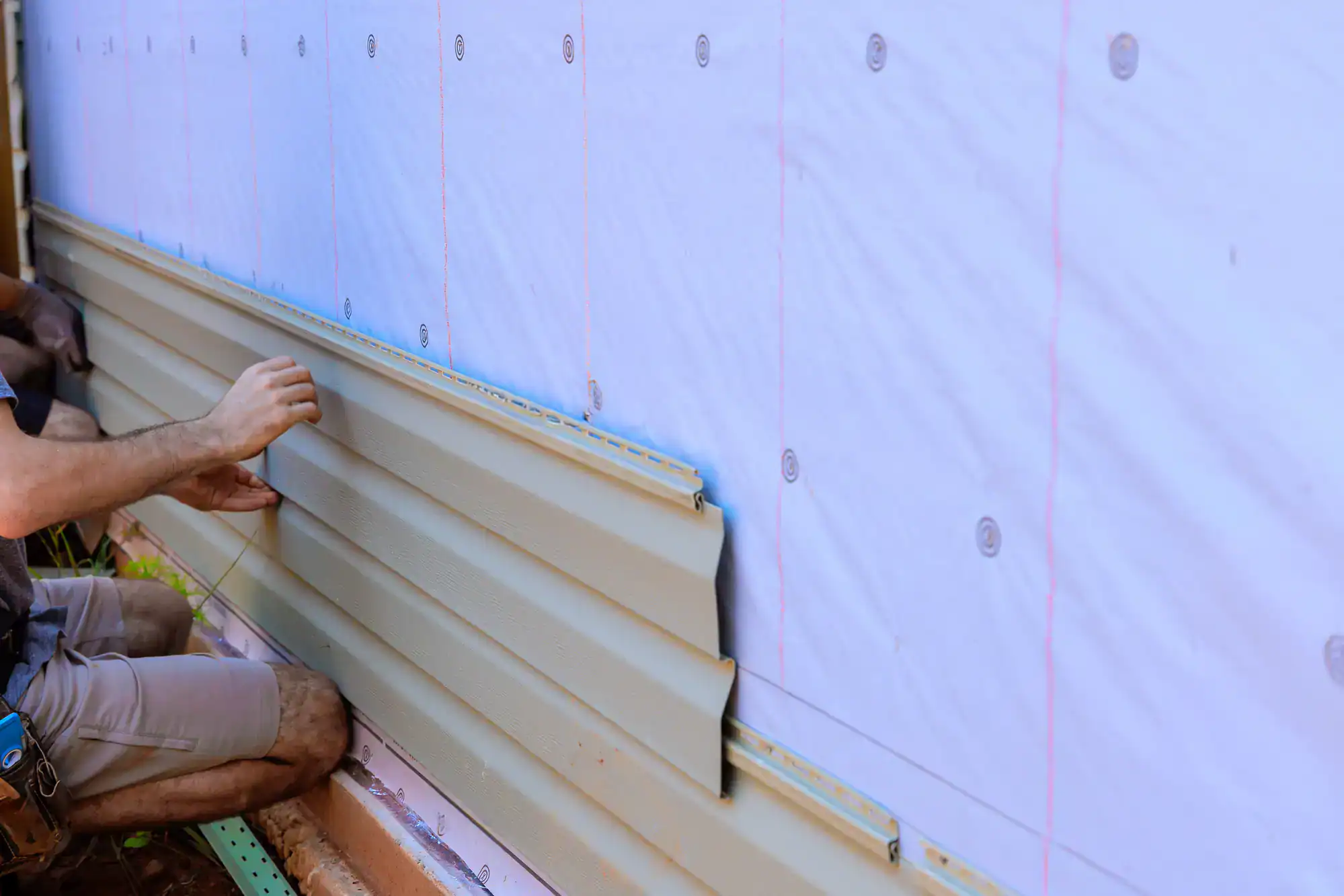
It starts with a free consultation. We come out, look at what you’re working with, and give you an honest read on the condition of your existing siding and what’s behind it. In Lincoln Park especially, that inspection step isn’t a formality. Homes near the Two Bridges area or in any of the borough’s low-lying sections can have moisture intrusion or substrate damage that isn’t obvious from the outside. We check for it before anything else happens, because covering up a problem with new siding is the worst outcome for everyone.
Once we’ve assessed the scope, we walk you through your options material choices, what makes sense for your home’s age and location, and a clear estimate with no hidden numbers. If a permit is required through Lincoln Park’s Building Department at 34 Chapel Hill Road, we handle that process and make sure everything is filed correctly before work begins. That’s part of the job, not an afterthought.
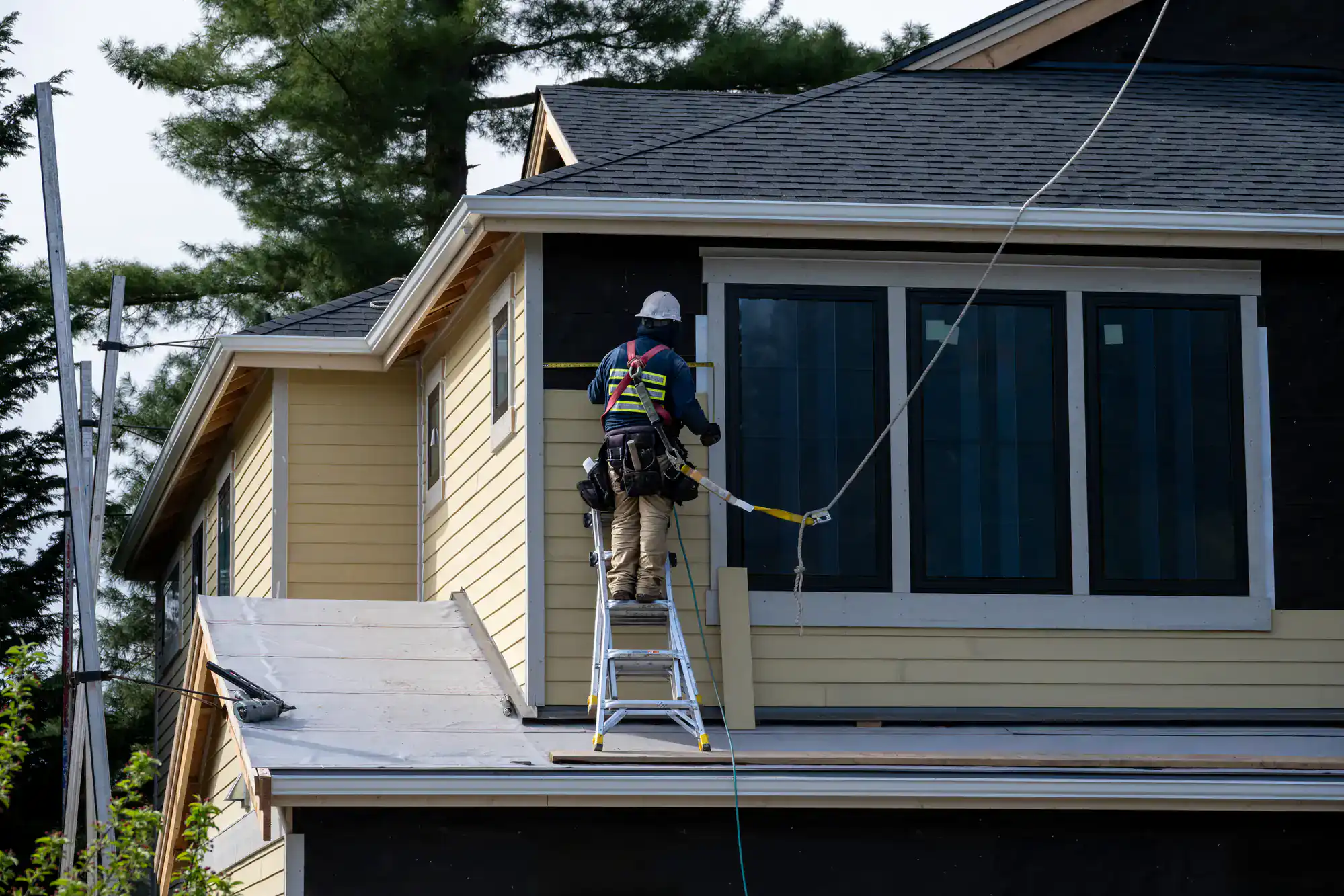
Installation is scheduled around your life. You don’t need to be home every day, and you won’t be chasing us for updates we communicate the way that works best for you, whether that’s a call, a text, or an on-site walkthrough when you’re available. When the job is done, we do a final walkthrough with you to make sure everything is right before we close it out. The warranty kicks in from that point forward, covering both the materials and the work itself.
Ready to get started?
Request a callback

Siding installation in Lincoln Park isn’t a one-size-fits-all job. The borough’s flood history, its river-adjacent geography, and the age of its housing stock all factor into what materials make sense and how the work should be done. Vinyl siding is the most common choice in the area it’s durable, low-maintenance, and handles the moisture exposure that comes with living near the Passaic and Pompton river corridors reasonably well when it’s installed correctly. Fiber cement is the faster-growing option for homeowners who want something that handles temperature swings and moisture infiltration at a higher level, and it’s worth a conversation if your home has had repeated flood exposure.
Beyond full replacement, we handle siding repair for situations where damage is localized storm impact, a section that’s cracked or warped, or panels that have separated at the seams. We also do siding replacement on older homes where the original material has simply run its course. A lot of Lincoln Park’s housing stock is 40 to 60 years old, which puts it squarely in the window where repair stops making financial sense and replacement starts paying for itself, both in energy efficiency and in home value.
Whatever the scope, every project includes a thorough substrate inspection, proper moisture barrier assessment, and clean installation that meets Lincoln Park’s building code requirements under the NJ Uniform Construction Code. We don’t cut corners on the parts you can’t see because in a flood-prone borough, those are exactly the parts that matter most.
Yes, in most cases siding replacement in Lincoln Park does require a permit through the borough’s Building Department, located at 34 Chapel Hill Road. The permit process involves submitting the scope of work, contractor information, and licensing documentation for review and the borough explicitly requires that all contractors performing siding work hold a valid NJ Home Improvement Contractor Business registration before they can pull that permit legally.
This is worth paying attention to when you’re comparing contractors. If someone is offering to do the job without pulling a permit, that’s a red flag not just for code compliance, but for your homeowner’s insurance and your ability to sell the home later. We hold NJ HICB license #13VH09838700 and handle the permitting process as part of the job, so you’re not navigating that on your own.
The honest answer is that you won’t know for certain until someone looks at what’s underneath. Visible damage cracked panels, warping, fading tells part of the story, but the more important question is what’s happening to the sheathing and moisture barrier behind the siding. In Lincoln Park, where flood events and river-adjacent humidity have affected a large portion of the borough’s homes over the years, it’s not uncommon to find substrate damage that isn’t visible from the outside at all.
As a general rule, if the damage is isolated to a small section and the surrounding material is still in good condition, repair is usually the right call. If the siding is more than 20 to 25 years old, if there are multiple problem areas, or if you’ve had water intrusion in the past, replacement tends to be the more cost-effective long-term decision. We’ll give you a straight read during the free consultation including cases where a targeted repair is all you actually need.
For homes in flood-prone areas like Lincoln Park’s Two Bridges neighborhoods and other low-lying sections near the Passaic and Pompton rivers, material selection matters more than it does in a typical suburban setting. Vinyl siding is the most widely used option and performs reasonably well in moisture-heavy environments when it’s properly installed with adequate drainage and ventilation. It doesn’t absorb water, doesn’t rot, and holds up through freeze-thaw cycles all of which are relevant in this borough.
Fiber cement is worth considering for homes that have experienced repeated flood exposure or significant moisture intrusion. It’s denser, more dimensionally stable in extreme temperature swings, and less susceptible to the kind of long-term moisture-related failure that can affect vinyl over time. It’s also a heavier material with a higher upfront cost, so it’s a conversation that depends on your home’s specific situation. We’ll walk you through the tradeoffs during the consultation so you can make the call that makes sense for your home and your budget.
For a standard single-family home in Lincoln Park, a full siding replacement typically runs anywhere from two to five days depending on the size of the home, the material being installed, and what we find once the old siding comes off. Substrate repairs, if needed, add time but they’re also non-negotiable if the sheathing or moisture barrier is compromised. Skipping that step to finish faster creates problems that show up later, and in a borough with Lincoln Park’s moisture exposure history, later tends to come sooner than expected.
Timing also matters seasonally. Vinyl siding installation becomes more difficult when temperatures drop below 40°F because the panels become brittle and more prone to cracking during handling. The spring and fall windows roughly April through June and September through November are the most reliable in northern NJ. If you’re planning a project, getting on the schedule before peak season fills up is usually the smarter move.
Start with licensing. Lincoln Park’s Building Department requires all siding contractors to hold a valid NJ Home Improvement Contractor Business registration so that’s the first thing to confirm, and you can verify any contractor’s license number directly on the NJ Division of Consumer Affairs website. Beyond licensing, look for current insurance, a written warranty that covers both materials and workmanship, and a contractor who will actually inspect the substrate before installing new siding rather than going straight to installation.
Be cautious of the lowest bid. The BBB has documented that the majority of contractor complaints are filed against the lowest-cost bidder and in a borough where hidden moisture damage is a real and common issue, a contractor cutting corners on the inspection phase is setting you up for a problem that costs more to fix later than the money you saved upfront. Ask for references, check their accreditation status, and make sure you understand exactly what’s included in the estimate before anything is signed.
It does, and the numbers back it up. The 2024 Cost vs. Value Report puts siding replacement among the highest-returning exterior improvements a homeowner can make, with returns in the 80 to 95 percent range at resale. In Lincoln Park, where median home values are in the $440,000 to $535,000 range and homes have been moving relatively quickly, exterior condition is one of the first things buyers and their agents evaluate and deteriorating or visibly aging siding is a negotiating point that works against you.
Beyond resale, new siding improves insulation performance, which translates to lower energy costs. For a borough where a large portion of the housing stock is 40 to 60 years old and original or aging siding is common, that efficiency gain is real and measurable. And in a community where homeownership rates run close to 80 percent, protecting the long-term value of your home is the practical reality of living somewhere you’ve invested in for years.
Other Services we provide in Lincoln Park