North Caldwell sits at the highest point in Essex County and that elevation comes with real wind exposure that most siding contractors don’t account for. When panels are installed without proper sealing, flashing, and fastening for that kind of exposure, you end up with water behind the wall before you ever notice anything on the surface. New siding, installed correctly, closes those gaps before they become a structural problem.
The borough’s wooded character is part of what makes it worth living here. It also means the north and east-facing walls on your North Caldwell home stay shaded and damp longer than they would in a more open suburb. That’s where mold takes hold on vinyl, where moisture works behind panels, and where the first signs of rot tend to show up quietly. A proper installation addresses the moisture barrier and substrate conditions not just the surface material.
At current North Caldwell home values median sale prices pushing past $1.1 million the math on quality siding is straightforward. Fiber cement siding alone returns around 87% at resale according to the 2024 Cost vs. Value Report. This isn’t a cosmetic upgrade. It’s one of the higher-ROI moves you can make on a home in this market.
We’re a family-owned contracting company that’s been serving North Caldwell and the surrounding Essex County communities since 2018. We hold NJ HICB License #13VH09838700 verifiable directly on the NJ Division of Consumer Affairs website along with BBB Accreditation earned in January 2025 and GAF Preferred Contractor status. These aren’t decorative badges. They’re the kind of credentials a North Caldwell homeowner expects to be able to verify before signing anything.
We work throughout Essex County, including the West Essex communities Caldwell, West Caldwell, Fairfield, Essex Fells, and Roseland which means we’re familiar with the specific housing stock, terrain, and permit process that applies to homes in this part of the county. Older homes in North Caldwell, many built between the 1950s and 1980s, come with their own set of exterior challenges, and we know what to look for.
We handle siding, roofing, gutters, chimney, and masonry under one roof. If a siding project uncovers something at the roofline or fascia, you’re not calling a second contractor to sort it out.
It starts with a free consultation. Someone from our team comes out, looks at the full exterior, and gives you an honest read on what’s going on not just the surface, but the substrate, the moisture barrier, and any areas where water may have already worked its way in. If repair makes more sense than replacement, that’s what you’ll hear. There’s no pressure toward the more expensive option.
Once a scope is agreed on, we handle the permitting process through North Caldwell’s Building Department. Under the NJ Uniform Construction Code, any siding replacement covering more than 25% of the exterior wall area requires a permit and skipping that step creates real problems at resale. You won’t have to chase that paperwork. It gets handled before our crew shows up.
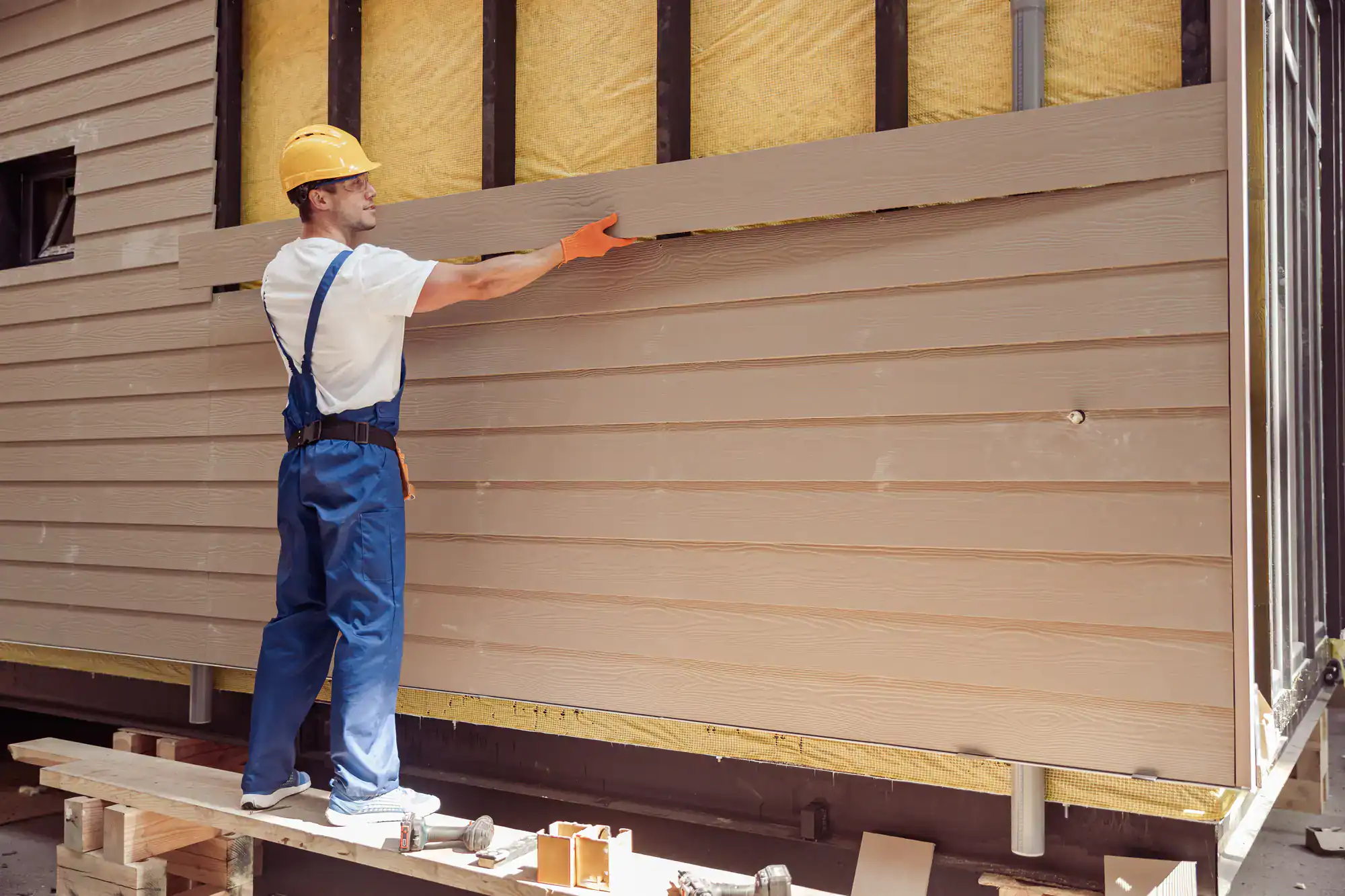
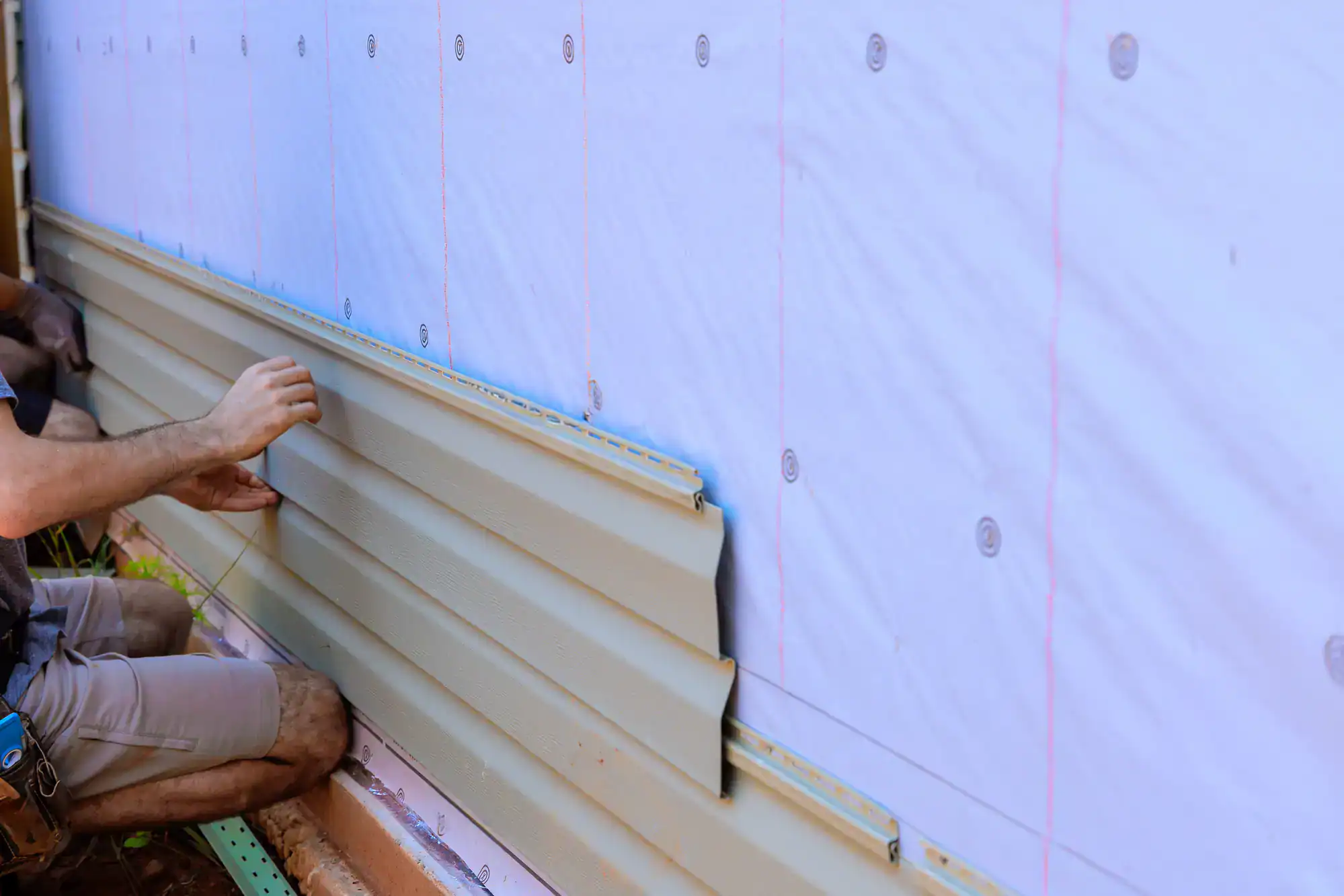
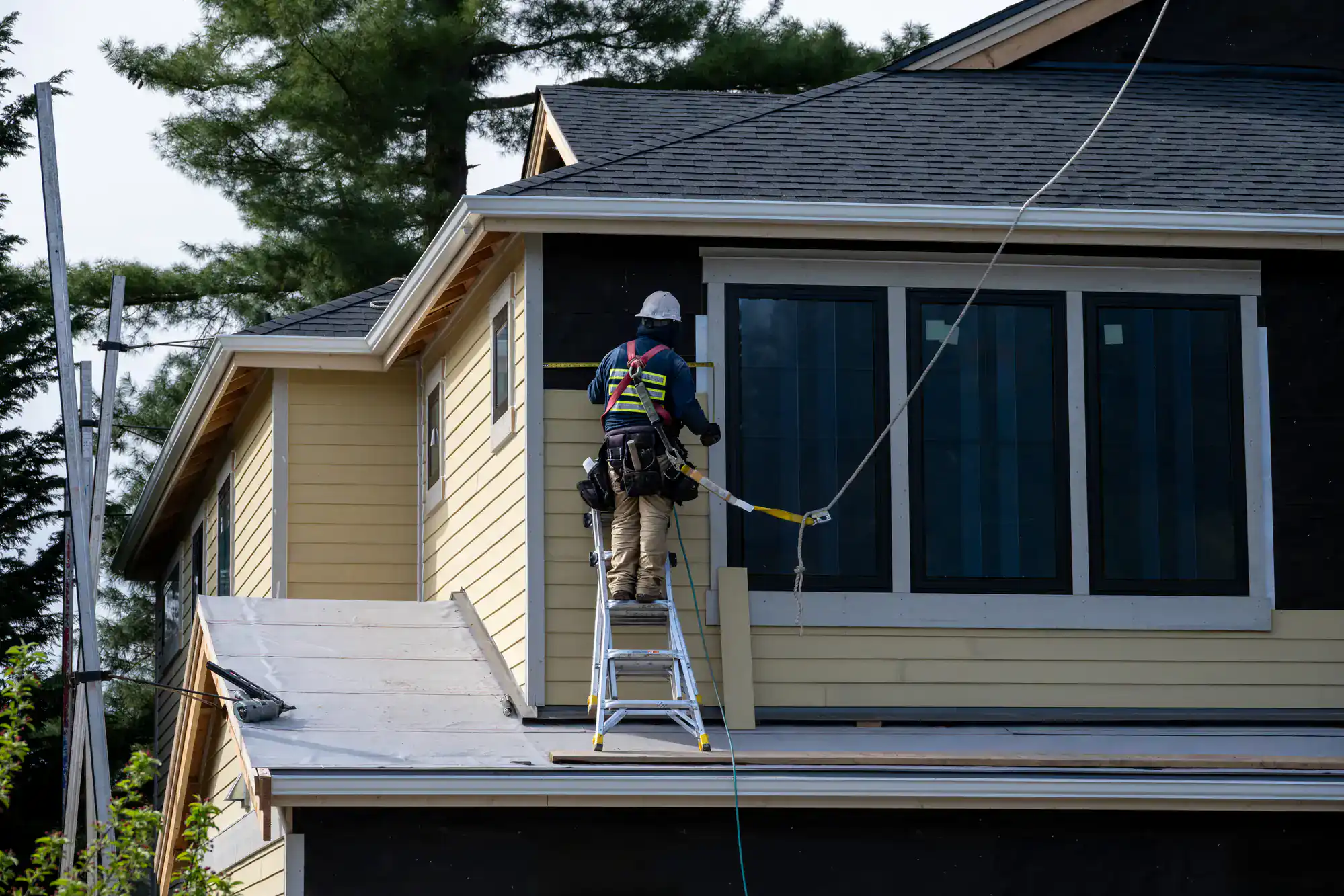
Installation follows a substrate-up process: moisture barrier first, proper nailing technique with correct expansion gaps, fully sealed penetrations at every window and trim intersection. In a climate with the freeze-thaw cycling that northwestern Essex County gets through winter and early spring, that sequence matters. Water that gets behind siding before a cold snap expands, forces panels apart, and turns a manageable repair into a much bigger project. The work is done in the right order so that doesn’t happen.
Ready to get started?
Request a callback

We install and repair all major siding types vinyl, fiber cement, wood, composite, board and batten, and aluminum. The right material for your home depends on your exposure, your budget, and what you want the home to look like long-term. For most homes in North Caldwell, fiber cement is worth a serious look. It handles freeze-thaw cycling better than vinyl, resists moisture absorption more effectively, and holds up well on the kind of elevated, wooded lots that define this borough. It also carries strong resale value in a market where buyers are paying close attention to what they’re getting.
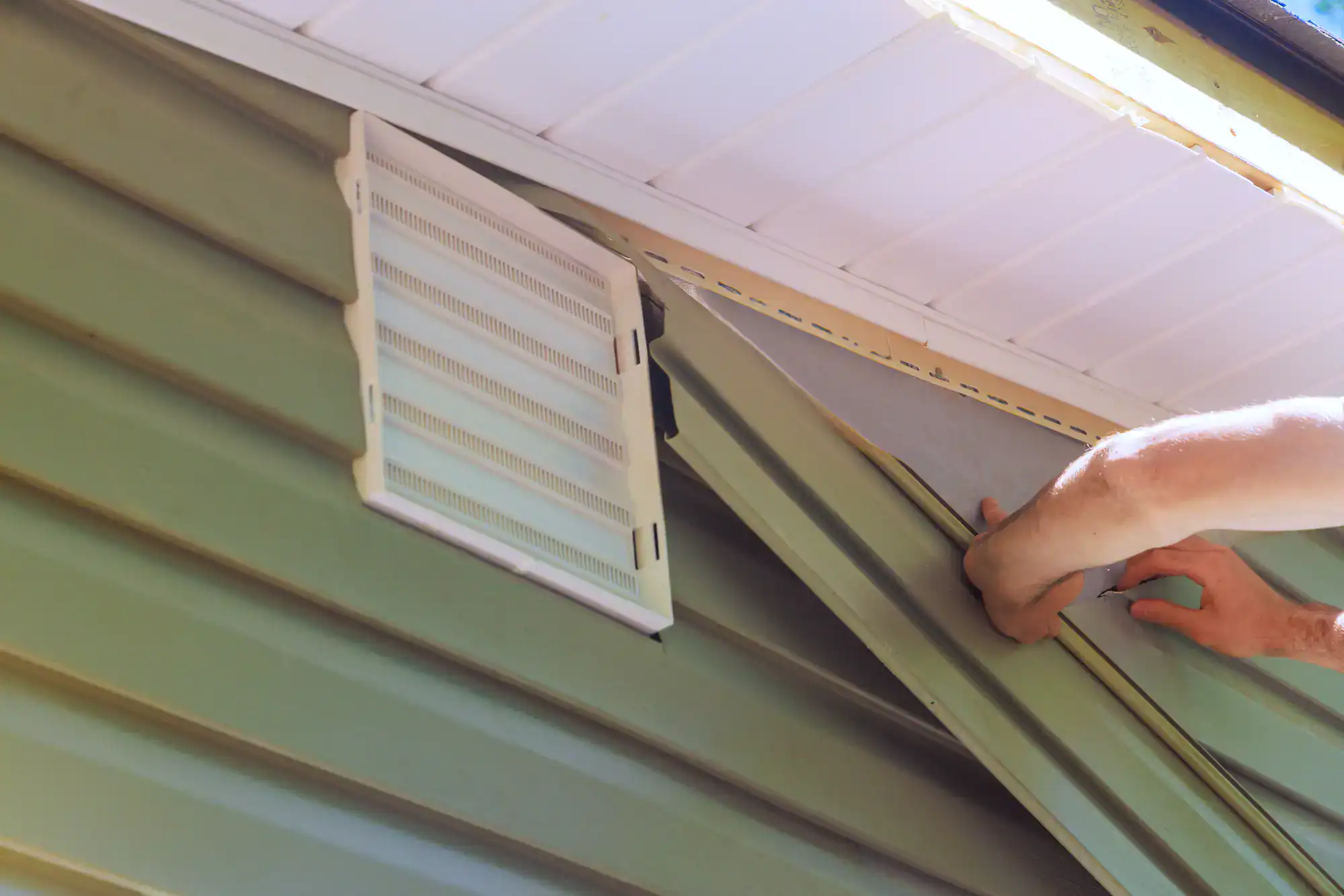
Vinyl remains a solid, cost-effective option when it’s the right fit and we install it properly, which means accounting for thermal expansion, using the correct fastening method, and not cutting corners on the trim and corner work that tends to fail first. The difference between a vinyl installation that lasts 30 years and one that starts showing problems in 10 is almost entirely in the installation process, not the material itself.
Beyond full replacement, we handle targeted siding repair isolated panel replacement, resealing around windows and penetrations, and addressing sections where moisture has gotten behind the wall. If your home only needs repair, that’s what you’ll get. The consultation is free, the assessment is honest, and the scope is set before any work begins.
In most cases, yes. Under the New Jersey Uniform Construction Code, replacing more than 25% of your home’s exterior wall siding requires a building permit through North Caldwell’s Building Department. That threshold covers the majority of full replacement projects. If you’re only addressing a small section a few damaged panels, for example it may fall under ordinary maintenance and not require a permit, but that determination depends on the scope and materials involved.
This matters more than it might seem at first. Unpermitted work shows up on title searches and can create complications when you go to sell. In a market where North Caldwell homes are transacting above $1 million, a permit issue flagged during a buyer’s due diligence can delay or derail a closing. We handle the permitting process as part of the project you don’t have to navigate the Building Department on your own.
For homes in North Caldwell and the surrounding northwestern Essex County area, fiber cement tends to perform best over the long run. The primary reason is freeze-thaw cycling. Through a typical North Caldwell winter, temperatures regularly cross the freezing threshold multiple times and any moisture that’s worked its way behind or into a siding panel will expand when it freezes. Vinyl handles this reasonably well when installed correctly, but it becomes brittle in sustained cold and is more vulnerable to impact damage during winter months. Fiber cement absorbs significantly less moisture and expands and contracts less dramatically with temperature swings.
Wood siding can work on the right home with the right maintenance commitment, but it demands more upkeep in a climate like this particularly on shaded, north-facing elevations where moisture lingers. If you’re doing a full replacement and planning to stay in the home for the next 15 to 20 years, fiber cement is usually the most durable choice for this specific climate and terrain. It’s also the material that tends to return the strongest value at resale in high-value markets like North Caldwell.
The surface is usually the last place to look. Cracked or warped panels, fading, and visible gaps are signs something is wrong but the more important question is what’s happening behind the siding. In older North Caldwell homes, particularly those built in the 1950s through 1980s that make up a large portion of the borough’s housing stock, the original moisture barrier (or lack of one) may have degraded long before the siding itself started showing visible wear.
A proper assessment looks at the substrate the sheathing beneath the siding for signs of rot, moisture damage, or mold. If the substrate is compromised, patching panels over it just delays the problem. If the substrate is sound and the damage is isolated, targeted repair is often the right call and a fraction of the cost of full replacement. The honest answer depends on what’s actually there, which is why our consultation starts with a full exterior inspection rather than a quote based on what you can see from the driveway.
For a standard single-family home in North Caldwell, a full siding replacement typically takes between three and seven days of active work, depending on the size of the home, the material being installed, and what we find once the old siding comes off. Fiber cement installation generally takes a bit longer than vinyl because of the weight of the material and the additional care required at seams and penetrations but the timeline difference is usually measured in one or two days, not weeks.
Weather is a real factor in this area. Vinyl siding installation below 40°F is not recommended the material becomes brittle and can crack during handling. That makes late fall and winter scheduling more variable in North Caldwell than in warmer climates. Spring and fall are typically the best windows for scheduling a full replacement project here. If you’re planning ahead, getting on the schedule before peak season fills up usually by mid-spring gives you the most flexibility on timing.
The return on siding replacement is consistently strong, and it gets more meaningful as home values rise. Fiber cement siding replacement returns approximately 87% at resale nationally meaning a $30,000 project adds roughly $26,000 in home value. Vinyl siding replacement runs in a similar range, returning 80% or more in most markets. In a market like North Caldwell, where median home values are above $1.1 million and buyers are conducting thorough due diligence before committing, the condition of the exterior carries real weight in the transaction.
Beyond resale, there’s a more immediate financial argument: failed siding on a home of this value can allow water infiltration that causes rot, mold, and structural damage that costs far more to remediate than a proper installation would have cost upfront. The ROI on quality siding isn’t just about what you get at closing it’s also about avoiding the repair bills that come from putting the project off.
New Jersey requires all home improvement contractors to be registered with the Division of Consumer Affairs under the Home Improvement Contractor Business (HICB) program. You can verify any contractor’s license status directly at the NJ Division of Consumer Affairs website it takes about a minute. Enter the contractor’s name or license number and you’ll see whether they’re active, lapsed, or have any disciplinary history on record. Our license number is 13VH09838700, and it’s active and verifiable.
Beyond the state license, it’s worth checking whether the contractor carries general liability insurance and workers’ compensation coverage. In 2024, New Jersey updated its contractor licensing law to add new compliance bond and workers’ compensation requirements so a license that was valid before those changes may not fully meet current standards. Asking for a certificate of insurance before work begins protects you from liability if something goes wrong on your property. A contractor who hesitates to provide that documentation is a contractor worth walking away from.
Other Services we provide in North Caldwell