
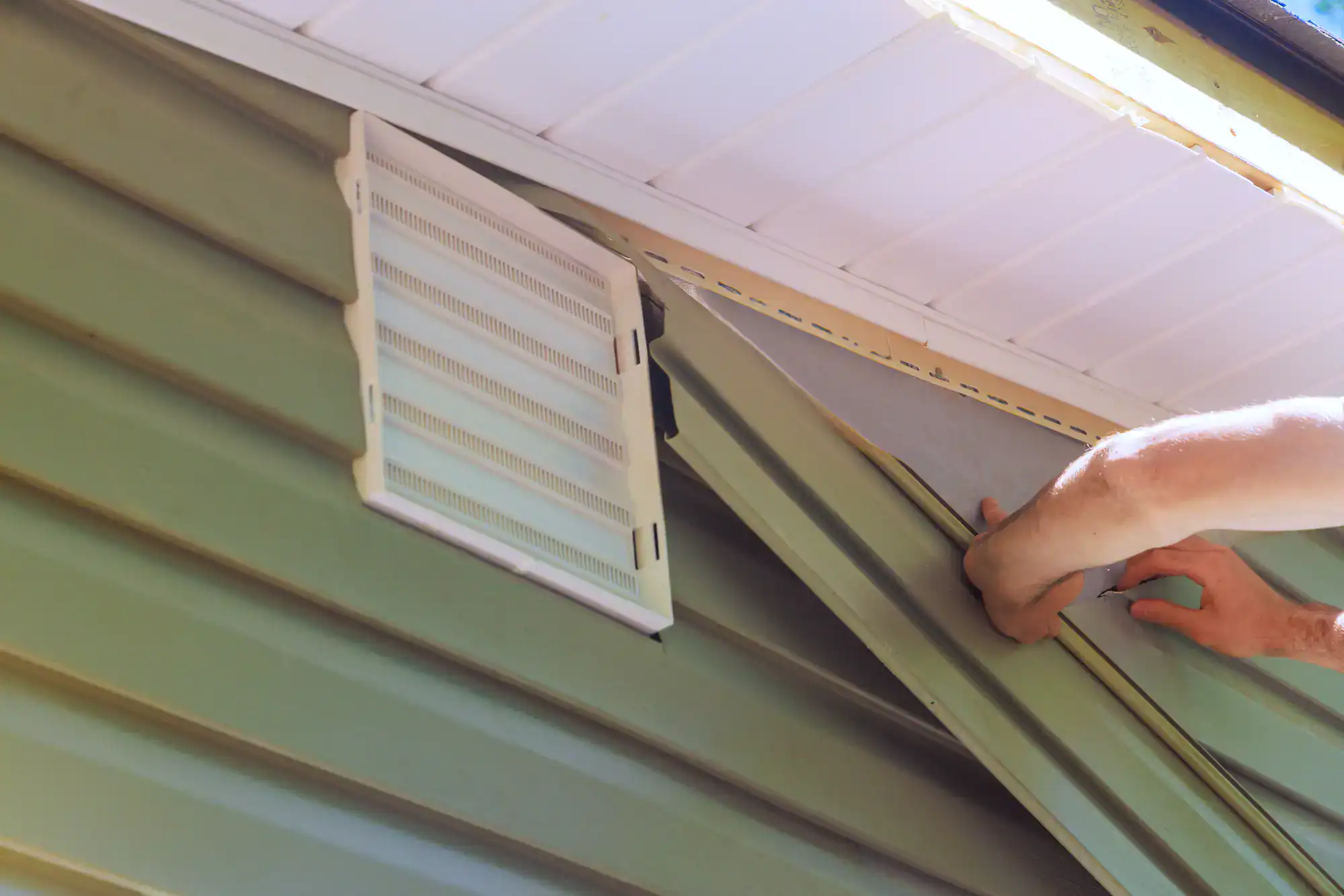
When siding fails on a home that’s been standing since the 1950s, it rarely fails all at once. It happens slowly a warped panel here, a soft spot behind the trim there, a seam that lets water in a little more each winter. By the time it’s obvious, the damage usually goes deeper than the surface. Getting ahead of that is exactly what a proper siding replacement does for your home.
Pleasantdale sits right at the base of the Second Watchung Mountain, where the elevation drop along I-280 creates real freeze-thaw pressure on exterior surfaces every single winter. Water gets into micro-cracks during warmer stretches, freezes, expands, and widens those gaps over time. Add the moisture that rolls off the South Mountain Reservation to the west, and western-facing homes here take a harder beating than most homeowners realize until they pull back the old panels.
Done right, new siding stops that cycle completely. Your walls stay dry, your insulation performs the way it’s supposed to, and the home holds its value which matters a lot when the median real estate price in Pleasantdale sits above $858,000. This isn’t a cosmetic upgrade. It’s structural protection for one of the most significant assets you own.
We’re a family-owned contracting company based in northern New Jersey, serving homeowners across Essex County since 2018. We hold NJ Home Improvement Contractor Business license number 13VH09838700 verifiable right now on the NJ Division of Consumer Affairs website. We’re BBB Accredited as of January 2025 and a GAF Preferred Contractor. These aren’t just badges. They’re the result of meeting specific standards that a lot of contractors in this area simply haven’t bothered with.
What that means for you as a Pleasantdale homeowner is straightforward: you’re hiring someone accountable. Someone whose name is attached to the work, whose insurance is current, and who has a documented track record of getting the job done without drama. We cover siding, roofing, gutters, chimney, and masonry so if your home near Eagle Rock Avenue needs more than one thing addressed, you’re not coordinating three separate contractors. One call, one crew, one point of contact.
It starts with a free consultation no cost, no obligation, no pressure to commit on the spot. Someone from our team comes out, looks at the actual condition of your siding, and gives you an honest read on what’s going on. If repair is the right call, that’s what you’ll hear. If replacement makes more sense given the age and condition of the home, that gets explained clearly with the reasoning behind it.
Once the scope is agreed on, we handle the permitting process through the West Orange Township Building Department. Most homeowners don’t realize that any siding replacement covering 25% or more of the exterior surface requires a permit in West Orange and skipping that step can mean fines, Stop Work Orders, or complications when you eventually sell. We know the threshold, know the process, and take that off your plate entirely.
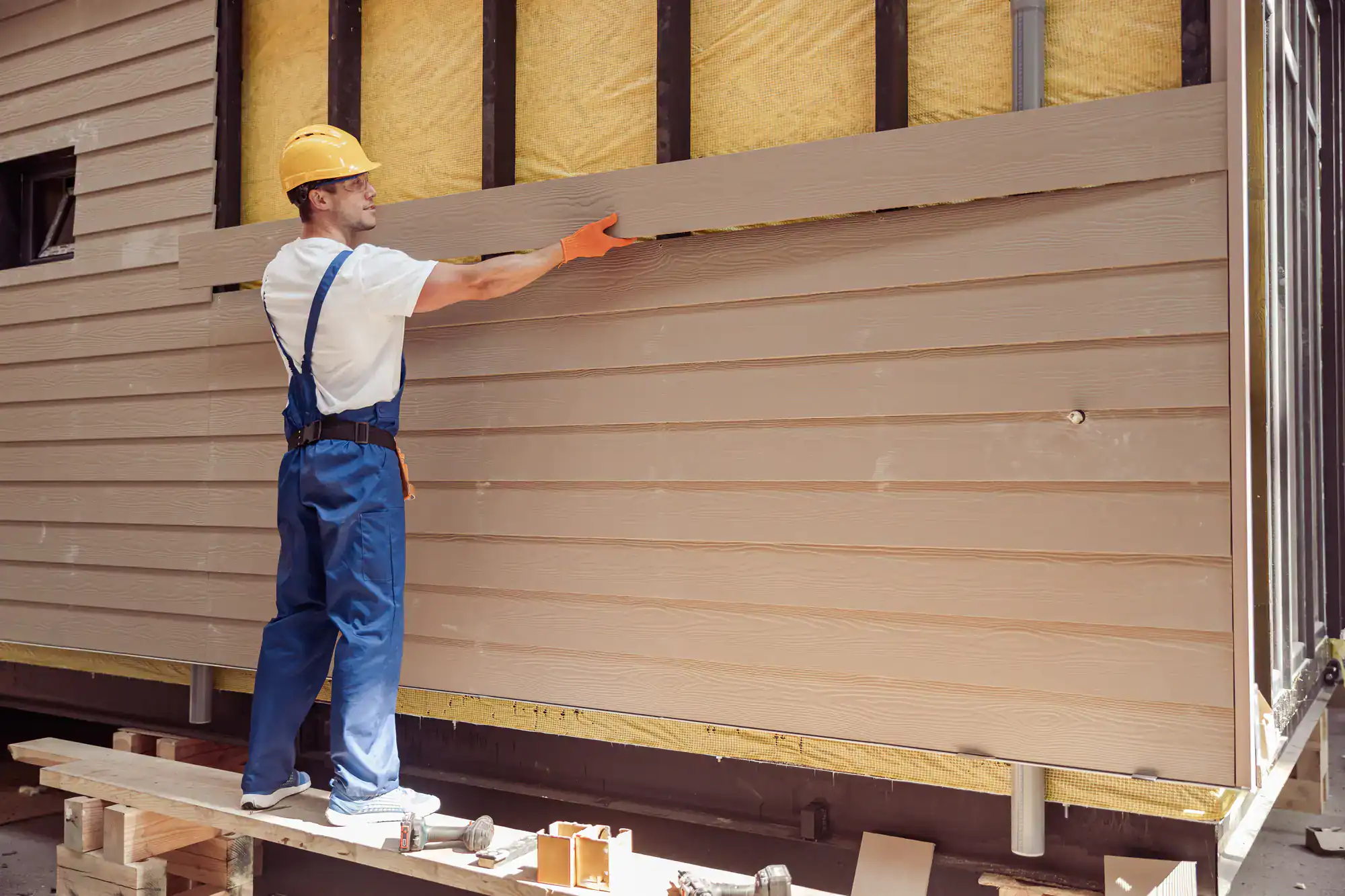
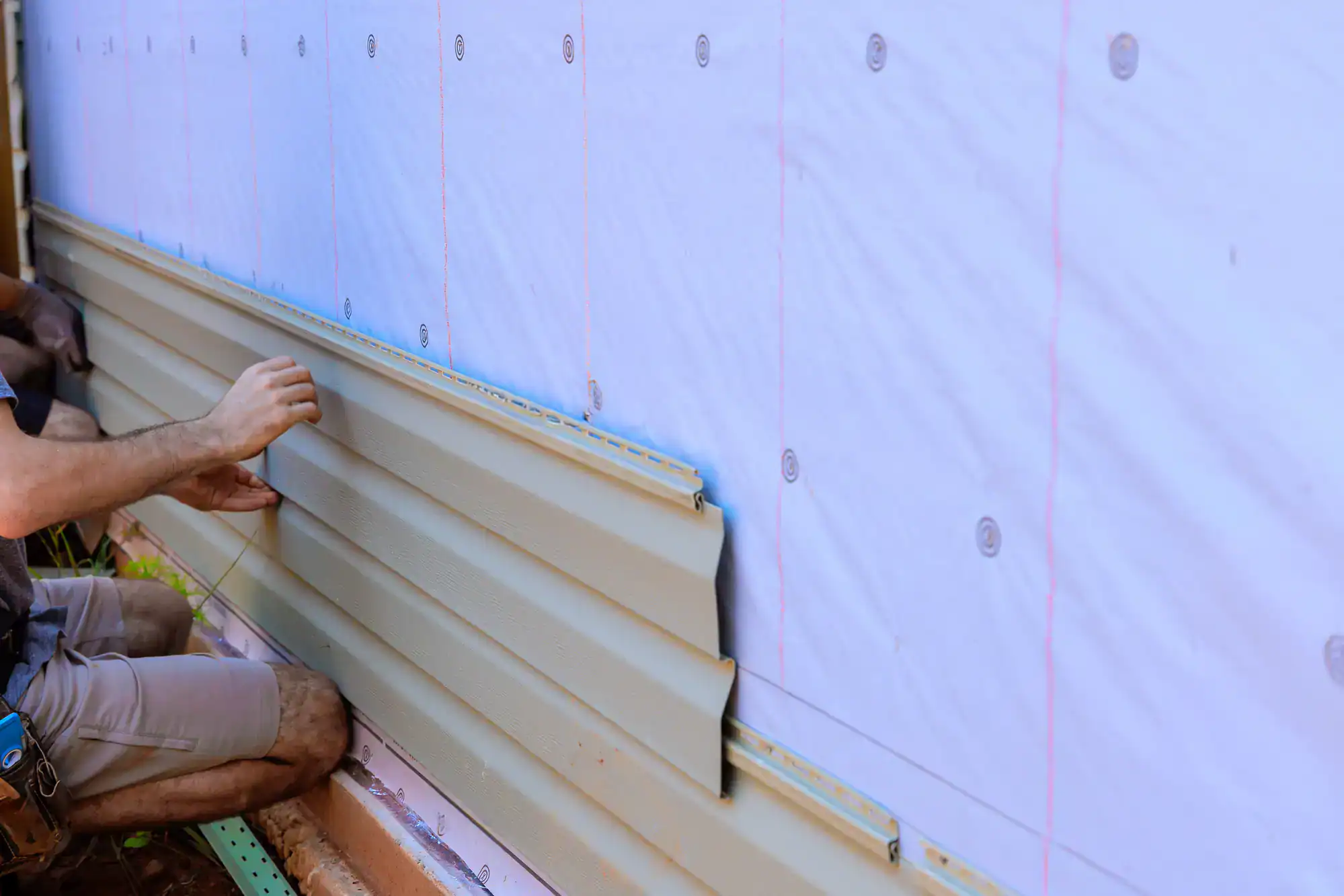
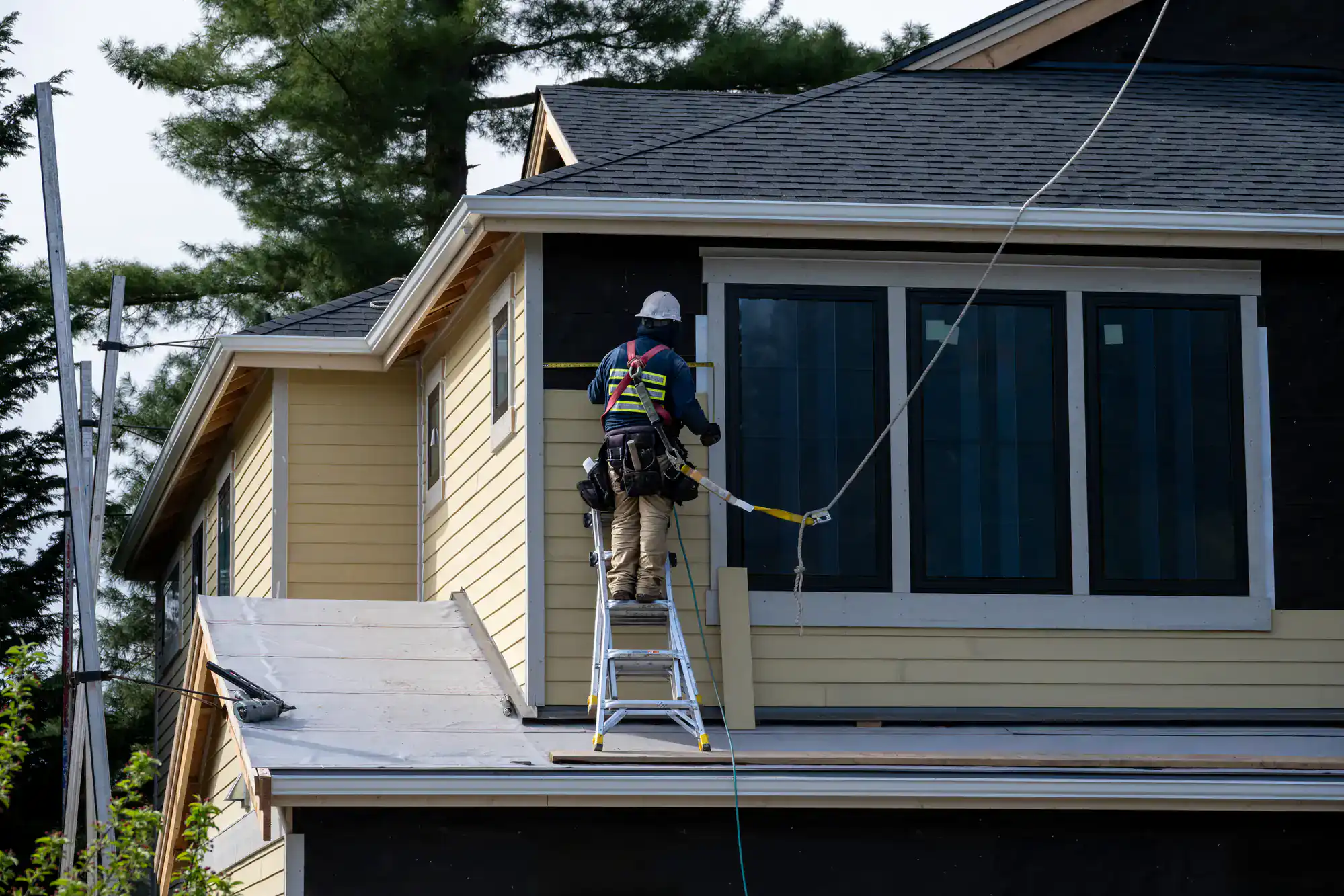
Installation itself starts with a full tear-off and substrate inspection. On homes built in the 1940s through 1960s which describes most of Pleasantdale that inspection step is critical. Original sheathing, missing or degraded moisture barriers, and framing that’s absorbed decades of moisture all need to be assessed before anything new goes up. From there, new panels go on correctly, trim is finished cleanly, and the site is left the way it was found. You get a written warranty covering both materials and workmanship before the crew leaves.
Ready to get started?
Request a callback

Every siding project we start with a real inspection not a quick visual from the driveway, but an actual assessment of the substrate, moisture barrier condition, and any structural issues hiding behind the existing panels. For older Pleasantdale homes, that step alone can save you from a siding job that looks fine on the outside but traps moisture against deteriorating sheathing underneath.
On the material side, we work with vinyl and fiber cement the two materials that make the most sense for this climate and this housing stock. Vinyl holds up well against the freeze-thaw cycling that comes with Pleasantdale’s elevation and winter conditions, and it’s the most cost-effective option for full-home replacement. Fiber cement is the stronger long-term investment: it handles moisture, impact, and temperature swings better than vinyl, and it returns roughly 87% of its cost at resale according to the 2024 Cost vs. Value Report. For a home worth over $850,000, that math is worth considering.
We also handle siding repair for homeowners who don’t need a full replacement storm damage, isolated panel failure, or sections that took a hit from a nor’easter. If the rest of the exterior is sound, there’s no reason to replace everything. That’s the kind of honest assessment you get from a contractor who’s more interested in a long-term relationship than a single large invoice.
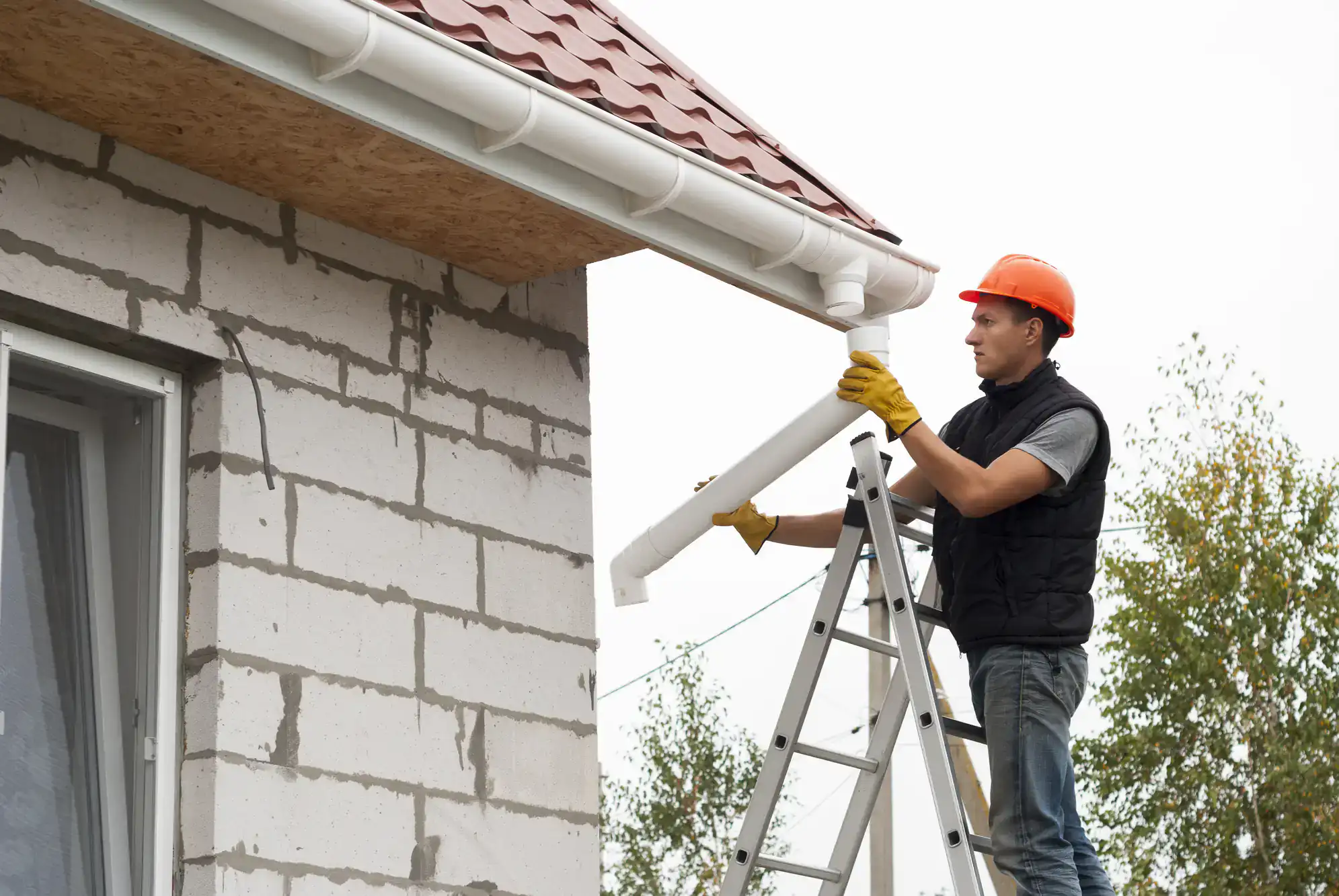
The rule in West Orange is specific: if the siding replacement covers less than 25% of your home’s total exterior surface, it qualifies as ordinary repair and no permit is required. But if you’re doing a full-home replacement which most Pleasantdale homeowners are when they call us that crosses the threshold and a building permit is required through the West Orange Township Building Department on Main Street.
This matters more than most people realize. Unpermitted work doesn’t just risk a fine during the project it can create real problems when you go to sell the home. Buyers’ attorneys and inspectors look for this, and an unpermitted exterior job on a home worth $850,000-plus is not a small issue. We manage the permit process as part of every qualifying project, so you’re not left navigating the Building Department on your own or finding out after the fact that something wasn’t done by the book.
The honest answer is that it depends on what’s happening behind the panels, not just what you can see from the street. Surface cracking, fading, and a few loose sections might be repairable. But if the sheathing underneath has absorbed moisture over multiple winters which is common in Pleasantdale homes built in the 1940s and 1950s patching the surface doesn’t solve the underlying problem.
The clearest signs that replacement makes more sense than repair are widespread warping or buckling across multiple sections, soft spots when you press against the wall, visible mold or mildew that keeps coming back, or siding that was installed more than 25 to 30 years ago and has never been replaced. A free consultation with us will give you a straight answer on this including an honest assessment of what’s going on at the substrate level, not just the surface. If repair is genuinely the right call, that’s what you’ll hear.
Both vinyl and fiber cement perform well in New Jersey’s climate, but they perform differently and the right choice depends on your priorities. Vinyl is more flexible, which actually works in its favor during freeze-thaw cycles. It expands and contracts without cracking as readily as harder materials. It’s also the more budget-friendly option for a full-home replacement, and modern vinyl looks significantly better than the vinyl of 20 years ago.
Fiber cement is the more durable long-term choice. It handles moisture, impact, and temperature swings better than vinyl, it doesn’t warp or buckle under direct sun exposure, and it holds paint longer. For homes on the western side of Pleasantdale that face the South Mountain Reservation where moisture exposure is higher due to the wooded hillside fiber cement’s resistance to mold and moisture infiltration is a real advantage. It costs more upfront, but the 2024 Cost vs. Value data puts its resale return at approximately 87%, which makes it a financially sound choice for a home at Pleasantdale’s price point.
For a typical single-family home in Pleasantdale, a full siding replacement generally takes between three and seven days of active work, depending on the size of the home, the material being installed, and what’s found during the substrate inspection. Homes built in the 1940s and 1950s sometimes reveal additional work once the old siding comes off deteriorated sheathing, failed moisture barriers, or areas of rot that need to be addressed before new panels go up. That can add time, but it’s work that needs to happen regardless.
Weather is also a factor worth planning around. Vinyl siding installation becomes problematic below 40°F because the panels get brittle and can crack during handling. Spring and fall are the strongest installation windows in this area mild temperatures, manageable moisture levels, and enough daylight to work efficiently. If you’re planning a project, getting the consultation done in late winter puts you in a good position to start as soon as conditions allow, before the spring backlog builds up.
Essex County nor’easters can pull panels off, drive water behind seams, and leave sections of a home’s exterior genuinely exposed and when that happens, waiting isn’t a good option. Moisture that gets behind siding and into the sheathing doesn’t dry out on its own, especially in late fall or winter when temperatures stay low. What starts as a manageable repair can turn into rot, mold, and eventually structural damage if it sits too long.
We offer emergency siding services for exactly this situation. The goal in an emergency response is to stop the exposure first temporarily or permanently and then assess the full scope of what needs to be done. If the damage is isolated to a section that took a direct hit, a targeted repair may be all that’s needed. If the storm revealed that the surrounding siding was already compromised, that conversation happens honestly and upfront, not after the work has started. Either way, you get a clear picture of what’s going on and what it will take to fix it before anything is agreed to.
The most reliable filter is credentials you can verify independently, not just claims on a website. In New Jersey, every legitimate home improvement contractor is required to hold an active HICB registration through the NJ Division of Consumer Affairs and you can search that database yourself in about 60 seconds. Our license number is 13VH09838700. Look it up before you call if you want to. That’s exactly the kind of transparency that separates accountable contractors from the ones who disappear after the deposit clears.
Beyond licensing, look for BBB accreditation, manufacturer certifications like GAF Preferred Contractor status, and a review history that goes back more than a year or two. Volume matters, but so does consistency a contractor with 190-plus reviews built steadily since 2018 tells a different story than one with 40 reviews posted in the last three months. For a Pleasantdale homeowner protecting a home worth over $850,000, the contractor you hire should be someone whose name and reputation are genuinely on the line. That’s the standard we hold ourselves to on every project in this area.
Other Services we provide in Pleasantdale