
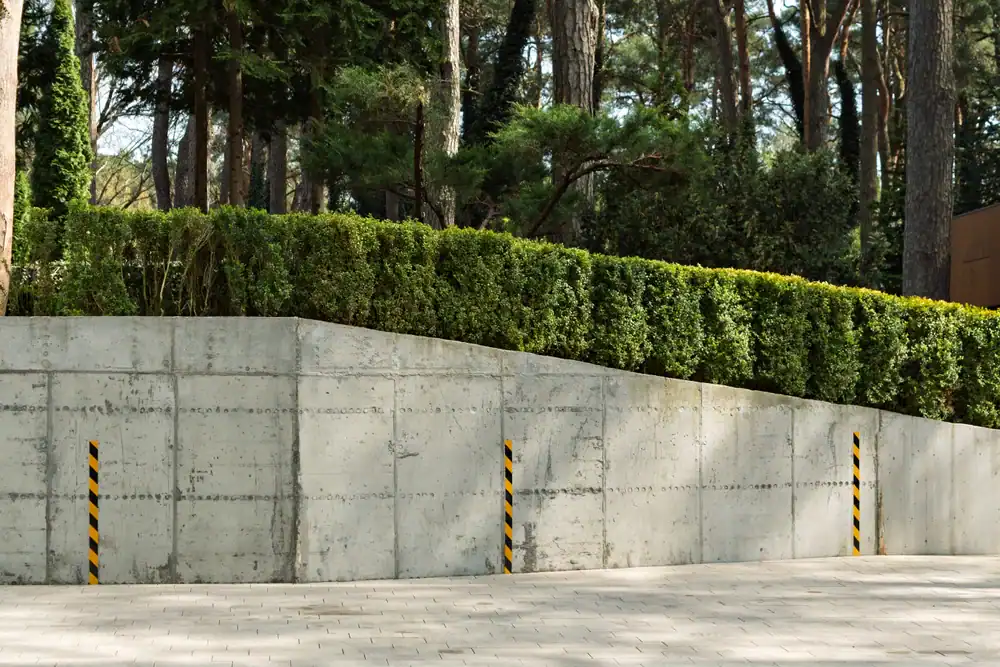

A retaining wall isn’t just stacked blocks. It’s engineered soil retention that stops erosion during heavy rains, redirects water away from your foundation, and prevents thousands in potential damage to your home, walkways, and landscaping.
In Livingston’s hilly terrain, water doesn’t just sit—it moves. Without proper drainage and structural support, you’re looking at leaning walls, cracked driveways, and soil washing into places it shouldn’t be. A well-designed concrete retaining wall blocks that cycle entirely.
You also get functional outdoor space. Level areas for patios, gardens, or just a flat yard where your kids can play. And when it’s done right with quality materials and proper permits, you’re adding real value to your property—the kind that shows up in appraisals and buyer interest.
We’ve been handling exterior projects across New Jersey for years—roofing, masonry, siding, and everything in between. We’re not a one-trick company that only does walls. We understand how your entire property works together.
In Livingston specifically, we’ve seen what happens when walls are built without proper drainage or permits. We’ve repaired plenty of DIY disasters and aging wood structures that couldn’t handle the soil pressure. Our approach is straightforward: assess your property’s grade and drainage, design a wall that actually works, pull the necessary permits, and install it correctly the first time.
No hidden charges. No surprises halfway through. You get a free estimate upfront, and we stick to it.

First, we come out to assess your property. We’re looking at slope, soil type, water flow patterns, and what’s actually causing the erosion or drainage issue. This isn’t a quick glance—it’s the foundation of whether your wall will hold up or fail in five years.
Next, we design the wall based on what your property needs, not just what looks good. That includes selecting the right materials—concrete retaining wall blocks, natural stone, or interlocking pavers—and planning the drainage system. Most wall failures happen because water pressure builds up behind the wall. We prevent that with proper gravel backfill and drainage pipes.
Then we handle permits. In New Jersey, walls over four feet typically require permits and engineered plans. We take care of that process so you’re not dealing with township offices or code violations down the road.
Installation starts with excavation and a compacted gravel base. Every course of block gets leveled and set correctly. Drainage goes in as we build, not as an afterthought. Once the wall is up, we backfill properly and finish the top course. You’re left with a structure that’s engineered to handle soil pressure and water flow for decades.

Ready to get started?
You’re getting a full site assessment and custom design based on your property’s specific grade and drainage needs. We don’t use cookie-cutter plans. Livingston’s terrain varies significantly from property to property, especially in areas with steeper slopes or properties near the Watchung Mountains.
Material selection matters. We’ll walk you through options—concrete blocks for durability and cost-effectiveness, natural stone for aesthetics, or segmental retaining wall systems that offer both. Each has different structural capabilities and maintenance requirements. We match the material to your soil conditions and the wall’s height.
Drainage systems are non-negotiable. Every wall we build includes proper backfill, gravel, and perforated drainage pipes. This is what keeps water from building up behind the wall and causing it to lean or crack. It’s also what most DIY projects and cheaper contractors skip.
Permits and code compliance are handled entirely by us. We know Essex County’s requirements and work directly with Livingston Township to ensure everything is approved before we break ground. You won’t get a violation notice or have to tear anything down later.

Cost depends on wall height, length, material choice, and site conditions. A basic concrete block retaining wall typically runs between $25-$45 per square foot installed. Natural stone costs more, usually $50-$100+ per square foot. Taller walls requiring engineering and permits add to the cost.
In Livingston, site access and soil conditions affect pricing too. If we need to bring equipment through tight spaces or deal with rocky soil, that adds labor time. Drainage systems, which are essential, add roughly $10-$15 per linear foot but prevent much more expensive failures later.
We provide free estimates that break down all costs upfront. No hidden fees for permits, drainage, or “unexpected” site conditions. You’ll know exactly what you’re paying before we start.
Yes, if your wall is over four feet tall, you’ll need a permit from Livingston Township. Walls under four feet typically don’t require permits, but there are exceptions if the wall is near a property line or supporting a significant load.
The permit process involves submitting plans and sometimes engineered drawings, especially for taller walls. Essex County has specific requirements about setbacks, drainage, and structural design. We handle this entire process as part of our service.
Skipping permits might seem easier, but it creates problems when you sell your property or if a neighbor complains. Unpermitted work can result in fines and requirements to tear down and rebuild the wall correctly. It’s not worth the risk or the eventual cost.
Poor drainage is the number one cause. Water builds up behind the wall, creating hydrostatic pressure that pushes the wall outward. Even a well-built wall will fail without proper drainage pipes and gravel backfill.
Inadequate foundation is the second most common issue. If the base isn’t excavated deep enough or the gravel base isn’t compacted properly, the wall will settle unevenly and start to lean. This is especially common with DIY installations.
Wrong materials for the wall height also cause failures. A three-foot wall needs different structural support than a six-foot wall. Using standard concrete blocks without reinforcement on a tall wall is asking for problems. Material choice has to match the engineering requirements, not just the budget.
Sometimes, but it depends on how far gone it is. If the wall is showing small cracks or a slight lean, we can often reinforce it, improve drainage, and stabilize it before it gets worse. Early intervention saves money.
If the wall is significantly bowed, has large cracks, or sections are collapsing, rebuilding is usually the better option. Trying to patch a structurally compromised wall is throwing money at a temporary fix. You’ll end up rebuilding anyway, plus dealing with whatever damage the failing wall causes in the meantime.
We’ll assess your wall honestly and tell you whether repair makes sense or if you’re better off replacing it. Some older wood retaining walls in Livingston have simply reached the end of their lifespan. Wood rots, especially with moisture and poor drainage. Replacing with concrete or stone gives you decades more life.
Concrete retaining wall blocks are the most popular choice for good reason. They’re durable, cost-effective, and handle New Jersey’s freeze-thaw cycles well. Segmental retaining wall (SRW) systems are engineered specifically for structural loads and come in various colors and textures.
Natural stone looks great and lasts forever, but it costs significantly more and requires skilled installation. If aesthetics are your priority and budget isn’t a constraint, stone is hard to beat. It also complements Livingston’s upscale properties well.
Avoid wood unless you’re building a very short garden wall. Wood retaining walls rot, especially in contact with soil and moisture. They might last 10-15 years if treated, but concrete and stone will outlast them by decades. For anything structural or over two feet tall, stick with masonry materials.
A typical residential retaining wall takes anywhere from three days to two weeks, depending on size and complexity. A simple 20-foot wall that’s three feet tall might be done in three to five days. Longer walls, taller walls, or projects requiring significant excavation take longer.
Permit approval adds time before we start—usually one to three weeks depending on Livingston Township’s review schedule. We factor that into the timeline when we give you an estimate. Weather also plays a role, especially if we’re excavating and pouring bases.
We’ll give you a realistic timeline upfront and keep you updated throughout the project. Most delays come from unexpected site conditions—hitting ledge rock, discovering underground utilities, or dealing with worse drainage issues than initially visible. We work through those efficiently, but they can add days to the schedule.
Other Services we provide in Livingston