
The moment water finds a way in, the clock starts. It moves from the shingles to the underlayment, then into the decking, insulation, drywall, and eventually your floors. By the time you see a stain on the ceiling, the damage above it is usually worse than what’s visible. Getting it handled fast and handled correctly is the difference between a repair bill and a renovation.
Most homes in Lake Hiawatha were built in the 1950s and 1960s, many of them originally designed as seasonal bungalows along what was once the lake shoreline. Those homes have been expanded, modified, and re-roofed over decades, which means complex roof geometries, aging flashing at chimney intersections, and underlayment that was never designed to last this long. A ranch home on Wenonah Avenue or a Cape on Knoll Road has different vulnerabilities than a newer build and diagnosing the real source of a leak on that kind of structure takes someone who actually understands what they’re looking at.
Once the repair is done right, you get your home back. No more buckets, no more stress every time the forecast shows rain, no more wondering whether your ceiling is going to hold through another nor’easter.
We’re a family-owned general contracting company founded in 2018 and serving homeowners across northern New Jersey, including Morris County communities like Lake Hiawatha. We’re BBB Accredited and hold GAF Preferred Contractor status both verifiable credentials that matter in a market where storm-chasing contractors show up after every major weather event and disappear just as fast.
Every job is backed by a full warranty, and every project starts with a free consultation. There are no hidden charges, no pressure to buy more than you need, and no mystery about what the work actually costs before it starts. Our NJ Division of Consumer Affairs registration #13VH09838700 is on file and publicly checkable because in New Jersey, that registration is required, and not every contractor bothers.
For a community like Lake Hiawatha where nearly 40% of residents were born outside the United States and where educated homeowners do their homework before hiring anyone that kind of transparency isn’t just appreciated. It’s expected.
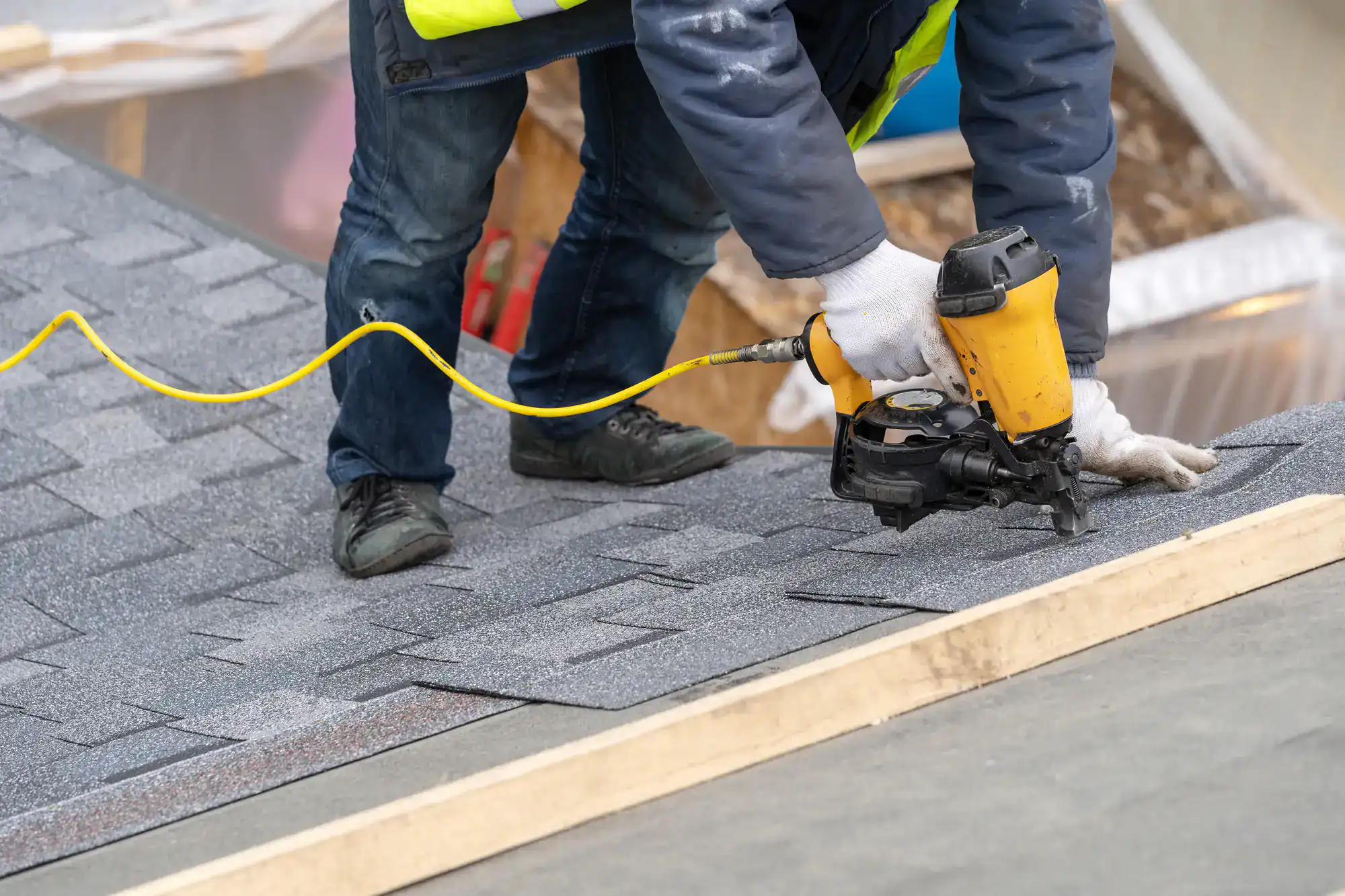
It starts with a call. Whether you’re dealing with an active leak, missing shingles after a storm, or something you spotted during a routine check, we respond quickly and that speed matters in Lake Hiawatha, where a damaged roof during a Rockaway River storm event isn’t a hypothetical. If your roof has been breached and more rain is coming, we get emergency tarping up first to stop the damage from spreading while a permanent repair is planned.
From there, the assessment is thorough. We look at the full picture not just the obvious damage, but the flashing, the valleys, the chimney intersections, and any areas where water could be traveling before it shows up inside. On the mid-century ranch and Cape-style homes common throughout Lake Hiawatha, that kind of complete diagnostic is especially important because leaks rarely originate exactly where they appear.
Once the scope is clear, you get a written estimate with transparent pricing before any work begins. If the repair involves structural decking or anything beyond a standard re-cover, we’ll walk you through what’s needed from Parsippany-Troy Hills Township’s permitting process though most shingle repairs and re-covers don’t require a permit under Township ordinance. The repair gets done, the site gets cleaned up, and the work is backed by a full warranty.
Ready to get started?
Request a callback

We handle the full range of residential roof repair shingle repair, missing shingle replacement, roof leak patching, flat roof repair, storm damage repair, and emergency roof tarping. For Lake Hiawatha homeowners, that breadth matters because the housing stock here doesn’t fit a single mold. You might have a 1960s ranch with a low-slope asphalt shingle roof, a Cape with dormers and complex valleys, or a home that’s been expanded twice with a flat roof section over an addition. Each of those requires a different approach, and we work across all of them.
Storm damage roof repair is a specific area where the process goes beyond just fixing shingles. After a major weather event and Lake Hiawatha has had its share, including the 2011 Hurricane Irene flooding that damaged homes throughout the lower Rockaway River corridor you may need professional documentation to support an insurance claim. Our assessment gives you a clear, written record of what was damaged and what caused it, which is exactly what insurance adjusters need.
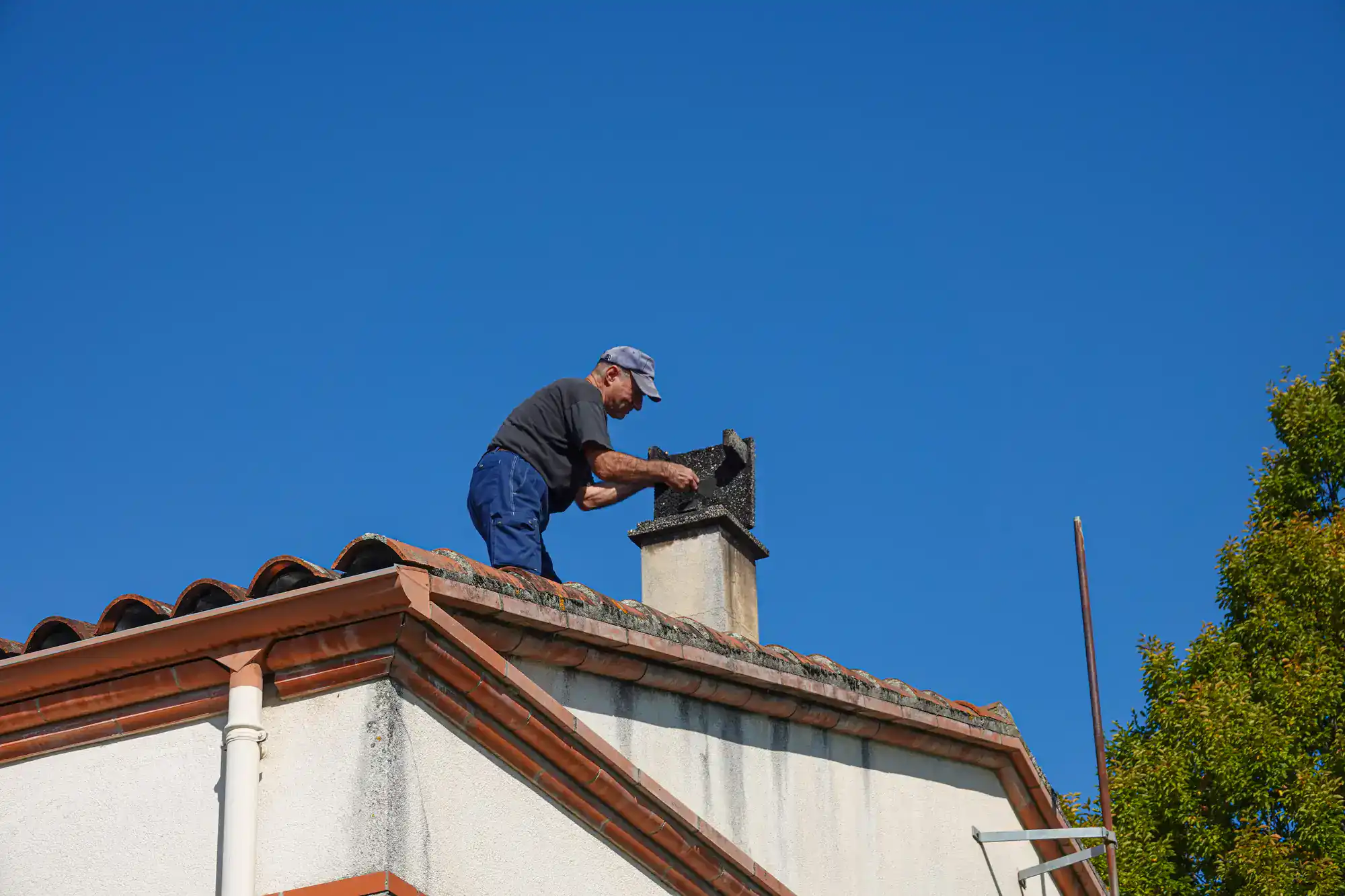
Because we also handle chimney repair, masonry, gutters, and siding, a roof leak that turns out to originate at a chimney crown or a failed gutter seam doesn’t require a second contractor. That kind of multi-trade capability saves time, eliminates finger-pointing between contractors, and gets your home fully sealed in a single project.
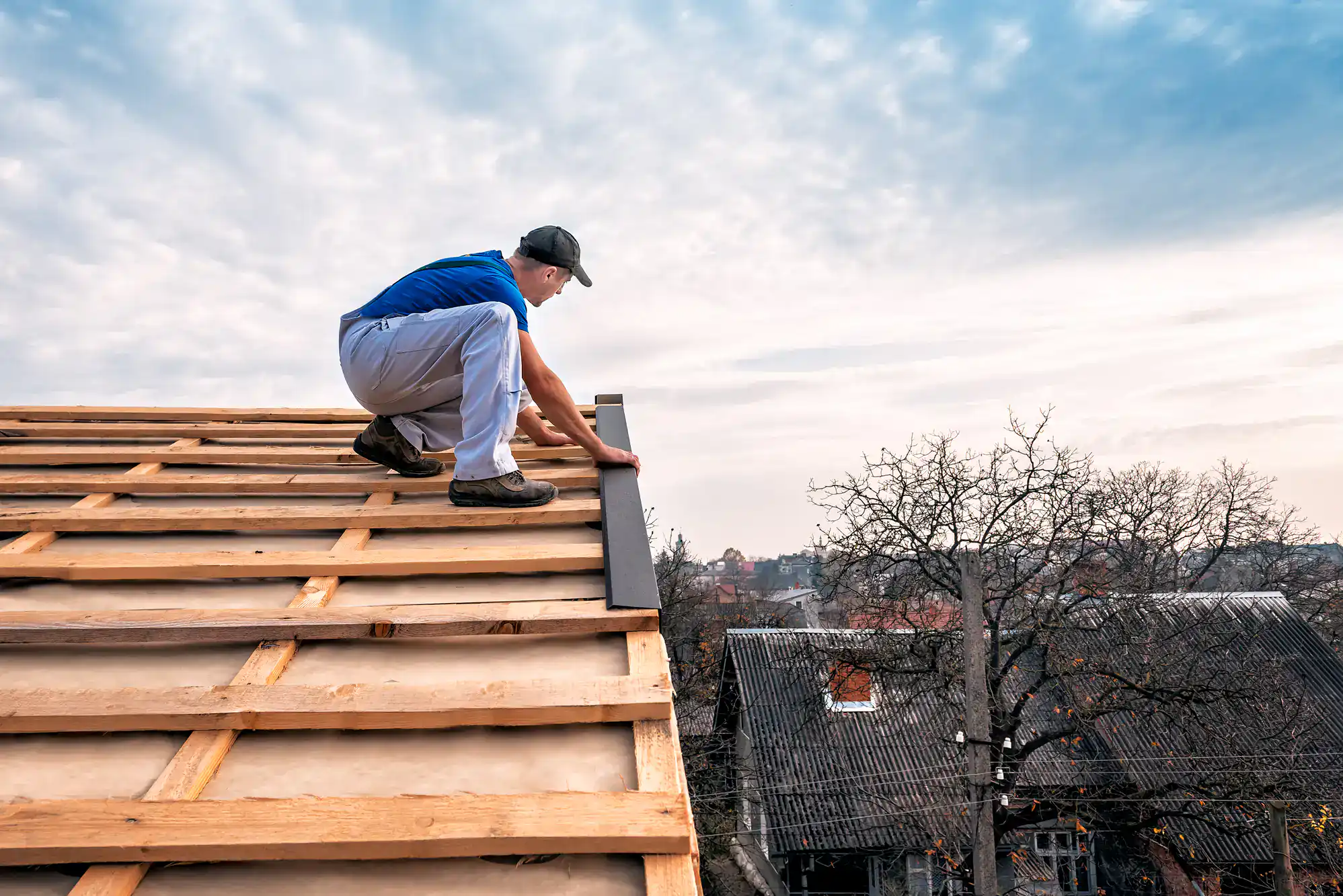
For most standard roof repairs and re-covers replacing shingles, patching a leak, or re-covering an existing flat roof section no permit is required under Parsippany-Troy Hills Township ordinance. That means work can start without waiting on a permit application, which matters when you’re dealing with an active leak or storm damage.
Where permits do come into play is when the repair involves structural work replacing damaged roof decking, making changes to the roof framing, or altering the type of roofing system. If that’s the case, the work falls under New Jersey’s Uniform Construction Code and requires inspection through the Township’s Division of Construction Code Inspection and Enforcement. We’ll tell you upfront whether your specific repair crosses that line, so there are no surprises about timeline or process.
One thing worth knowing: Parsippany-Troy Hills Township’s property maintenance code actually requires homeowners to keep their roofs in a condition that prevents water from entering the structure. A roof that’s actively leaking isn’t just a comfort issue it’s a code compliance matter. That’s worth keeping in mind if you’ve been putting off a repair.
The honest answer is that it depends on the age of the roof, the extent of the damage, and what’s underneath. A roof with localized damage a few missing shingles, a failed flashing seal, a small leak at a chimney intersection is often a strong candidate for repair, especially if the rest of the system is still in reasonable condition. Repair makes financial sense when the damage is isolated and the underlying structure is sound.
Where it gets more complicated is with the older homes throughout Lake Hiawatha. A ranch home built in the early 1960s that’s on its second or third roof may have layers of material, aged underlayment, and decking that’s been absorbing moisture for years. In that case, patching the visible damage without addressing what’s underneath can be a short-term fix that leads to another call in 12 months. Our free consultation is specifically designed to give you an honest read on which situation you’re actually in repair or replace without any pressure toward the more expensive option.
First, protect the interior. Move furniture, electronics, and valuables away from the affected area and put down buckets or towels to manage water coming in. If you can safely access your attic, check whether the leak is localized or spreading that information is useful when you call a contractor. Do not attempt to get on the roof yourself during active weather.
Then call for emergency roof repair as soon as possible. In Lake Hiawatha, where storms can come through quickly and hard especially in the lower sections of the community near the Rockaway River the window between a manageable repair and significant interior damage can be short. We provide emergency tarping services that stop water intrusion immediately, buying time for a permanent repair once conditions are safe. The tarp is not a cosmetic fix it’s a functional barrier that protects your insulation, drywall, and structural framing from continued exposure while the real repair is scheduled.
Document everything before any work begins if you plan to file an insurance claim. Photos of the interior damage, the roof surface if accessible, and any visible exterior damage will support your claim.
In New Jersey, homeowners insurance typically covers roof damage caused by sudden, accidental events wind, hail, falling trees, and storm-related impacts. What it generally doesn’t cover is damage from gradual wear, age, or lack of maintenance. That distinction matters because insurance adjusters are trained to identify pre-existing deterioration and separate it from storm-caused damage.
The strongest position you can be in when filing a claim is to have a professional contractor assess and document the damage before the adjuster visits. Our written assessment gives you a clear record of what was damaged, what caused it, and what it will take to repair which is exactly the kind of documentation that supports a claim. Homeowners who contact their insurer within 24 to 48 hours of a storm event and have contractor documentation ready tend to move through the claims process significantly faster than those who wait.
After major weather events in Morris County the kind of storms that have historically affected the Rockaway River corridor and communities like Lake Hiawatha insurance companies see a surge in claims. Getting your documentation in early puts you ahead of that backlog.
The most common culprits on the mid-century housing stock that makes up most of Lake Hiawatha are flashing failures, granule-depleted shingles, and ice dam damage. Flashing the metal sealing at chimneys, skylights, dormers, and roof valleys degrades over time and is one of the leading sources of leaks on homes that are 40, 50, or 60 years old. It’s also frequently overlooked because the shingles around it can look fine while the flashing itself has failed.
Granule loss is another issue specific to aging asphalt shingle roofs. As shingles age, they shed the granules that protect the asphalt layer from UV and water exposure. Once that layer is compromised, the shingle loses its ability to shed water effectively and in Morris County winters, where freeze-thaw cycles stress the entire roof system repeatedly, that degradation accelerates. Ice dams are also a real concern on the lower-pitch roofs common in Lake Hiawatha: when heat escapes through the attic and melts snow at the ridge, water runs down and refreezes at the cold eave, forcing moisture back under the shingles. What looks like a ceiling leak is often ice dam damage that has nothing to do with the field of the roof.
Most standard residential roof repairs shingle replacement, leak patching, flashing repair, flat roof section repair are completed in a single day. The actual time on-site depends on the scope of the damage, the complexity of the roof geometry, and whether any underlying decking needs to be addressed. A straightforward missing shingle repair on a simple ranch roof takes a few hours. A more involved repair involving multiple leak points, chimney flashing, and decking replacement on a Cape with dormers takes longer.
Weather is the main variable that affects scheduling in Morris County. Cold temperatures generally below 40 degrees Fahrenheit affect how shingle adhesives and roofing sealants cure, which is why certain permanent repairs are better scheduled outside of the deep winter months. That said, emergency situations don’t wait for ideal weather, which is why our tarping service exists: it’s a same-day protective measure that holds until conditions allow for a proper repair. If you’re booking a non-emergency repair in Lake Hiawatha, late spring through early fall is typically the most reliable window for scheduling and material performance.
Other Services we provide in Lake Hiawatha