
Most homeowners in Glen Ridge aren’t looking for a cosmetic refresh. They’re protecting a home that’s pushing 100 years old, in a community where the architecture is the identity. When siding is done right here, you get more than a clean exterior you get a home that holds its character, passes HPC review, and stands up to northern New Jersey winters without cracking, buckling, or letting moisture in behind the walls.
Glen Ridge sits on a ridge, which means your home takes wind-driven rain at angles that flat-lot homes in neighboring towns don’t deal with the same way. Add in the freeze-thaw cycles that hit Essex County every winter, and you start to understand why the substrate underneath your siding matters just as much as what goes on top. Fiber cement properly installed, historically profiled handles that climate without the expansion and contraction issues that cause vinyl to fail in extreme cold.
And because most homes here were built between 1870 and the early 1940s, what’s behind the current cladding is often a story in itself. Old growth framing, layers of previous renovations, original wood siding that may still be worth preserving these aren’t things a contractor should discover mid-project. They’re things that should be assessed before a single panel comes off.
We’re a family-owned general contracting company based in northern New Jersey, serving Essex County homeowners since 2018. We hold NJ Home Improvement Contractor Business license number 13VH09838700, earned BBB Accreditation in January 2025, and carry GAF Preferred Contractor status credentials that are verifiable, not self-reported.
In Glen Ridge specifically, that matters because this isn’t a town where you can show up, pull a permit, and start installing. The Historic Preservation Commission has been actively enforcing exterior material standards since 1987. Vinyl siding is not approved. Fiber cement requires a demonstrated match to historic wood profiles. A Certificate of Appropriateness has to be in hand before visible exterior work begins. We know this process and guide homeowners through it not around it.
When a project also uncovers roofing, chimney, or masonry issues which happens regularly in homes of this age we handle those trades too. One contractor, one point of contact, no coordination headaches.
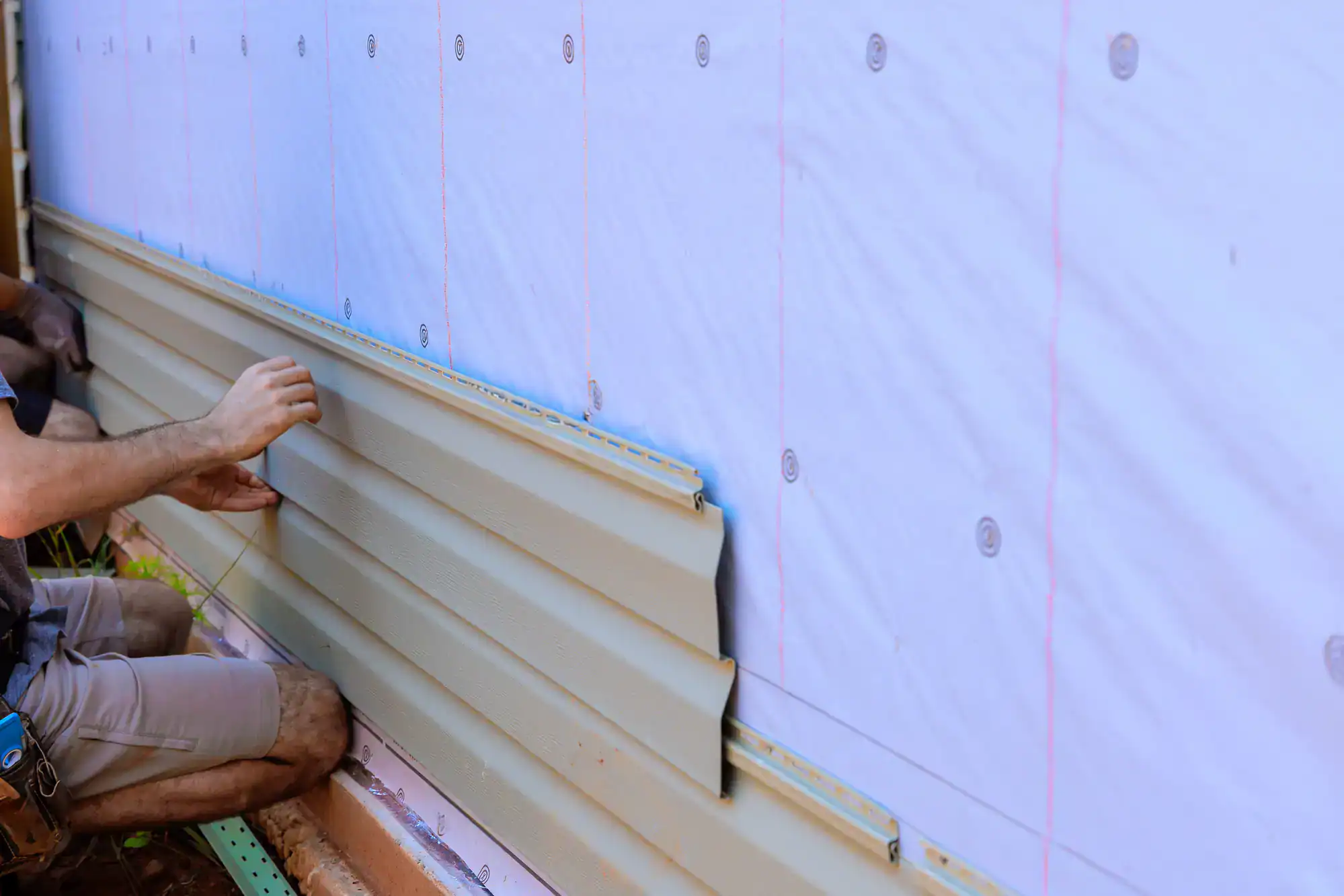
It starts with a free consultation and a real look at your home’s exterior not a five-minute walkthrough, but an actual assessment of what’s there, what’s underneath, and what the Historic Preservation Commission will and won’t approve for your property. If your home is in the Historic District, that conversation happens before anything else, because the material selection and the COA application have to come first.
Once the scope is clear, we handle the permit process with the Glen Ridge Building Department and coordinate the HPC Certificate of Appropriateness application if required. You don’t have to navigate that paperwork alone. Most homeowners have never filed a COA before we have, and knowing what the commission looks for makes a real difference in how smoothly that step goes.
When installation begins, our crew starts with a full substrate inspection. On homes built before 1940, this step regularly turns up moisture damage, deteriorated sheathing, or original architectural details worth preserving. You’ll know what we find before anything gets covered back up. From there, installation proceeds with the approved materials fiber cement matched to historic profiles, or restored wood where that’s the right call and the project wraps with a full walkthrough and both a material and workmanship warranty in writing.
Ready to get started?
Request a callback

Siding work in Glen Ridge isn’t a standard tear-off-and-replace job, and we don’t treat it like one. Every project includes a full exterior assessment, substrate inspection, and a clear material recommendation that accounts for both the Historic Preservation Commission’s guidelines and the specific climate demands of a ridge-top property in Essex County. If the HPC requires a COA for your project, that process is part of the engagement not an afterthought.
On the material side, we work with fiber cement siding that replicates historic wood in dimension and profile the standard the HPC requires for approval in the Historic District. For homes where original wood siding is still structurally sound, repair and restoration is a real option, and one that the commission often prefers over full replacement. You’ll get an honest recommendation on which direction makes more sense for your specific home, not a default push toward the option with the higher ticket.
Because Glen Ridge homes frequently reveal additional needs during a siding project deteriorated flashing, failed chimney mortar, compromised fascia our multi-trade capability means those issues get addressed in the same project window. Roofing, masonry, gutters, and chimney work are all in-house. You’re not left managing a second contractor to finish what the first one started.
Yes and in most cases, you’ll need two separate approvals before any visible exterior work begins. The first is a standard building permit through the Glen Ridge Building Department, which can be reached at 973-748-8444. The second, and more specific to Glen Ridge, is a Certificate of Appropriateness from the Historic Preservation Commission. Because over 90% of the borough falls within the Historic District, the HPC has to review and approve the proposed materials and scope before work starts. Skipping that step isn’t a minor oversight it’s a code violation that can result in a stop-work order or a requirement to remove completed work at your own expense.
The COA application is reviewed at monthly HPC meetings, so timing matters. Starting the process early before you’ve committed to a contractor or a material gives you the most flexibility. We help homeowners navigate both the building permit and the COA application as part of the project, so you’re not figuring out a regulatory process you’ve never dealt with before while also trying to manage a construction timeline.
Not if your home is in the Historic District and in Glen Ridge, that applies to more than 90% of properties in the borough. The Historic Preservation Commission explicitly prohibits vinyl siding and aluminum siding on properties within the district. This isn’t a gray area or a guideline that can be worked around with the right application. It’s a hard rule, and any contractor who tells you otherwise either doesn’t know the local regulations or is willing to put you in a position where you’re on the hook for removing non-compliant work after the fact.
The approved path for most Glen Ridge homeowners is fiber cement siding that replicates historic wood in dimension and profile, or where the original wood is still structurally viable repair and restoration of the existing cladding. Fiber cement is a strong material choice for this climate regardless of the regulatory context. It handles freeze-thaw cycles well, doesn’t absorb moisture the way wood does, and when it’s installed correctly to match historic profiles, it holds up for decades without the maintenance burden that comes with real wood.
The honest answer is that you won’t know for certain until someone looks at what’s underneath. In Glen Ridge, where the median construction year for homes is 1938, the condition of the substrate the sheathing, the moisture barrier, and the framing behind the cladding varies significantly from house to house. A home that looks like it needs a simple repair on the surface can have significant moisture damage or deteriorated sheathing once the existing cladding comes off. The reverse is also true: some homes that look like they need full replacement actually have original wood siding in good enough condition to restore.
The factors that typically push a project toward full replacement are widespread moisture intrusion, large sections of damaged or missing panels, substrate rot, or cladding that has been installed in layers over decades without proper assessment. Repair makes more sense when the damage is localized, the substrate is sound, and the existing material is historically appropriate. The HPC’s own guidelines note that original wood siding should be preserved where possible so in Glen Ridge specifically, restoration is worth evaluating before defaulting to full replacement. A proper inspection at the start of the process is what makes that call clearly.
The HPC’s guidelines are specific. Original wood siding is the preferred material if it’s structurally sound, preservation and restoration is what the commission wants to see. When the original siding can’t be saved, smooth fiber cement siding may be approved, but only when it replicates historic wood in dimension and profile. That means the thickness, the lap width, and the surface texture have to match what was there historically. A standard fiber cement product pulled off the shelf at a building supply house may not meet that standard without the right specification.
Vinyl siding and aluminum siding are not approved in the Historic District full stop. The commission was established in 1987 and has been actively enforcing these standards for nearly four decades. If you’re unsure what your home’s original siding profile was, there are ways to research it old photographs, architectural records, or sometimes the original material is still visible in a protected area like under the eaves or behind an addition. A contractor who knows what to look for can help you build a COA application that gives you the best chance of a clean approval.
On a pre-war home in Glen Ridge, it’s realistic to budget more time than you might expect not because the installation itself is slow, but because the steps that come before it take time to do correctly. The COA application process alone can add several weeks to a project timeline, depending on where you are in the HPC’s monthly meeting schedule when you apply. Factor in the building permit, the substrate inspection findings, and any additional scope that gets identified once the old cladding comes off, and a project that might take a week on a newer home in another town can realistically run two to four weeks here.
That’s not a complaint about the process it’s just the reality of working in a regulated historic district on homes that are approaching a century old. The upside is that when the process is followed correctly, the result holds up. A properly permitted, HPC-approved siding installation on a Glen Ridge home isn’t just cosmetically sound it’s legally compliant, structurally addressed, and backed by documentation that protects you if you ever sell. Buyers in this market where median sale prices are now above $1 million do their due diligence, and a clean permit history matters.
Yes. Every project starts with a free consultation and a no-pressure assessment of your home’s exterior. For Glen Ridge homeowners specifically, that first conversation covers more ground than a standard estimate it includes a review of your property’s Historic District status, a discussion of what materials the HPC will and won’t approve, and an honest look at what the substrate inspection is likely to find based on the age and condition of your home’s current cladding.
The goal of that first visit isn’t to close a sale. It’s to give you enough real information to make a decision that’s right for your home. If the scope is straightforward, you’ll know that. If there are complicating factors substrate concerns, a COA application that needs to be filed, additional trades that need to be involved those get surfaced at the start, not mid-project. Glen Ridge homes are significant investments, and the people who own them deserve a clear picture of what they’re getting into before any work begins.
Other Services we provide in Glen Ridge