
A lot of South Orange Village homes were built before World War II. That’s part of what makes this place worth living in and part of what makes exterior work more involved than it looks. When siding fails on a home that’s been standing since the 1890s or 1920s, it rarely fails alone. There’s usually something underneath that’s been quietly getting worse: rotted sheathing, a failed moisture barrier, wood that’s been holding water for longer than anyone realized. Getting that fixed the right way means the problem actually goes away not just gets covered up.
Once the exterior is done properly, the difference is real. Your home stops losing heat through wall cavities that were never sealed correctly. You stop finding water stains inside after heavy rain. The freeze-thaw cycles that hit Essex County every winter the kind that crack and buckle panels that weren’t installed with proper expansion tolerance stop being your problem. South Orange’s tree canopy is one of its best features, but falling branches during nor’easters and summer storms are a consistent source of siding damage in neighborhoods like Montrose and West Montrose. When the siding is right, a branch hit stays a localized repair instead of becoming a moisture event.
Beyond the structural side, new siding on a South Orange Village home is a genuine financial decision. With median home values well above $1 million in this community, the exterior isn’t just aesthetics it’s the first line of defense for a significant asset. Siding replacement consistently delivers strong ROI at resale, and more importantly, it prevents the kind of compounding damage that turns a manageable project into a very expensive one.
Proline Construction is a family-owned general contracting company based in northern New Jersey, serving South Orange Village and Essex County homeowners since 2018. We hold NJ Home Improvement Contractor Business license #13VH09838700 verifiable on the state’s public database earned BBB accreditation in January 2025, and carry GAF Preferred Contractor status. These aren’t claims you have to take on faith. You can look them up before you ever pick up the phone.
What that means practically: you’re working with a contractor who’s accountable, insured, and operating above board. In a market where unlicensed operators are common and contractor fraud is a documented problem, those checkboxes matter especially in a community like South Orange Village, where homes are complex, older, and worth protecting carefully.
We handle siding, roofing, chimney, masonry, and gutters. For homeowners in the Montrose area or anywhere across the village dealing with multiple exterior issues at once, that matters. You get one contractor managing the full picture instead of coordinating three separate crews on a 100-year-old home.
It starts with a free consultation. A member of our team comes out, looks at what you’re dealing with, and gives you an honest read on whether repair or full replacement makes more sense for your situation. There’s no pressure and no obligation just a real assessment from someone who’s worked on homes like yours in Essex County.
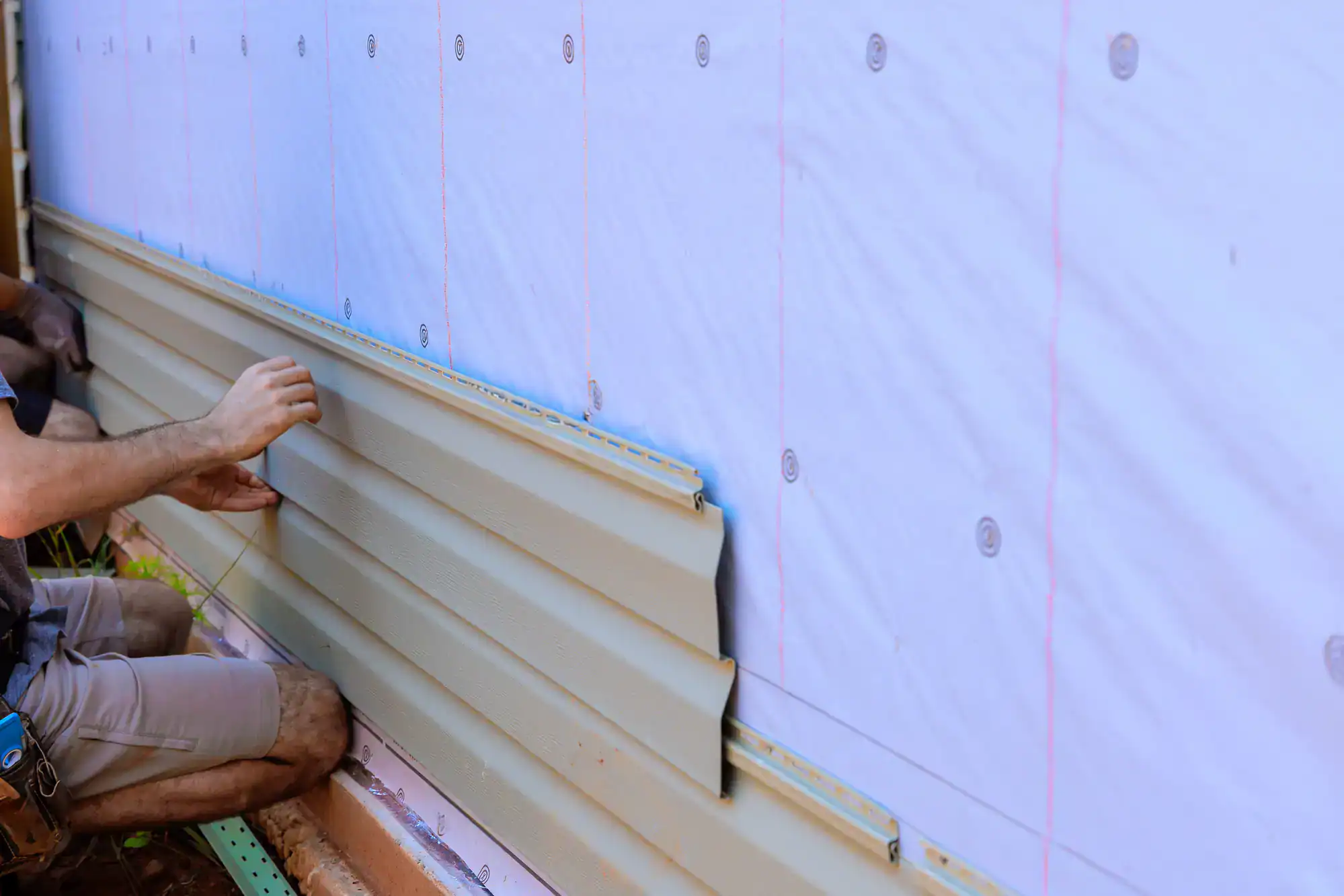
If the project moves forward, the next step before any installation is a thorough substrate inspection. This is non-negotiable on older South Orange Village homes. The homes in the Montrose Park Historic District and across the broader village have decades of layered exterior history original wood clapboard, previous siding applications, aging moisture barriers and what’s underneath the current surface determines what the right installation looks like. Skipping that step is how problems get buried instead of fixed. We don’t skip it.
One thing worth knowing upfront: South Orange Village’s Building Department requires a permit for siding replacement. That’s not optional, and it’s not something to work around. We pull the permit as part of the standard process, which means your project is fully documented and code-compliant. For a home in this price range, that matters when it comes time to sell. Once the permit is in place and the substrate is assessed, installation moves forward with clear communication throughout calls, texts, or on-site updates, whatever works best for your schedule.
Ready to get started?
Request a callback

Siding work in South Orange Village isn’t one-size-fits-all. The architectural range here is genuinely wide Tudor revivals, Victorian-era homes, Colonial Revival estates, and more modest mid-century properties and each one presents a different set of installation challenges. Complex rooflines, decorative trim, bay windows, dormers, wraparound porches: these aren’t obstacles to work around. They’re part of what the job requires, and our crews are built for it.
On the material side, the conversation usually comes down to vinyl siding or fiber cement. Vinyl is durable, low-maintenance, and handles northern New Jersey’s climate well when installed correctly. Fiber cement including James Hardie products is the faster-growing option for a reason: it replicates the profile of original wood clapboard closely enough to be the right call for many of the older homes in the Montrose and West Montrose neighborhoods, where preserving the architectural character of the exterior matters to the homeowner and the community. We walk you through the tradeoffs honestly so you’re making the right choice for your specific home, not just the most convenient one.
Every project is backed by a full warranty covering both materials and workmanship. Most siding failures are installation errors, not product defects so a material-only warranty doesn’t actually protect you. The workmanship warranty does. Emergency siding repair is also available when storm damage or sudden failure can’t wait for a standard scheduling window.
Yes and this isn’t a gray area. South Orange Village’s Building Department has explicitly confirmed on the municipality’s own FAQ page that siding replacement requires a construction permit under the New Jersey Uniform Construction Code. The permit process involves a plan review with a 20-business-day window and culminates in a Certificate of Compliance once inspections are passed.
The reason this matters practically: unpermitted siding work can surface as a problem during a future home sale. In a community where home values regularly exceed $1 million, a buyer’s attorney or home inspector flagging unpermitted exterior work at closing is a situation worth avoiding entirely. We pull permits as a standard part of every project not as an add-on, not as something you have to ask for. It’s built into the process.
The honest answer is that it depends on what’s underneath. Visible damage cracked panels, warped sections, fading tells part of the story, but the more important question is what’s happening at the substrate level. On older South Orange Village homes, particularly those in the Montrose and West Montrose neighborhoods built between the 1880s and 1940s, there’s often a history of layered exterior work: original wood clapboard, one or more previous siding applications, and moisture barriers of varying quality installed over the decades.
If the substrate is sound and the damage is localized, repair is often the right call. If there’s evidence of rot, failed moisture barriers, or widespread panel failure, replacement is the smarter long-term investment because patching over a compromised wall system just delays a larger and more expensive project. Our free consultation is specifically designed to answer this question honestly. You’ll get a real assessment, not a default recommendation toward the more expensive option.
For the Victorian, Tudor, and Colonial Revival homes that define the Montrose Park Historic District and much of South Orange Village’s residential character, fiber cement siding is often the strongest choice. Products like James Hardie can be manufactured to replicate the profile of original wood clapboard closely enough that the exterior retains its architectural character while gaining the durability and moisture resistance that original wood simply can’t match after a century of northern New Jersey winters.
That said, vinyl siding is a legitimate option for many South Orange Village homes particularly those outside the historic district or with less architecturally complex profiles. High-quality vinyl, installed correctly with proper expansion tolerance for the freeze-thaw cycles Essex County sees every winter, performs well and requires minimal maintenance. The right answer depends on your specific home, its architectural profile, and your goals for the exterior. We walk through both options with you directly so the decision is based on your situation, not a blanket recommendation.
Northern New Jersey’s climate is genuinely hard on exterior materials. South Orange Village sees the full range: freeze-thaw cycles through winter that cause siding to expand, contract, and crack if it wasn’t installed with proper tolerances; heavy spring and fall rainfall that drives moisture behind panels with compromised seals; summer humidity that accelerates mold growth inside any wall cavity where water has found a way in; and periodic nor’easters and ice events that cause sudden physical damage.
The village’s mature tree canopy one of the things that makes South Orange visually distinctive also means falling branches during high-wind events are a recurring cause of localized siding damage in residential neighborhoods. The practical takeaway is that installation quality matters as much as material quality here. Siding that’s correctly flashed, properly sealed at all penetrations, and installed with the right expansion tolerances will outlast siding that was rushed or cut corners on regardless of what the panel itself is made of.
Start with the basics that are verifiable before you ever have a conversation. New Jersey requires siding contractors to hold a Home Improvement Contractor Business registration with the NJ Division of Consumer Affairs you can search any license number on the state’s public database in under a minute. If a contractor can’t give you a license number, that’s a clear signal. Beyond licensing, check for BBB accreditation, proof of insurance, and any manufacturer certifications like GAF Preferred Contractor status, which require demonstrated installation quality and compliance standards.
Once you’re past the credential check, the questions that matter most are about process: do they pull permits as standard practice, do they inspect the substrate before installing, and what does their warranty actually cover? In South Orange Village, where homes are older and more architecturally complex than most of the surrounding area, a contractor who skips the substrate inspection or suggests bypassing the permit to save time is telling you something important about how they work. The right contractor answers these questions directly and without hesitation.
For most single-family homes in South Orange Village, the installation itself runs anywhere from two to five days depending on the size of the home, the complexity of the exterior profile, and what the substrate inspection reveals once the existing siding comes off. Homes in the Montrose area with Victorian or Tudor profiles multiple gable ends, dormers, decorative trim, wraparound porches naturally take longer than a straightforward colonial or ranch-style home.
The part of the timeline that catches some homeowners off guard is the permit process. South Orange Village’s Building Department has a 20-business-day review window from application receipt, so factoring that in before scheduling installation is important. If you’re hoping to have the project completed before winter or want it finished during a specific window, the time to start the conversation is earlier than most people expect especially in spring and fall, when contractor schedules in Essex County fill up quickly. We communicate the full timeline upfront so there are no surprises once the project is underway.
Other Services we provide in South Orange Village