
Most Glen Ridge homes were built before 1940. That means steep rooflines, bracketed eaves, and original or early-replacement fascia boards that have already been through decades of freeze-thaw cycles, heavy leaf seasons, and northeasters. When gutters fail on a home like that, the damage doesn’t stay at the roofline it works its way into the fascia, down the foundation, and sometimes into the basement. Foundation repairs in this area routinely run $5,000 to $25,000. A properly installed gutter system costs a fraction of that.
Glen Ridge also sits under one of the densest mature tree canopies in Essex County. The Shade Tree Commission maintains nearly 3,700 street trees maples, oaks, elms that have been growing for a century or more. That canopy is one of the things that makes the borough beautiful. It’s also one of the most demanding conditions a gutter system will face anywhere in northern New Jersey. Gutters that aren’t properly sized, pitched, and maintained fill up fast in October and November, and the overflow goes straight to your foundation.
The borough has also acknowledged publicly that parts of its storm sewer system are undersized and can cause backwater flooding during heavy rain. The state funded a $500,000 flood study on Toney’s Brook specifically because of it. When the municipal system gets overwhelmed, your gutters become the last line of defense for your home. That’s not a small job and it’s not one to hand off to whoever shows up with the lowest quote.
Proline Construction is a family-owned general contracting company that has been serving residential homeowners across Essex County since 2018. We hold NJ Home Improvement Contractor License #13VH09838700 verifiable through the NJ Division of Consumer Affairs and we’re BBB accredited and a GAF Preferred Contractor. Every job comes with a full written warranty on both labor and materials.
Glen Ridge is a community where homeowners research before they commit. You know to ask for a license number, check the BBB, and call a neighbor for a referral. We’re built for exactly that kind of buyer. There’s no pressure, no manufactured urgency, and no bill that doesn’t match the quote. What you get is a clear estimate, honest communication, and a contractor who shows up when we say we will.
Because we handle roofing, siding, chimney, and masonry alongside gutters, our team can identify what’s actually going on with your home’s exterior not just the gutters. On a 100-year-old home near Ridgewood Avenue or Bloomfield Avenue, that full-picture awareness matters.
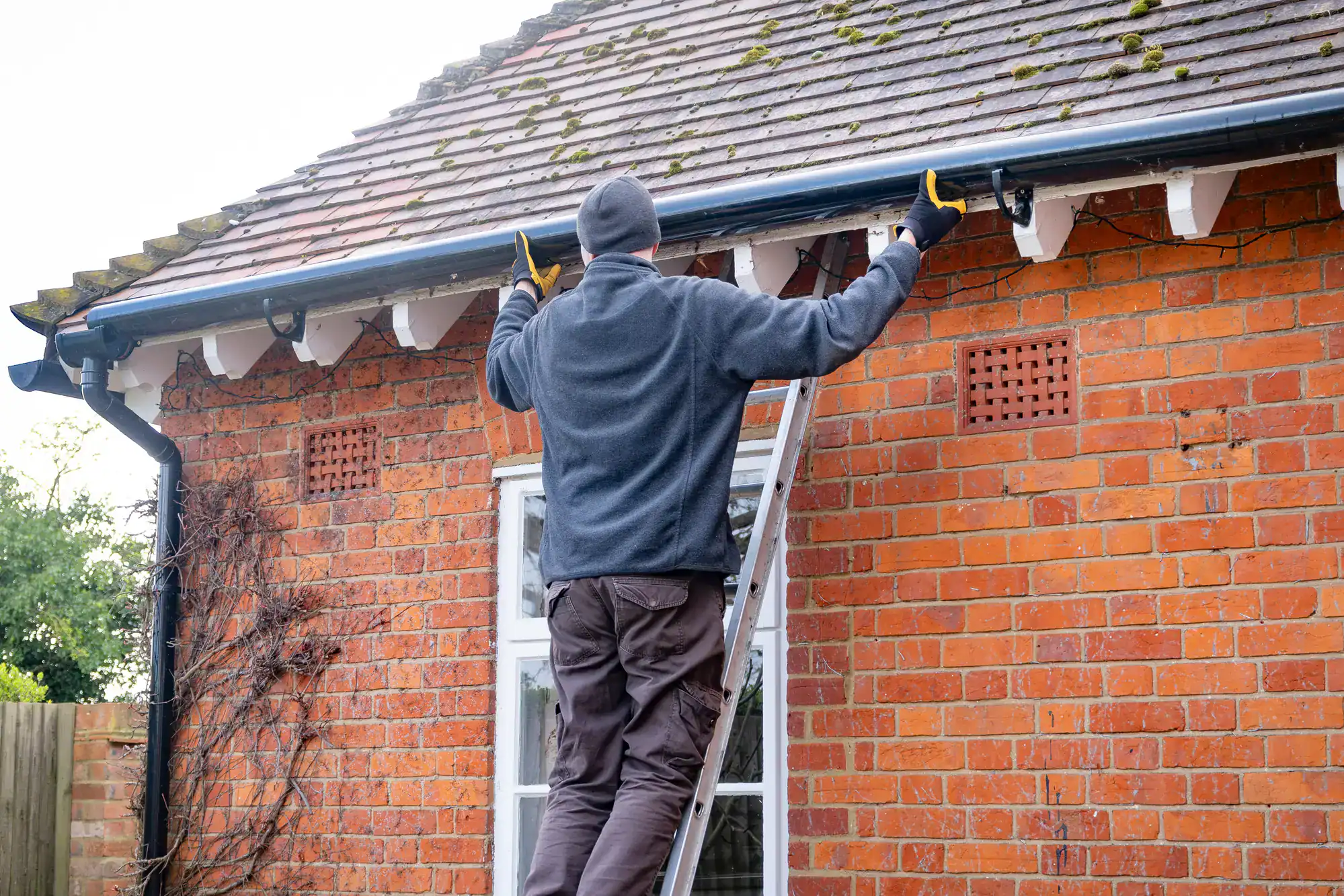
It starts with a free consultation. Someone from our team comes out, walks the roofline, and gives you an honest read on what’s there whether that’s a full gutter replacement, targeted repair, or just a cleaning and recheck. On a pre-war home in the Glen Ridge Historic District, that first assessment also includes a conversation about materials and profile options, because the Historic Preservation Commission requires a Certificate of Appropriateness before exterior work begins on most properties in the borough. We’re familiar with that process and handle the compliance side so you don’t have to figure it out yourself.
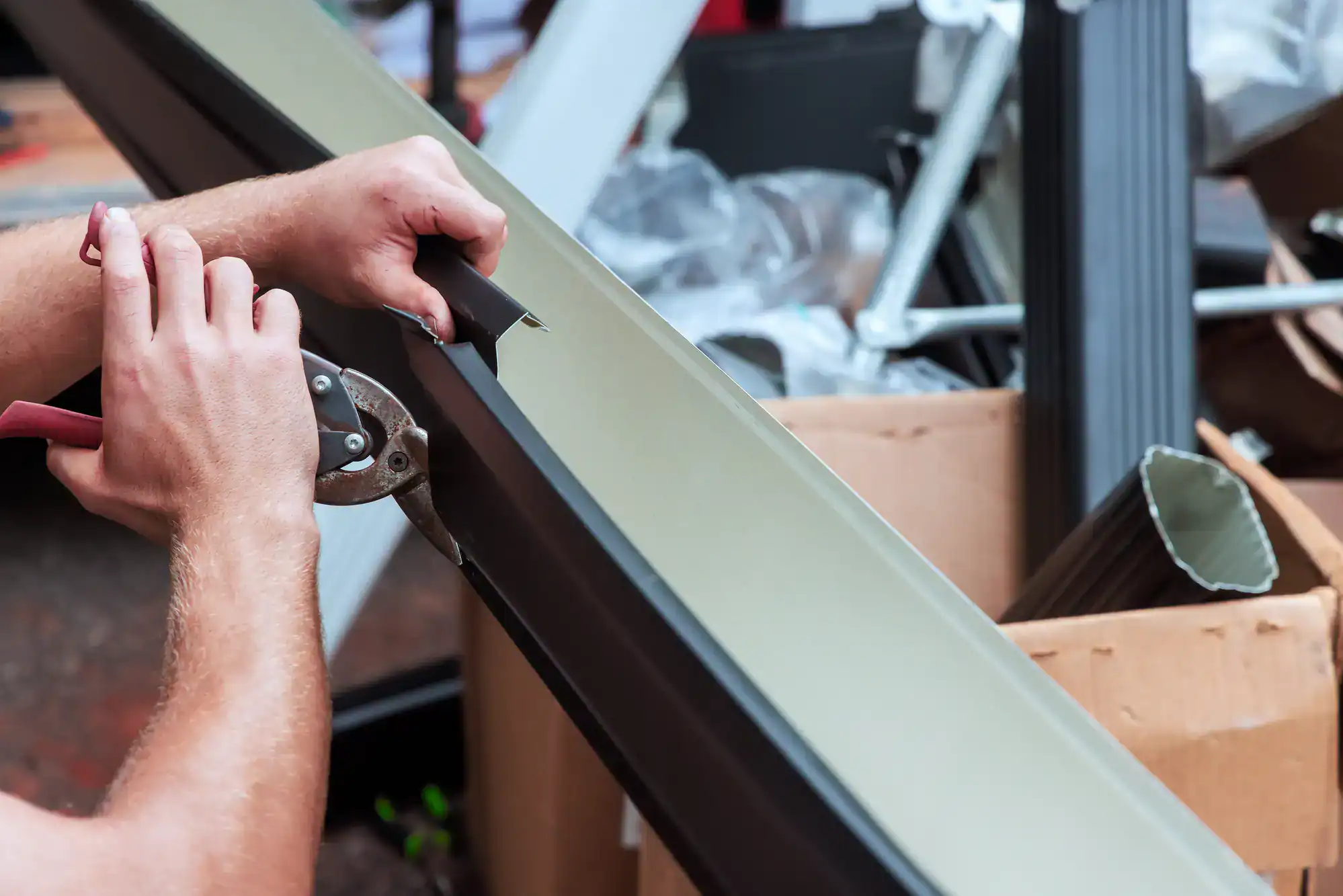
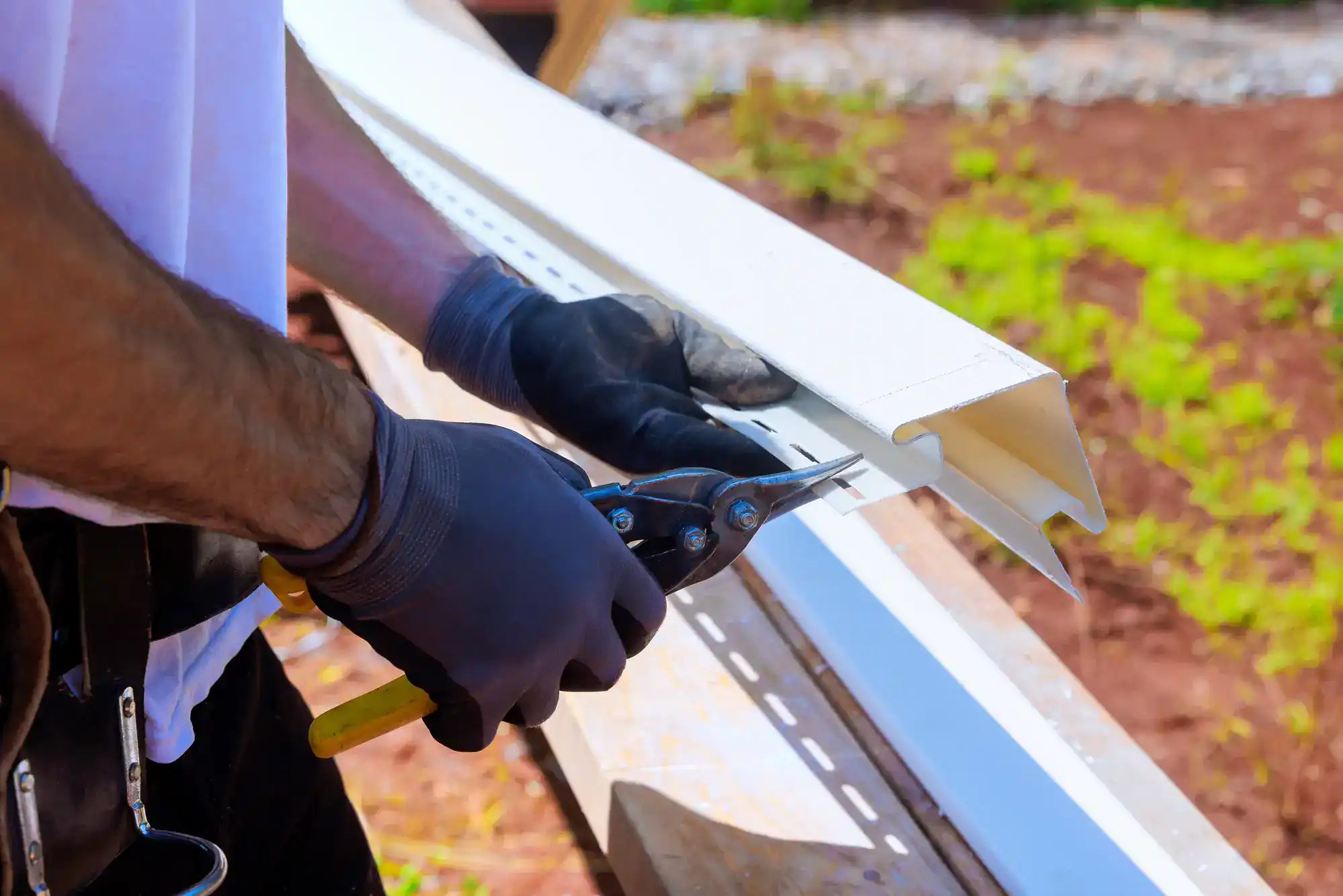
Once the scope is agreed on, we fabricate seamless gutters on-site to the exact measurements of your home’s roofline. There are no pre-cut sections pieced together with joints just a continuous run that eliminates the seam points where most gutter leaks start. On Glen Ridge’s Victorian and Tudor-style rooflines, that custom fit matters both for performance and for how the finished system looks on the building.
Installation is clean, scheduled around your timeline, and followed up with a walkthrough so you can see exactly what we did and why. If anything else was spotted during the job fascia rot, a roofline concern, a chimney issue you’ll hear about it clearly, without pressure to add it to the invoice on the spot.
Ready to get started?
Request a callback

We install seamless aluminum gutters as the standard for Glen Ridge residential work fabricated on-site, custom-fitted, and finished in colors appropriate for historic exteriors. For homes where the architecture warrants it, we also offer copper gutter systems. Copper develops a natural patina over time, has a lifespan of 50 years or more, and is one of the most historically appropriate materials for the Queen Anne, Colonial Revival, and Tudor Revival homes that define Glen Ridge’s streetscape. It’s a real option for homeowners who want a system that performs and looks right on a National Register property.
Beyond the gutter run itself, our work includes proper hanger spacing for the weight loads that come with a heavy leaf season, correct pitch for drainage toward downspouts, and downspout placement that moves water away from the foundation not toward it. On properties where the existing fascia is compromised, we address that before the new system goes on, because new gutters on rotted wood is money wasted.
We also handle gutter repair in Glen Ridge, NJ for homeowners who don’t need a full replacement sagging sections, failed seams, disconnected downspouts, or hangers that pulled away from aging fascia boards over the winter. If repair is the right call, that’s what you’ll hear. The free consultation exists to give you an honest answer, not to sell you a full system you don’t need.
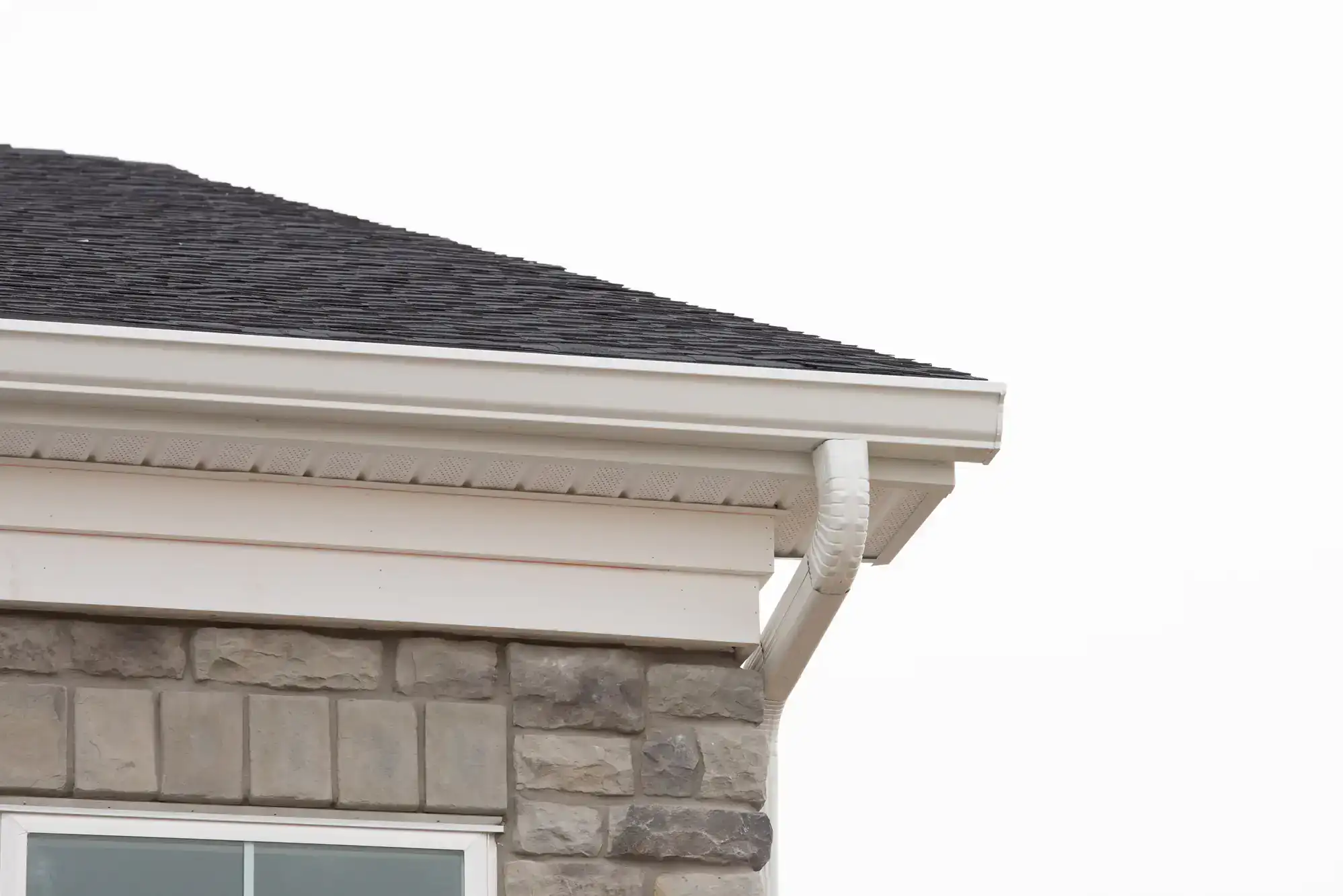
It depends on the scope of the work and what materials are involved. Glen Ridge’s Historic Preservation Commission requires a Certificate of Appropriateness before exterior work begins on properties within the Historic District which covers the vast majority of the borough. If your gutter replacement involves changing the visible material, profile, or color on a street-facing elevation, or if it’s connected to fascia or soffit work that requires a building permit, HPC review may be part of the process.
The Glen Ridge Building Department also instructs homeowners to contact them before starting any exterior project to confirm what approvals are needed. This isn’t a step most gutter contractors think about, but on a National Register property it matters skipping it can create compliance issues that are harder to resolve after the work is done. We’re familiar with Essex County building requirements and the Glen Ridge HPC process, and we handle the compliance piece as part of the project.
Seamless gutters are the right call for the kind of homes Glen Ridge is known for. Victorian, Tudor Revival, and Colonial Revival homes typically have steep pitches, complex rooflines, and architectural details at the eaves that make a custom-fitted system far more effective than anything assembled from pre-cut sections. Sectional gutters rely on joints every few feet, and those joints are where leaks start especially after a winter of freeze-thaw stress.
Seamless gutters are fabricated on-site to the exact dimensions of your roofline, so there are no seam points along the run. They also look cleaner on a historic home, which matters if your property is subject to HPC review. Material choice is part of the conversation too aluminum is the standard for most installations, but copper is a historically appropriate option for homes where the architecture calls for it and the owner wants a system that will outlast the next owner.
Twice a year is the baseline once in late spring after seed pods and early growth clear out, and once in late November or early December after the leaves have fully dropped. But in Glen Ridge specifically, the density and maturity of the tree canopy makes that schedule more important than it is in most towns. The Shade Tree Commission maintains nearly 3,700 street trees, and the residential lots add hundreds more mature maples and oaks on top of that. When those trees drop in October, gutters fill fast.
If your home sits directly under a large canopy which most Glen Ridge homes do a mid-fall check in late October is worth adding. Gutters that get fully clogged before the season ends will overflow during the next heavy rain, and with parts of the borough’s storm sewer system already undersized, that overflow has nowhere to go except toward your foundation. Gutter guards can reduce the frequency of cleaning, but they don’t eliminate it, and they need to be the right type for the leaf load your specific property sees.
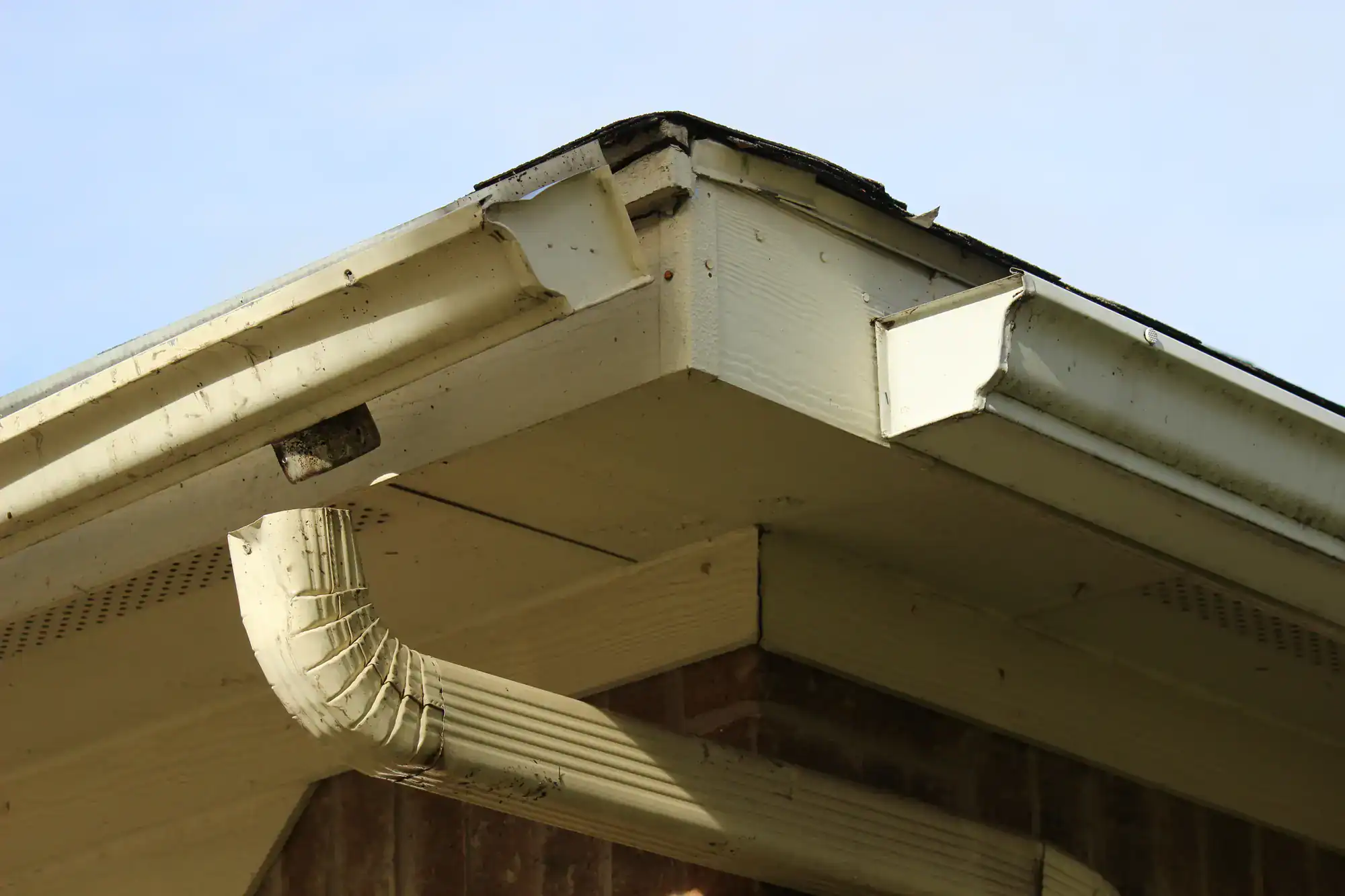
The most common cause is fascia rot. On a home built in the 1920s or 1930s which describes most of Glen Ridge’s housing stock the original or early-replacement fascia boards have been holding gutter hangers for decades. When water gets behind the gutter system, either from overflow or from a failing seal at the back edge, it saturates the wood over time. Once the wood softens, the hangers lose their grip and the gutter starts to pull away from the roofline.
Ice is the other major factor. Glen Ridge’s winters bring repeated freeze-thaw cycles from November through March. Water that sits in a clogged gutter freezes, expands, and puts significant weight and outward pressure on the hangers. On a steeply pitched roof, ice dams can also back water up under the shingles and into the fascia from above. The fix isn’t just reinstalling the gutter it’s addressing the fascia condition first, then reinstalling with proper hanger spacing and pitch so the system drains completely and doesn’t hold standing water.
For a standard residential gutter installation in New Jersey, most homeowners are looking at somewhere between $600 and $1,600 for a complete system, depending on the linear footage, material, and complexity of the roofline. Glen Ridge homes tend to be on the more complex end Victorian and Tudor-style rooflines with multiple elevations, dormers, and architectural details at the eaves take more time and custom fabrication than a straightforward ranch or colonial.
Copper gutters, which are a legitimate option for historic homes in the Glen Ridge Historic District, carry a higher upfront cost but a significantly longer lifespan 50 years or more compared to 20-plus years for aluminum. When you factor in the median home value in Glen Ridge exceeding $1 million and the cost of foundation damage that failed gutters can cause, the investment in a properly installed system is modest relative to what it protects. We provide a clear written estimate before any work begins no surprises on the final invoice.
It depends on the age of the system, how widespread the damage is, and what the underlying fascia condition looks like. If you have one or two sections that are sagging, a downspout that disconnected, or a few hangers that pulled away after last winter, repair is usually the right call and it’s significantly less expensive than a full replacement. We handle gutter repair in Glen Ridge, NJ for exactly these situations, and the free consultation is specifically designed to give you an honest answer on which direction makes sense.
Where full replacement becomes the better investment is when the system is 20 or more years old, the damage is spread across multiple elevations, or the fascia underneath is compromised enough that you’d be attaching a new repair to deteriorating wood. On a pre-war home that’s already been through multiple gutter cycles, a full seamless replacement often makes more financial sense than patching a system that’s going to need more attention in two or three years. You’ll get a straight answer on which situation you’re actually in not a push toward the more expensive option.
Other Services we provide in Glen Ridge