
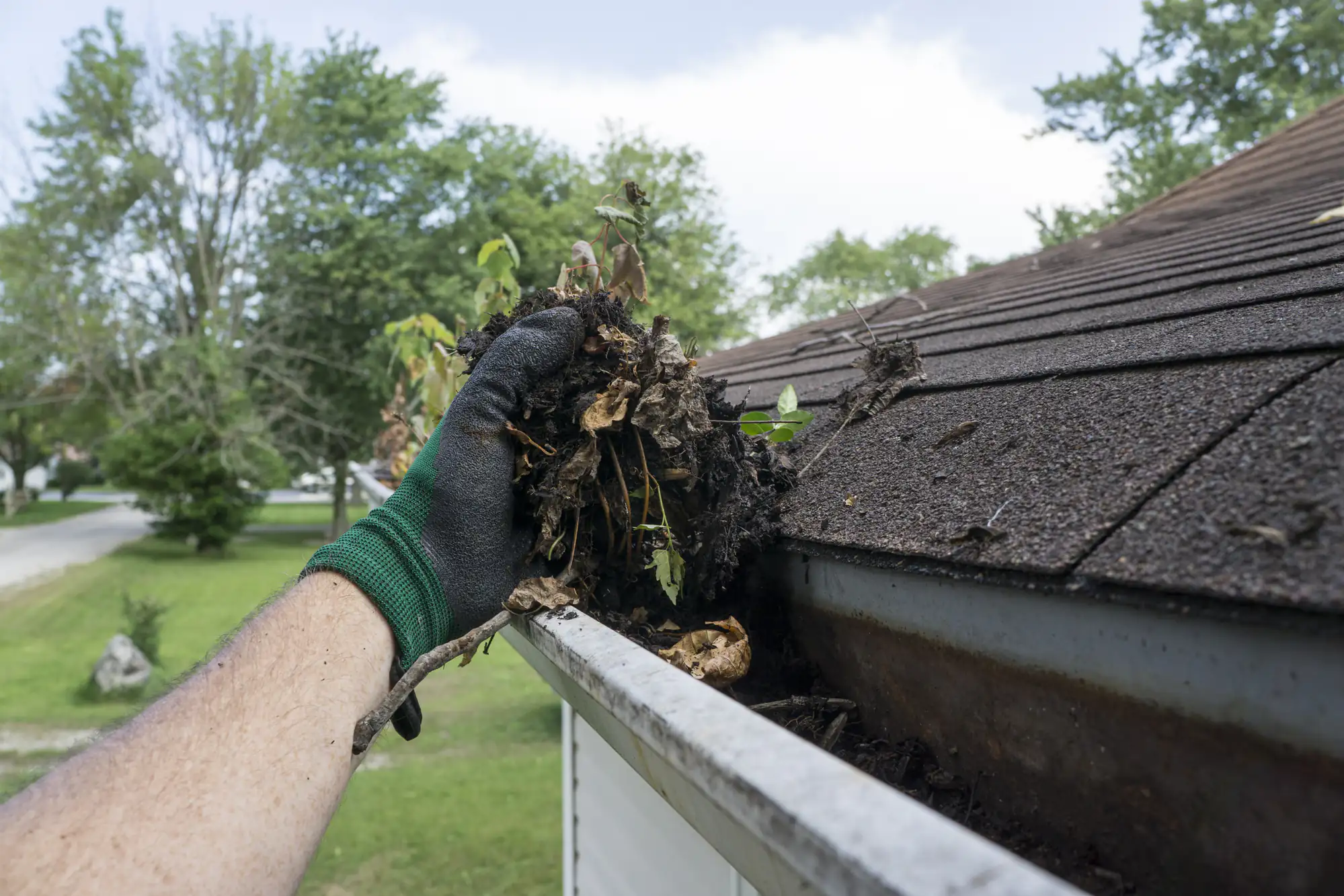
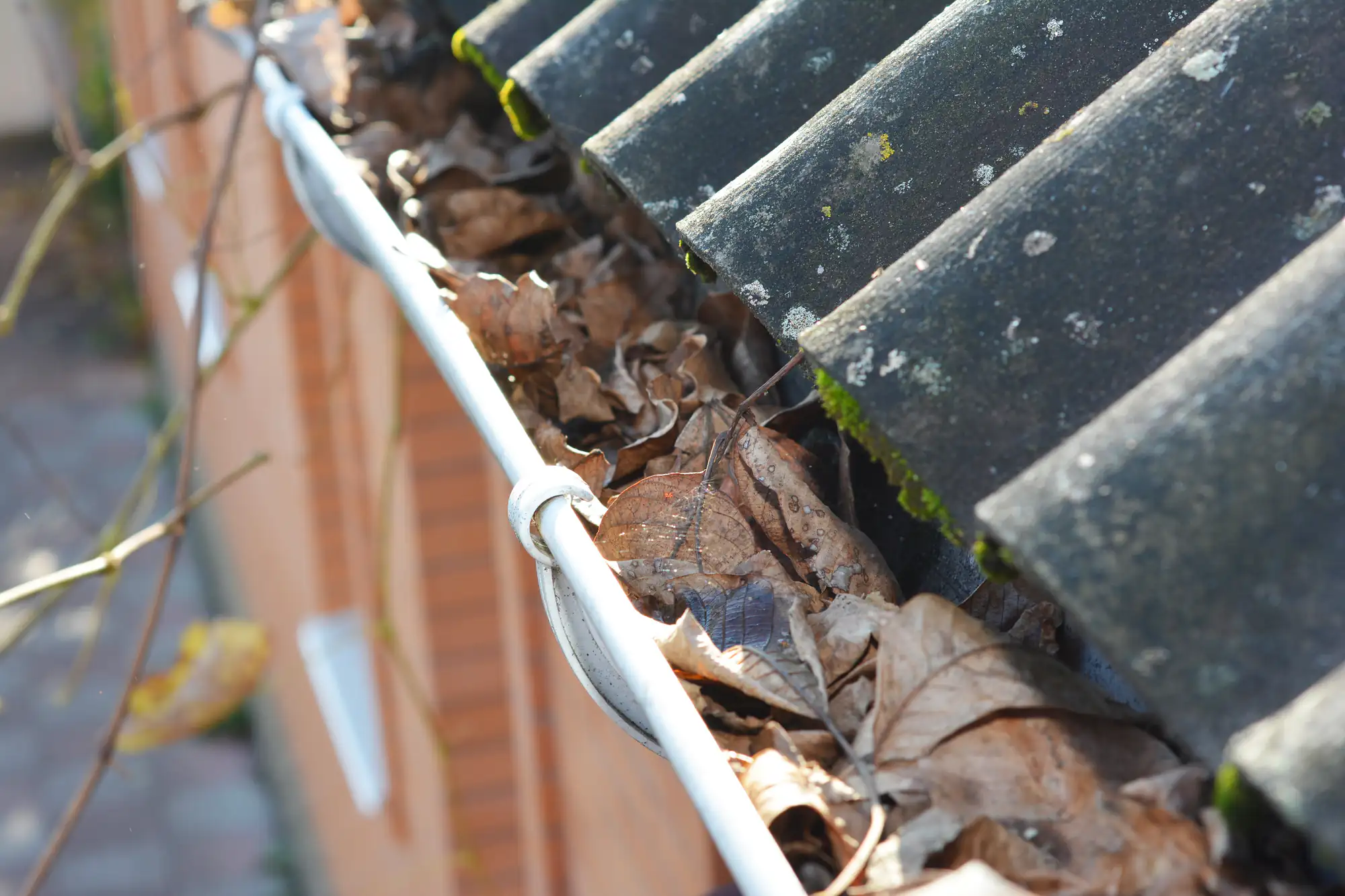
When gutters are clogged, water doesn’t just overflow it sits. It saturates the fascia boards behind the bracket, works its way toward the foundation, and in winter, it freezes. On a Victorian home built before 1939, that kind of repeated saturation doesn’t take long to turn into rot, structural damage, or an ice dam forcing water under shingles and into your interior walls. That’s a predictable outcome when seasonal cleaning gets skipped in Glen Ridge.
The tree canopy along Ridgewood Avenue, Bloomfield Avenue, and practically every residential street in the borough is part of what makes Glen Ridge beautiful. It’s also what fills your gutters twice a year. Late-dropping oak leaves compact into the trough through November, and maple seed pods hit in the spring. Two debris events per year, both capable of blocking downspouts completely which means water backs up regardless of how clean the gutter trough looks from the ground.
What you get after a proper cleaning isn’t just cleared gutters. It’s drainage that actually works, downspouts that are flushed and confirmed clear, and a set of eyes on the fascia, brackets, and surrounding exterior that can catch problems before they become expensive ones. For a home worth close to $800,000 in a Historic District, that’s not a luxury it’s basic asset protection.
We’re a family-owned exterior contracting company serving Essex County since 2018, with deep roots in Glen Ridge and the surrounding communities. We handle roofing, chimney, siding, masonry, and gutters which means when we clean your gutters, we’re not just running through a checklist. We understand how the full exterior system works on an older home, and we know what warning signs look like at the roofline, the fascia, and the downspout connection.
That matters in Glen Ridge, where over 90% of the borough sits within a National Register Historic District and the majority of homes were built before World War II. These aren’t standard gutter jobs. The rooflines are steep, the architecture is complex, and the materials behind those gutters are older and less forgiving. We bring the experience and the full-service capability to handle what a gutter-only company would leave behind.
We’re BBB accredited, GAF Preferred Contractor certified, fully insured, and we back every job with a warranty. No hidden fees, no pressure, and no debris left on your lawn when we’re done.
It starts with a call or a quick text whichever works better for you. We give you a clear, upfront quote before anything is scheduled. No vague estimates, no “we’ll figure it out when we get there.” You know what it costs before anyone shows up.
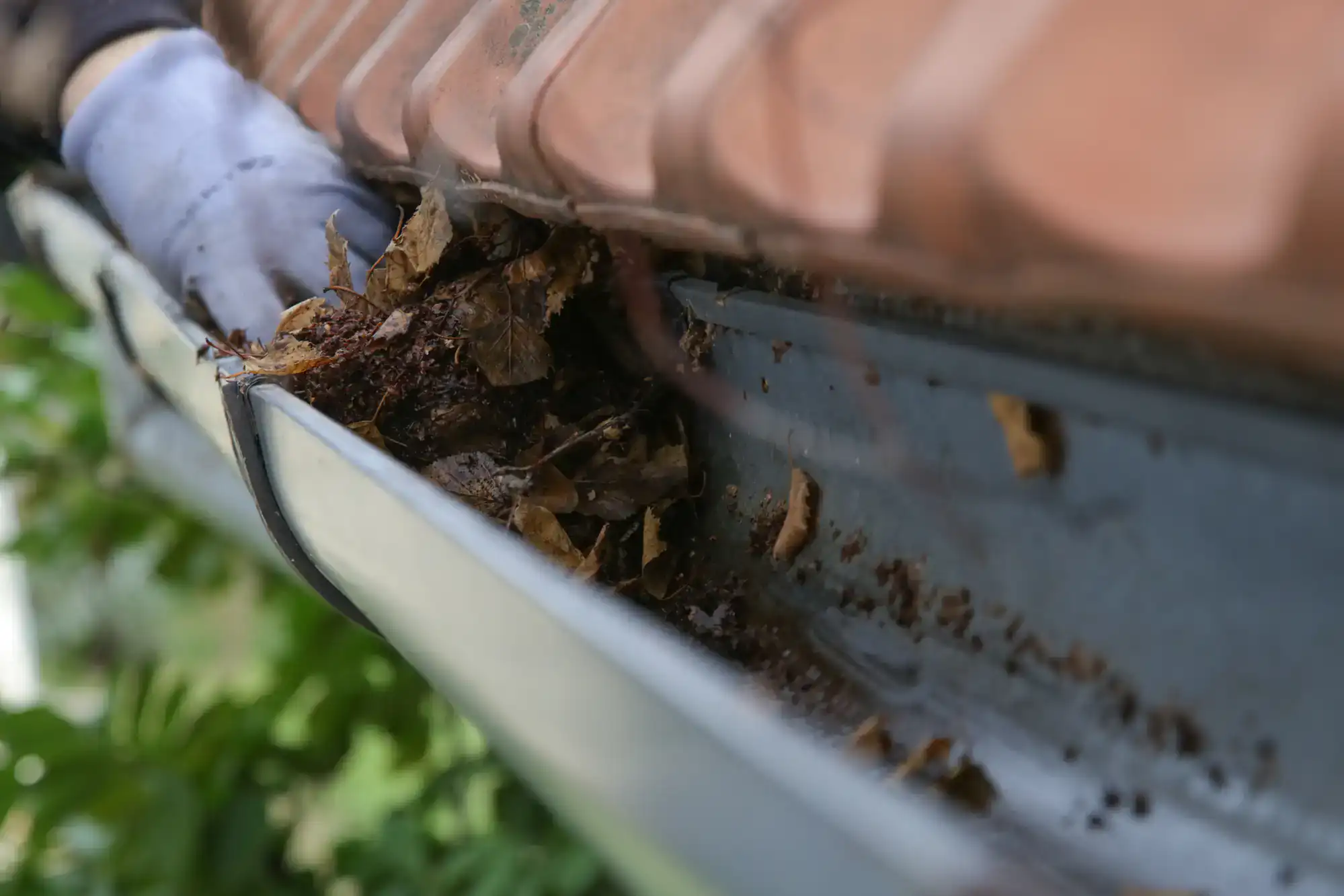
On the day of the job, our crew accesses the gutters safely including the sections on upper pitches, dormers, and rear elevations that are easy to miss on a multi-story Victorian. Every trough is cleared of leaves, compacted debris, and organic buildup. Then every downspout gets flushed. That second step is the one most companies skip, and it’s the most common reason gutters overflow during a rainstorm even after a “cleaning.” If a downspout is blocked at the elbow or underground connection, the trough fills from the bottom up. We confirm water moves freely from the roofline all the way to grade.
While we’re up there, we’re also looking at the fascia boards, gutter brackets, and the surrounding exterior. If something needs attention a loose bracket, early-stage fascia rot, a flashing gap you’ll hear about it before it turns into a bigger repair. In a borough where fall cleaning before the first freeze is the single most important annual maintenance task, getting a full inspection alongside the cleaning is worth more than most homeowners realize. Scheduling in late November, after the bulk of Glen Ridge’s oak and maple canopy has dropped, gives you the best coverage going into winter.
Ready to get started?
Request a callback

Gutter cleaning in Glen Ridge isn’t a one-size-fits-all job. The homes here Italianate villas, Second Empire mansard roofs, Queen Anne cottages have more linear feet of gutter, more directional transitions, and more downspout connections than a standard post-war colonial. We account for that complexity in how we approach every job, not just in how we quote it.
Every cleaning includes full debris removal from the troughs, downspout flushing to confirm clear flow, and a visual inspection of the fascia, brackets, and exterior drainage points. Debris doesn’t get blown off the roof or left in your landscaping it’s cleared and removed. For homeowners along the gas-lit residential streets of the Historic District, that level of cleanup isn’t optional.
Because we’re a full-service exterior contractor, we can also handle what comes up during the inspection a loose gutter bracket, deteriorating fascia board, or a downspout that needs repositioning. You don’t need to call a second company or wait for a follow-up estimate. The work gets done by the same crew under the same warranty. For Glen Ridge homeowners carrying $19,000-plus in annual property taxes and living in homes valued close to $800,000, that continuity of service is exactly what the job calls for.
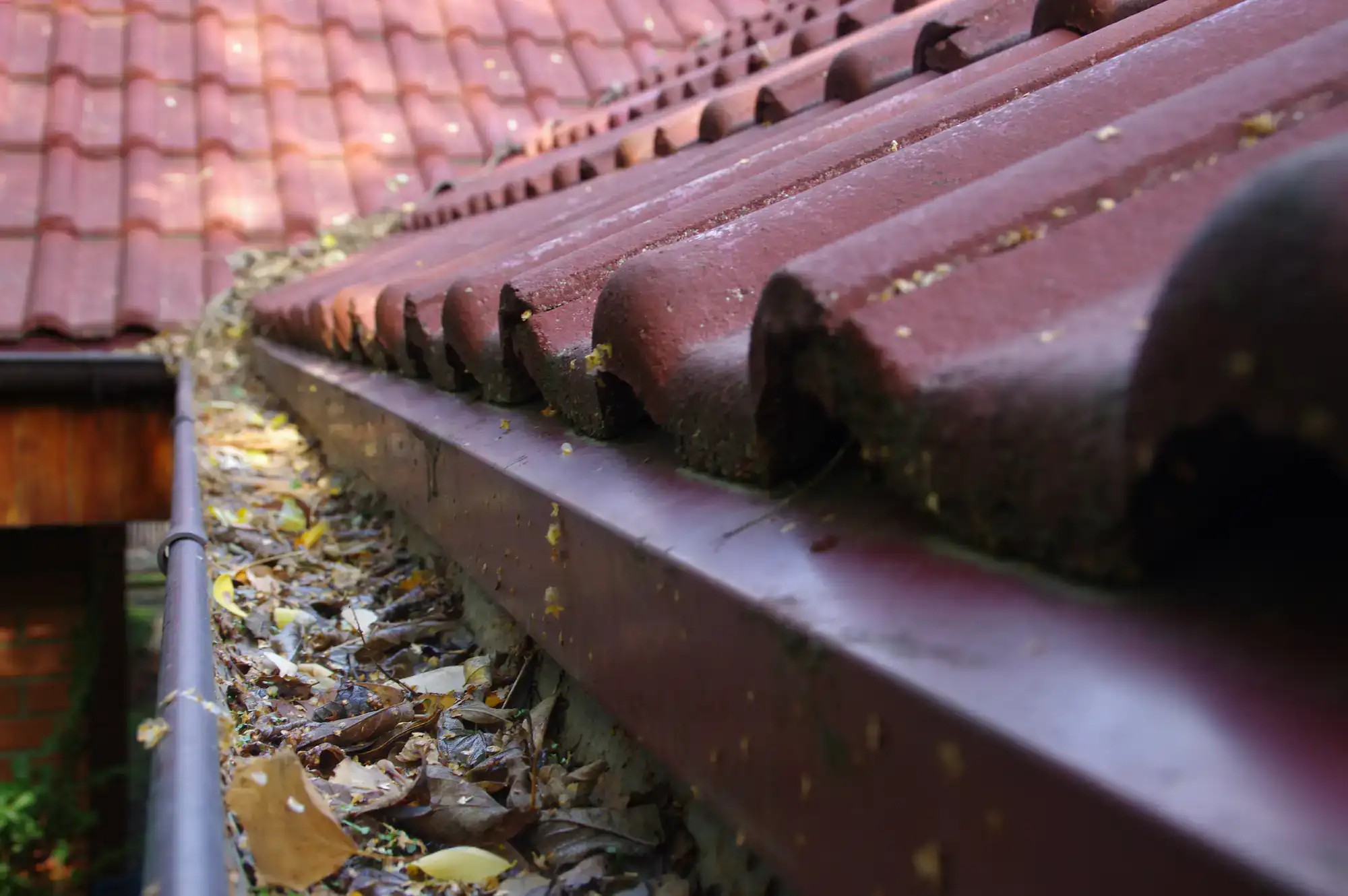
Twice a year is the standard recommendation, and Glen Ridge’s specific conditions make that schedule worth sticking to. The borough’s dense canopy of oaks and maples produces two distinct debris events: a heavy fall leaf drop that runs through late November, and a spring flush of maple seed pods that can block downspout openings before the rainy season hits. Skipping either cleaning leaves your gutters vulnerable during the season’s heaviest precipitation.
For homes in the Historic District which covers over 90% of Glen Ridge the stakes are higher than on a newer home. The fascia boards, soffit materials, and wood framing behind older gutters have less tolerance for repeated overflow. Fall cleaning is the more critical of the two, and timing it for late November, after the bulk of the leaf drop, gives you the best protection going into the freeze-thaw months. Spring cleaning clears whatever accumulated over winter and gets your drainage system ready before April and May storms arrive.
A clogged downspout is often the real reason gutters overflow not a full trough. When the downspout is blocked, water has nowhere to go, so it backs up and spills over the edge regardless of how clean the gutter looks from the ground. On a Victorian home with multiple downspout connections at complex roof junctions, this is easy to miss and easy to underestimate.
Left unaddressed, a blocked downspout pushes water against the fascia, down the siding, and toward the foundation. On older homes, that repeated saturation accelerates wood rot and can compromise the integrity of the fascia board behind the gutter bracket a repair that costs significantly more than the cleaning that would have prevented it. In winter, standing water in a blocked downspout freezes, expands, and can crack the downspout itself or pull the bracket connection loose from the wall. Flushing every downspout not just clearing the trough is a non-negotiable part of a complete gutter cleaning job.
Yes, and it’s one of the more direct connections between gutter maintenance and interior water damage. Ice dams form when heat escapes through the roof, melts snow at the ridge, and that meltwater refreezes at the cold eaves right where your gutters sit. When gutters are clogged, they trap standing water at the eave line. That water freezes, expands, and creates a dam that forces subsequent meltwater back up under the shingles.
On a Glen Ridge Victorian with steep pitches, older insulation, and a complex roofline, ice dam risk is meaningfully higher than on a modern home with standardized construction. The architectural features that make these homes beautiful dormers, mansard sections, multiple pitch transitions also create more opportunities for ice to build up in places that are hard to see from the ground. Getting gutters cleaned and downspouts fully cleared before the first hard freeze in late November or December is the most direct preventive step you can take against ice dam formation and the interior wall damage that follows.
For most homeowners, no not safely. The Consumer Product Safety Commission reports roughly 500,000 ladder-related emergency room visits annually in the United States, and the risk scales directly with roof height and pitch. A two-story Victorian with a steep roofline and asymmetrical geometry is a very different proposition from a single-story ranch with a low slope.
Beyond the height, Glen Ridge’s older homes often have gutters on sections that aren’t reachable from a standard extension ladder without repositioning multiple times over landscaping beds, along uneven terrain, or adjacent to decorative trim that can’t support ladder contact. Accessing a dormer gutter or a rear elevation on a complex historic home requires the right equipment and a crew that knows how to work around period materials without causing damage. Hiring a professional isn’t just about convenience on these homes, it’s genuinely the safer and smarter call.
Most professional gutter cleaning jobs in the Glen Ridge area fall somewhere between $150 and $300, depending on the size of the home, the number of downspouts, and the complexity of the roofline. Given that the majority of homes in the borough are large, multi-story Victorian and early 20th-century structures with more linear footage than a standard colonial, pricing tends to sit toward the mid-to-upper end of that range.
That cost is worth putting in context. The average water damage insurance claim resulting from gutter neglect runs between $11,000 and $14,000. Two professional cleanings a year for a decade costs roughly $3,000 to $6,000 total a fraction of a single damage event. For homeowners in Glen Ridge carrying close to $800,000 in property value and $19,000-plus in annual taxes, the math is straightforward. Preventive maintenance at this price point is one of the most direct ROI decisions in home ownership.
No, and for most Glen Ridge homeowners, that flexibility matters. The majority of residents in the borough commute to New York City via the Montclair-Boonton Line, which means weekday availability during business hours is limited. We’re used to working with homeowners who aren’t on-site we confirm the appointment in advance, complete the job without requiring supervision, and communicate via call or text with any updates or findings before leaving.
If our crew spots something during the cleaning a fascia board showing early rot, a bracket that’s pulling loose, a downspout connection that needs attention you’ll get a clear message with what we found and what it would take to address it. Nothing gets added to the scope without your approval. The job gets done, the property gets cleaned up, and you hear from us when it’s complete. For a busy commuter household, that’s exactly how it should work.
Other Services we provide in Glen Ridge