
Glen Ridge homes aren’t generic, and a deck addition shouldn’t be either. When you’re working with Victorian and Edwardian architecture homes that line gas-lit streets and sit in one of New Jersey’s most recognized historic boroughs the deck you add either belongs there or it doesn’t. Material choices, railing profiles, proportions relative to the existing structure all of it matters here in a way it simply doesn’t in a standard suburban neighborhood.
Beyond aesthetics, there’s a real financial case. The median home value in Glen Ridge is over $1 million. A well-built deck is consistently one of the top-returning home improvements at resale wood decks recoup roughly 83% of cost, composite around 68%. On a home worth what yours is worth, that’s not a minor consideration.
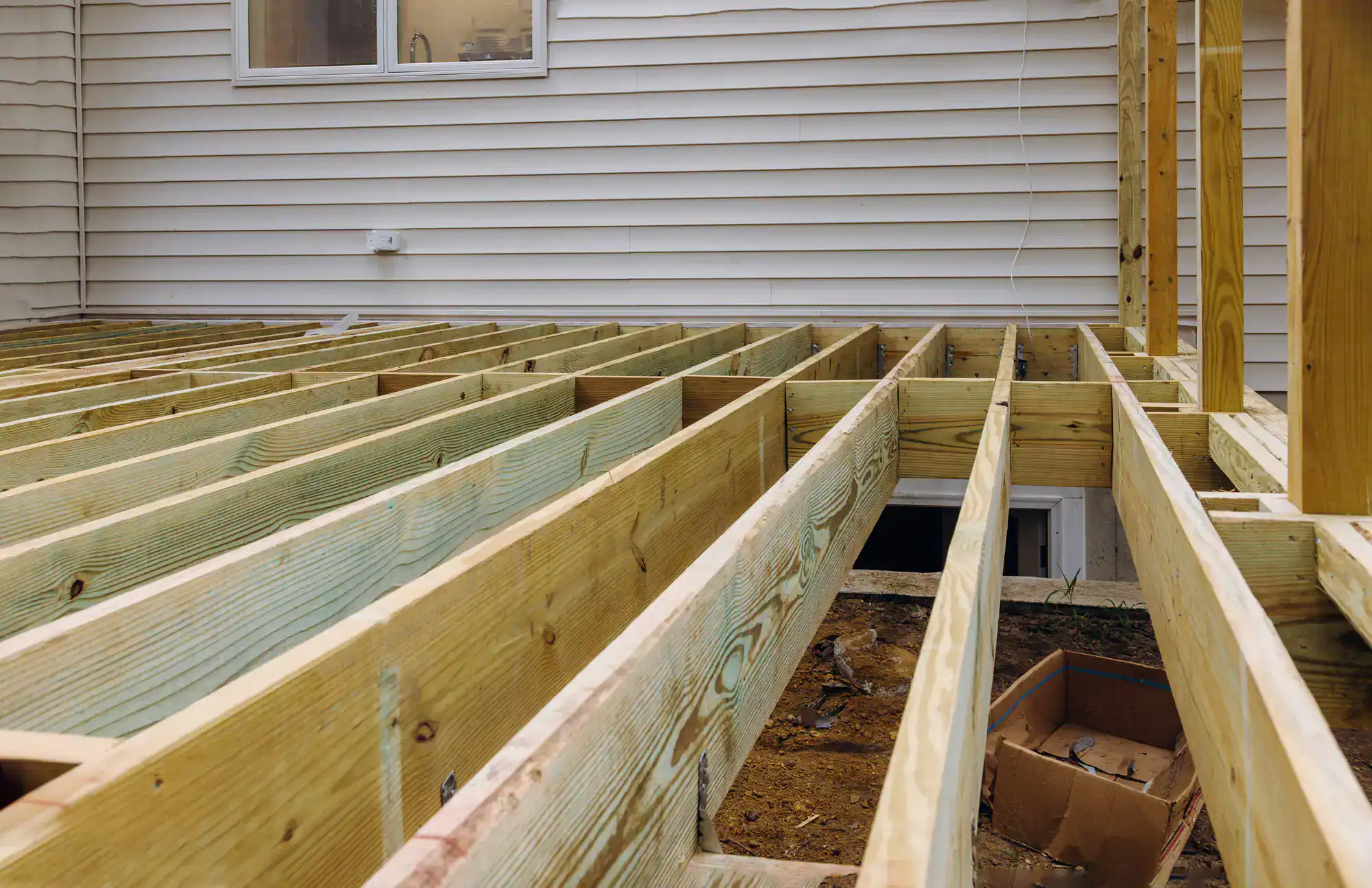
And then there’s the practical side. Essex County’s freeze-thaw winters are hard on outdoor structures. Footings that aren’t set deep enough heave. Ledger connections that aren’t properly flashed rot. A deck built right the first time with footings below the 36-inch frost line, correct flashing at the house connection, and materials suited to NJ’s climate lasts. One built to cut corners doesn’t.
We’re a family-owned general contracting company based in northern New Jersey, serving Essex County homeowners including Glen Ridge since 2018. We’re BBB Accredited, GAF Preferred, and fully licensed as a registered Home Improvement Contractor in New Jersey. Every project comes with a written warranty and a written quote before any work begins.
What that means practically: you’re not hiring a crew that shows up and figures it out. You’re hiring a licensed general contractor who understands the structural and weatherproofing context of attaching a deck to an older home the kind of homes that make up most of Glen Ridge’s housing stock, from the ridge down toward the Bloomfield Avenue corridor.
Tony, our owner, is personally involved in projects. Customers mention him by name in reviews not because it’s a marketing point, but because he’s actually there. For a borough where neighbors walk past each other’s homes every day and 2,200 households sit in just over a square mile, that kind of accountability is the whole point.
It starts with a free on-site consultation. We come to your property, look at the space, talk through what you’re thinking, and give you a detailed written quote itemized, clear, and delivered fast. No verbal ballpark that turns into a surprise invoice later.
Once you move forward, we handle the permit with Glen Ridge’s Building Department. That’s not optional here the borough explicitly requires a building permit for all deck construction, and skipping it creates real problems at resale and with your insurance. We know what the building department expects, submit the correct documentation, and schedule inspections as the work progresses.
Construction itself follows NJ code requirements specific to Essex County: footings go below the 36-inch frost line, ledger connections are properly flashed to prevent water intrusion into your home’s framing, and all lumber and hardware are rated for exterior use. If there’s anything going on with the existing wall framing or siding at the connection point common in homes built 80 to 130 years ago we identify it before it becomes your problem. The job doesn’t end when the last board goes down. It ends when the final inspection is passed and you’re satisfied with what’s been built.
Ready to get started?
Request a callback

We build new decks from the ground up pressure-treated wood, composite, or a combination and help you understand what actually makes sense for your specific home before you commit to anything. For Glen Ridge’s Victorian and Edwardian homes, that conversation matters. Wood is often the more architecturally sympathetic choice: natural, warm, and proportionate to period homes. Composite and PVC options offer better resistance to NJ’s freeze-thaw cycles and require less ongoing maintenance. Both are valid the right answer depends on your home, your goals, and how you plan to use the space.
Every deck we build includes proper structural footings, ledger board attachment with correct flashing, framing, decking, and code-compliant railings where required. For decks 30 inches or more above grade, guardrails are required under New Jersey code and we build to that standard without being asked.
If your project involves anything beyond the deck itself siding repair at the ledger connection, masonry work, or roofing at an adjacent structure our multi-trade general contracting background means those pieces don’t fall through the cracks between subcontractors. It’s all handled by the same licensed team. For Glen Ridge homeowners with older homes and high standards, that continuity matters.
Yes Glen Ridge’s Building Department explicitly requires a building permit before any deck construction begins. That means submitted drawings, a review process, and scheduled inspections as the work progresses. It’s not optional, and it’s not a formality.
Skipping the permit is one of the more costly mistakes a homeowner can make. An unpermitted deck creates real complications at resale buyers’ attorneys and home inspectors will find it, and you’ll either need to pull a retroactive permit, tear down the structure, or negotiate a price reduction. It can also create gaps in your homeowner’s insurance coverage if something goes wrong. We handle the entire permit process as part of the project, so you’re not navigating the borough’s building department on your own.
For a standard pressure-treated wood deck in the 12×16-foot range, expect to be in the $9,000–$13,000 range in northern New Jersey. A comparable composite deck runs $15,000–$20,000. Custom builds with premium materials, multi-level configurations, or built-in features can reach $25,000–$35,000 or more.
In Glen Ridge, where homes regularly sell above $1 million, those numbers are proportionate to the asset you’re improving. What matters more than hitting a low price point is getting a detailed written quote that itemizes exactly what’s included materials, labor, permit fees, and scope. That’s the only way to make a real comparison between contractors. We provide that in writing before any work starts, so you know what you’re getting and what it costs before you commit.
Glen Ridge contains a historic district listed on the National Register of Historic Places, covering much of the borough’s development from 1870 through 1940. The National Register listing itself doesn’t impose construction restrictions on private property owners it’s not the same as a local landmark designation with mandatory review. That said, Glen Ridge takes its architectural character seriously, and the borough’s Building Department is the right first call to confirm whether any additional review applies to your specific property or address before you begin.
What the historic context does affect in a practical sense is design. The borough’s streetscape gas-lit, Victorian, walkable sets a visible standard. Deck additions that clash with the existing architecture stand out in a place this small. We approach material and design selection with that context in mind, not just code compliance.
Both work in New Jersey, but they perform differently and suit different situations. Essex County’s winters include real freeze-thaw cycles temperatures swing above and below freezing repeatedly through late fall, winter, and early spring. That movement stresses wood more than composite over time. Composite and PVC decking hold up better to those cycles with less maintenance required no annual staining or sealing, and less risk of cracking or splitting.
That said, for Glen Ridge’s older Victorian and Edwardian homes, wood often makes more architectural sense. It’s natural, warm, and consistent with the period character of the home in a way that some composite products aren’t. It also delivers a higher immediate ROI at resale roughly 83% cost recoupment versus 68% for composite. The honest answer is that the right material depends on your home, your priorities, and how much ongoing maintenance you’re willing to do. We walk through that tradeoff with you before anything gets ordered.
From signed contract to completed deck, most projects run two to four weeks for a standard build but the full timeline from first consultation to finished deck is longer when you factor in the permit process. Glen Ridge requires a building permit for deck construction, and permit review timelines vary depending on the borough’s current workload and the complexity of your project. In peak season spring and early summer both contractor schedules and municipal review queues get backed up.
The practical advice: if you want a deck ready for summer, don’t start the conversation in May. Homeowners who reach out in late winter or early spring consistently get better scheduling, faster permit processing, and more contractor availability than those who call in April expecting a June completion. We’re upfront about realistic timelines from the first consultation, so you’re not left guessing.
Yes but it requires more attention than a standard suburban new-construction attachment. Glen Ridge’s housing stock is overwhelmingly pre-WWII, with many homes built between the 1870s and 1930s. That means the framing at the ledger connection point may use older lumber dimensions, older fastening systems, or construction methods that don’t match modern standards. Before a ledger board goes up, the condition of the existing wall framing, siding, and any underlying sheathing needs to be assessed.
This is where our background as a licensed general contractor not just a deck-only installer makes a real difference. We evaluate the full picture at the connection point and can address related issues like deteriorated framing, improper flashing, or aging siding before they become structural problems after the deck is built. For a home that’s 80 to 130 years old, that kind of assessment isn’t extra it’s the job done right.
Other Services we provide in Glen Ridge