
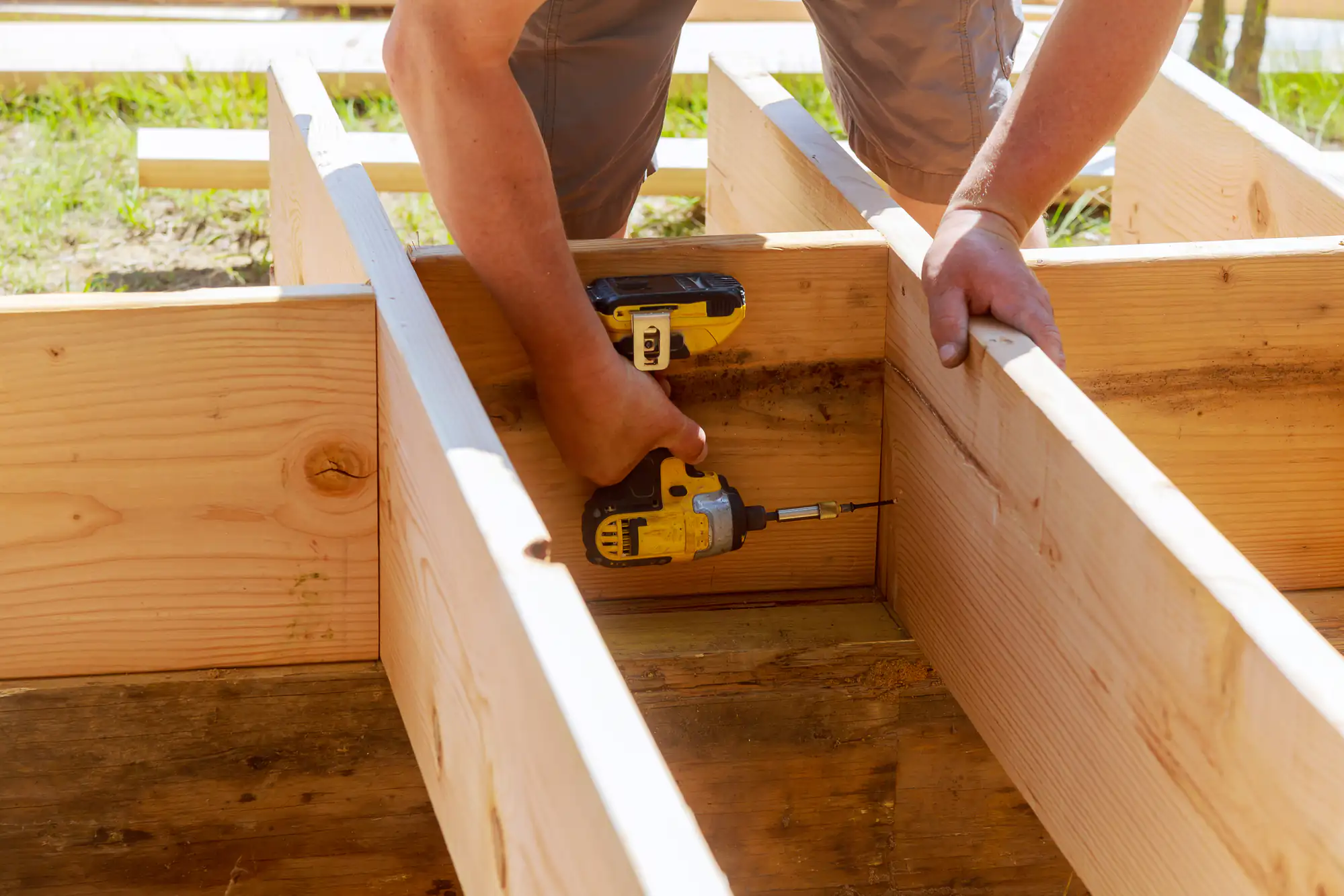
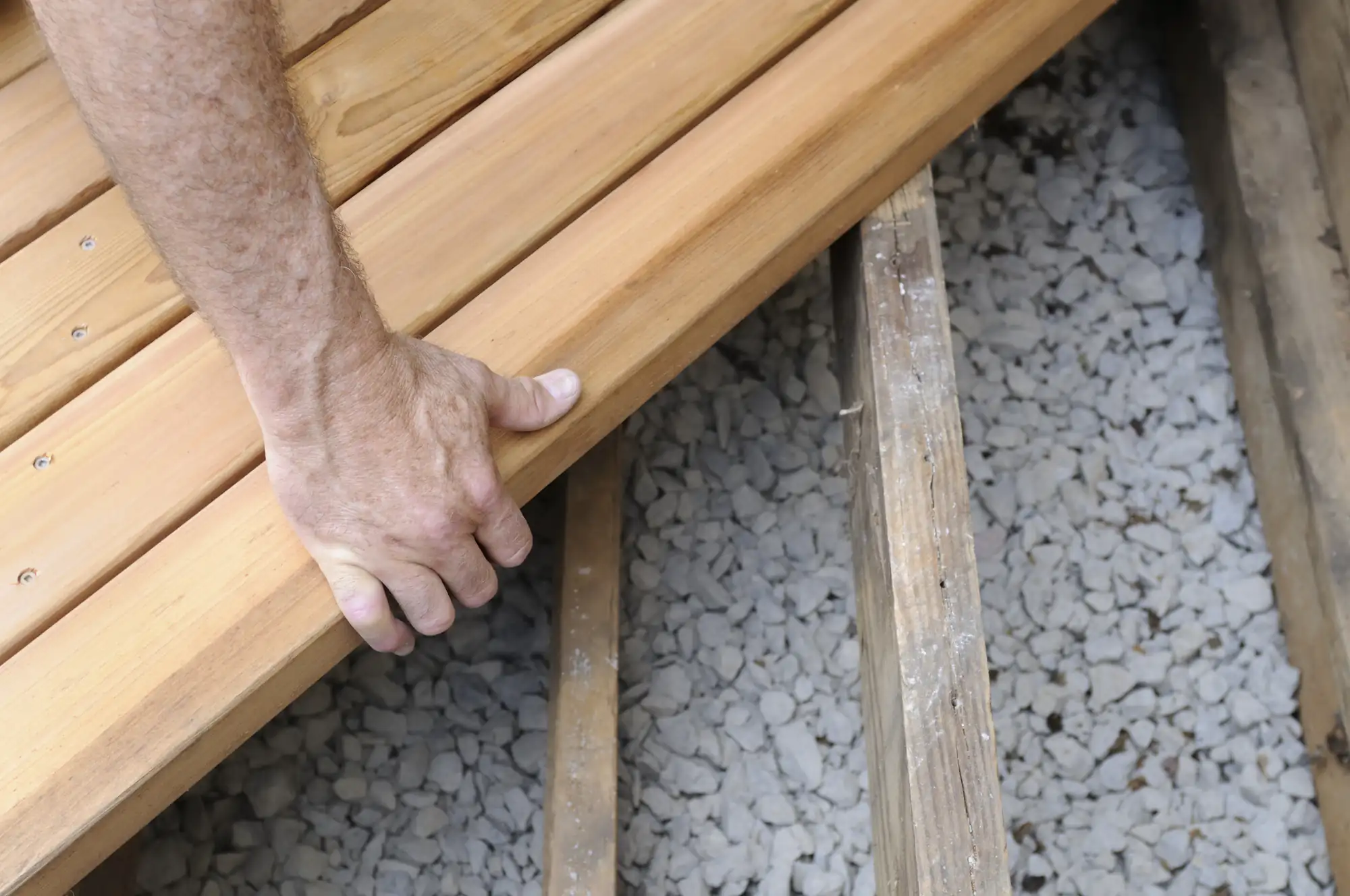
A deck done right isn’t just a platform out back. It’s usable square footage a place to eat outside, let the kids run, host on a Saturday, or just decompress after a commute on Route 287. For a lot of Parsippany-Troy Hills homeowners, that outdoor connection matters more than an extra room inside ever could.
The housing stock in Parsippany-Troy Hills tells the story. A large portion of homes here were built between the 1950s and 1980s Cape Cods, split-levels, and ranches that were never designed with an outdoor living space in mind. That gap between what these homes are and what they could be is exactly where a new deck changes the equation. And if you’re near Lake Parsippany or Lake Hiawatha, a well-designed deck stops being a nice-to-have and starts being the whole point of living there.
From a financial standpoint, it holds up too. Deck additions consistently rank among the top home improvements by return on investment wood decks recoup roughly 83% of their cost at resale, and composite comes in around 68%. In a market where median home values in the 07054 ZIP code sit near $587,000, that’s a real number worth paying attention to.
We’re a family-owned general contracting company based in northern New Jersey, serving Parsippany-Troy Hills and Morris County homeowners since 2018. BBB Accredited and a GAF Preferred Contractor, we bring third-party verified credentials to every project credentials that most deck contractors in this area simply don’t carry.
What actually sets us apart isn’t the badge, though. It’s how the job runs. You’ll know what’s happening, when it’s happening, and why through calls, texts, or on-site updates, whatever works for you. Our owner is personally involved in projects, which means the person accountable for the quality of your deck is the same person making decisions about how it gets built.
We know Parsippany-Troy Hills well from the mid-century homes across Troy Hills and Powder Mill to the lake community properties near Lake Hiawatha and Lake Parsippany where outdoor living isn’t just aesthetic, it’s part of why people bought there in the first place. Every project gets a full written warranty on workmanship, and consultations are always free.
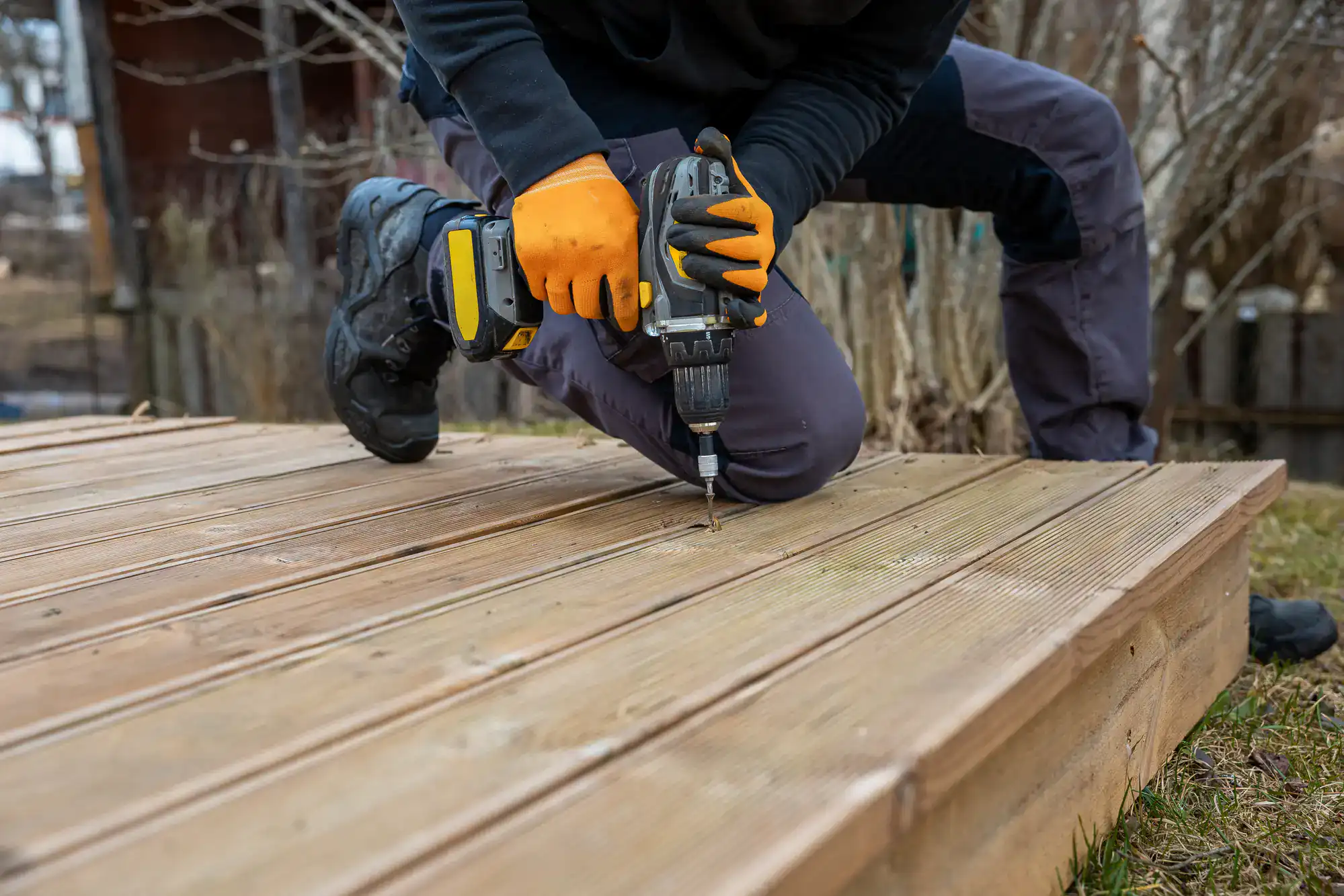
It starts with a free consultation. We come out, look at your space, listen to what you’re after, and give you a written quote that spells out materials, labor, and scope. No vague ballpark figures, no verbal estimates that balloon later. You’ll know exactly what you’re getting before anything is signed.
Once you move forward, we handle the permit process with Parsippany-Troy Hills Township directly. That means filing with the Division of Construction Code Inspection and Enforcement, clearing the zoning review for setback compliance and lot coverage limits, and scheduling the required inspections at each stage. This isn’t a step most homeowners want to navigate alone and with us, you don’t have to. We know the township’s specific deck ordinances and have been through this process in Morris County many times.
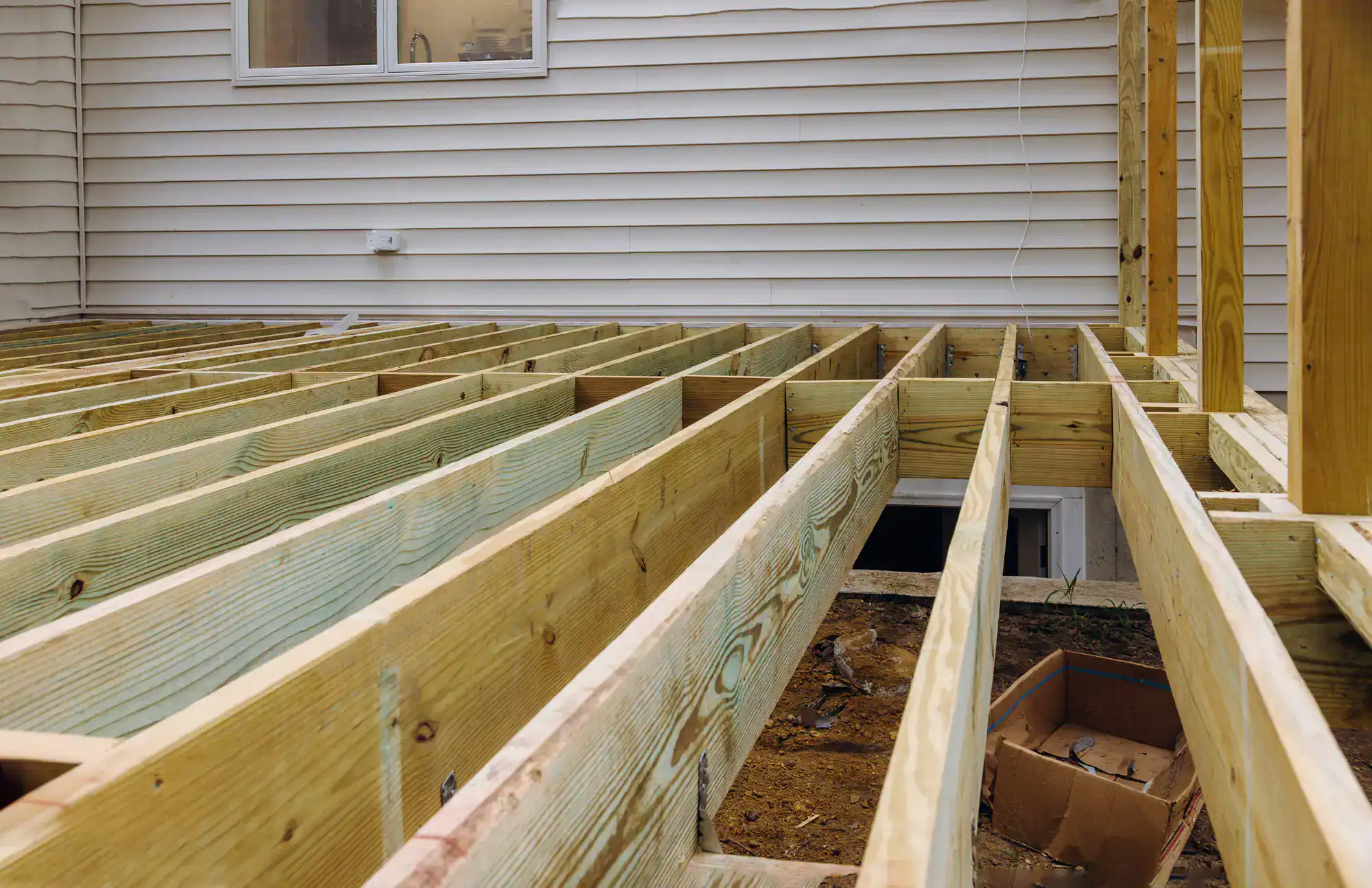
Construction follows a clear sequence: footings are set below New Jersey’s 36-inch frost line to prevent heaving through winter freeze-thaw cycles, framing and decking go in with properly coated fasteners rated for the material, and finishing details are handled before the final inspection is called. When the certificate of completion is issued, the job is done not just visually, but officially. You get a deck that’s built right, inspected, and fully permitted, which matters enormously if you ever sell the home.
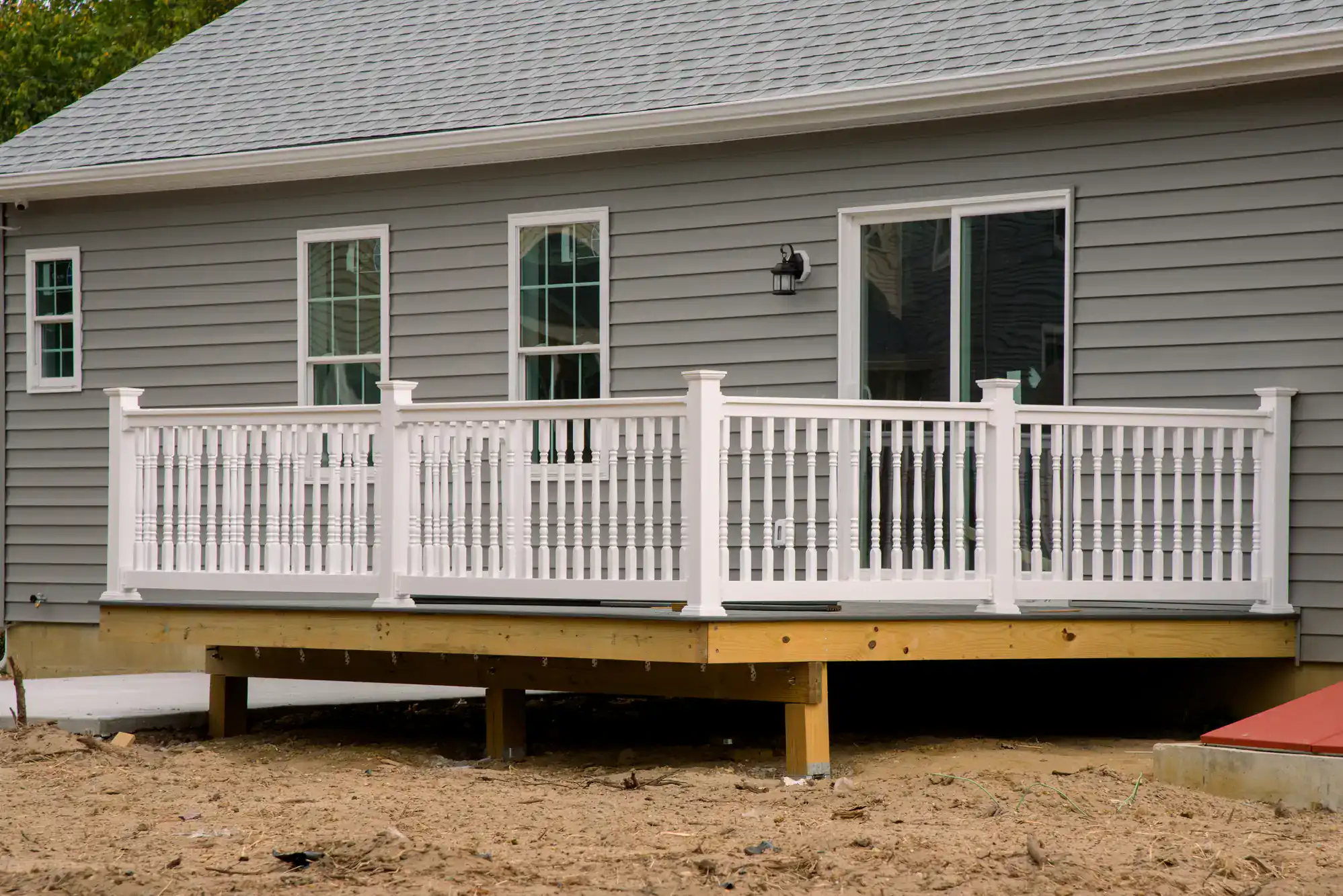
Ready to get started?
Request a callback

One of the most common questions Parsippany-Troy Hills homeowners ask is whether to go with composite or pressure-treated wood. The honest answer depends on your budget, your timeline, and how much maintenance you’re willing to do and we’ll walk you through both without pushing you toward the more expensive option.
Composite decking has become the dominant choice in northern New Jersey for good reason. It holds up through Morris County winters without absorbing moisture, resists the warping and splitting that pressure-treated wood can develop after years of freeze-thaw cycles, and requires almost no upkeep beyond occasional cleaning. If you’re near one of the township’s lake communities Lake Parsippany, Lake Hiawatha, Lake Intervale composite is particularly well-suited to the higher moisture exposure those properties see.
Pressure-treated wood is still a strong option for the right project. It has a lower upfront cost, it looks and feels traditional, and it recoupes a higher percentage of its cost at resale than composite does. For homeowners in the Mount Tabor historic district, where architectural character matters, wood often fits the home better visually. We build both to the same standard proper ledger flashing, coated hardware throughout, and code-compliant construction from footing to railing. Whatever you choose, the work is backed by a full written warranty and handled by a licensed NJ contractor who knows exactly what Parsippany-Troy Hills requires.
Yes and there’s no minimum size exemption in Parsippany-Troy Hills. Any deck construction requires both a zoning permit review and a construction permit through the township’s Division of Construction Code Inspection and Enforcement. The zoning review checks that your deck complies with setback requirements and lot coverage limits before the construction permit is even issued.
The township’s deck ordinances are specific: your deck cannot encroach into the side or rear yard more than 50% of the minimum side or rear yard requirement for principal buildings in your zoning district, and wooden decks may only cover an additional 4% of lot area beyond what’s otherwise permitted. The zoning permit fee for a residential deck is $50, with additional construction permit fees based on project scope. Skipping this process isn’t worth the risk unpermitted work can result in violations, fines, and real complications at resale. We handle the entire permit process with the township on your behalf.
Deck costs in Parsippany-Troy Hills typically range from $15,000 to $35,000 or more depending on size, material, design complexity, and site conditions. A straightforward pressure-treated wood deck on a flat grade will come in lower than a multi-level composite deck on a split-level home with a significant grade change which is a common scenario across the township’s mid-century neighborhoods.
Material choice is one of the bigger cost drivers. Composite decking costs more upfront than pressure-treated wood, but the long-term maintenance savings are real no staining, no sealing, no boards cupping after a Morris County winter. For homeowners near the lake communities or on properties with significant moisture exposure, that tradeoff often makes financial sense over a 10-to-15-year horizon. We provide written, itemized quotes at no charge so you can compare options clearly before committing to anything.
Parsippany-Troy Hills has district-specific setback requirements that apply to deck construction. Under the township’s zoning ordinance, a wooden deck attached to your home may not encroach into the side or rear yard more than 50% of the minimum side or rear yard requirement for principal buildings in your zoning district. In the R-4 District, decks may extend to the permitted minimum side and rear yard for accessory structures.
These rules matter practically because many of the mid-century homes in Parsippany-Troy Hills particularly the Cape Cods and split-levels common across neighborhoods like Troy Hills sit on lots where the available buildable footprint is tighter than it looks. Before you finalize a deck design, the zoning review will confirm what’s actually permitted on your specific lot. We go through this process with the township before any plans are drawn up, so you’re not designing something that can’t be approved.
New Jersey’s frost line is approximately 36 inches deep, and deck footings must be set below that depth to comply with the state’s Uniform Construction Code. This isn’t optional it’s a code requirement that gets verified during the inspection process. Footings set above the frost line are vulnerable to heaving as the ground freezes and thaws through a Morris County winter, which can cause structural movement, cracked ledger connections, and long-term deck instability.
This is one of the details that separates a properly built deck from one that looks fine at first and starts showing problems after a few seasons. Parsippany-Troy Hills experiences regular freeze-thaw cycling from late November through March, and footings that weren’t set correctly will reflect that over time. We set every footing to code depth and have it verified through the township’s inspection process before framing begins not as an extra step, but as the standard way the job is done.
For homes near Lake Parsippany, Lake Hiawatha, or any of the other lake communities within Parsippany-Troy Hills, composite decking is generally the stronger long-term choice. Properties near water see higher ambient moisture levels year-round, and pressure-treated wood while durable absorbs that moisture over time. The result is boards that swell, cup, and eventually crack or splinter, especially when you add Morris County’s freeze-thaw cycles into the equation.
Composite decking doesn’t absorb moisture the same way. It holds its shape and surface through wet seasons and cold winters without requiring annual sealing or staining. That matters for lake community homeowners who want a deck that stays low-maintenance and looks good year after year without a recurring maintenance bill. That said, pressure-treated wood is still a viable option on lake-adjacent properties if you’re working within a tighter budget the key is proper installation, the right hardware, and realistic expectations about upkeep. We’ll give you an honest read on both based on your specific property.
The timeline varies depending on project complexity and the township’s current application volume, but homeowners should generally plan for two to four weeks from permit application to approval for a straightforward residential deck. More complex projects those requiring variance review, structural engineering, or additional subcode applications can take longer.
This is one of the reasons starting your project planning in late fall or winter pays off. Parsippany-Troy Hills, like most Morris County municipalities, sees a surge in permit applications from March through June as homeowners begin spring construction projects. Contractors book up during that window, and permit queues get longer. If you want your deck built and ready for summer, the conversation should start well before the season does. We initiate the permit process as soon as the project scope is confirmed, keep you updated on where things stand with the township, and coordinate the inspection schedule so there are no delays once construction begins.
Other Services we provide in Parsippany-Troy Hills