
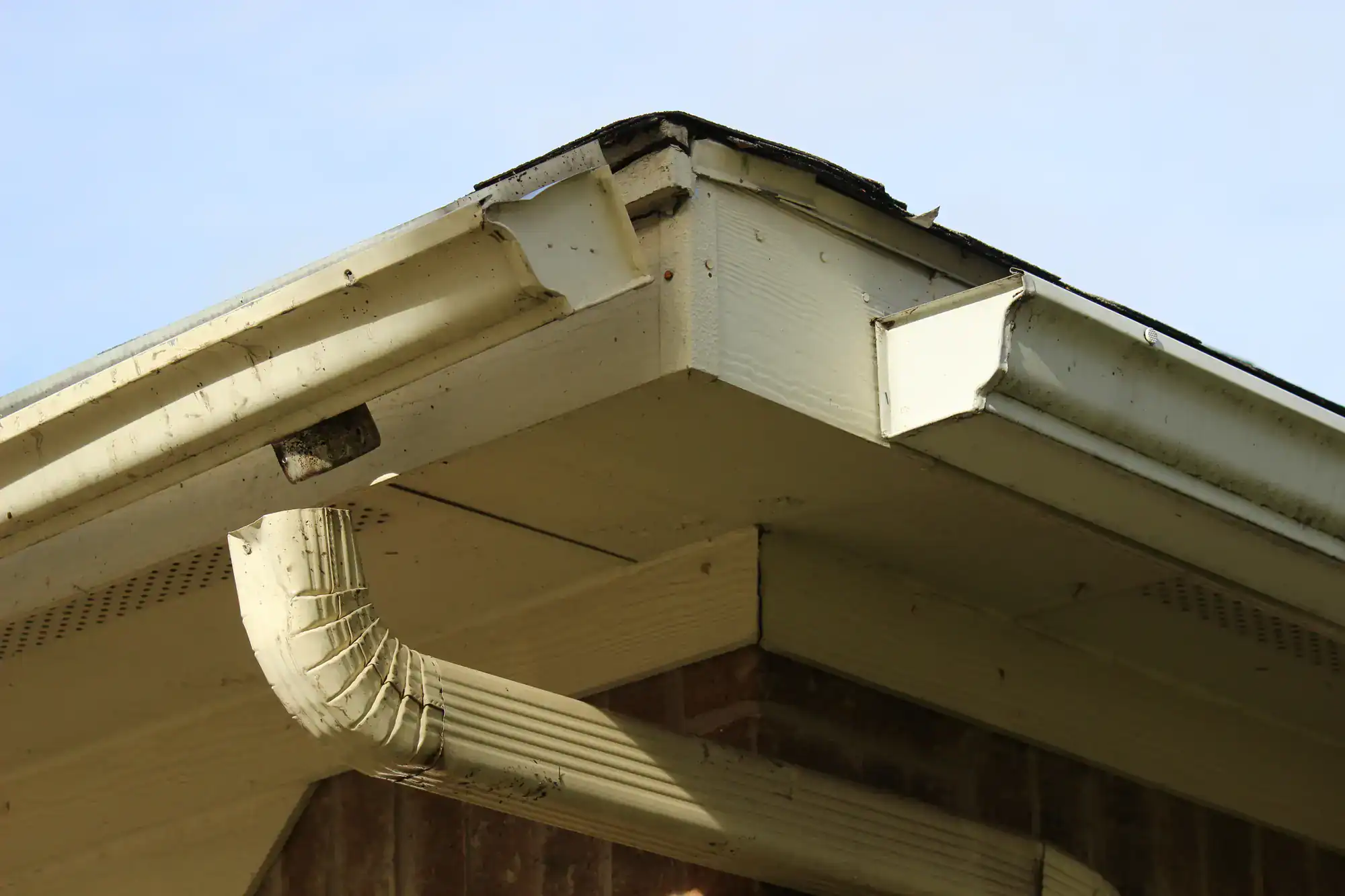
Most gutter failures don’t announce themselves. They show up as a water stain on the ceiling, a soft spot in the fascia, or a basement that gets damp every time it rains hard. By the time you notice, the damage is already done and in Chatham, where median home values sit close to $984,900, that’s not a small problem to absorb.
Chatham’s combination of heavy tree canopy and Passaic River proximity creates conditions that stress gutter systems faster than most homeowners expect. The mature oaks and maples lining streets throughout the Borough and Township drop debris that clogs channels and holds moisture against your roofline. Add in Morris County’s freeze-thaw winters, and you’ve got a recipe for ice dam formation, hanger failure, and fascia rot all of which start small and get expensive fast.
When your gutters are properly installed and sized for your home, water moves where it’s supposed to. Your foundation stays dry. Your fascia stays intact. And when the Passaic rises and the rain comes sideways, your home is managing drainage instead of fighting it. That’s the difference a properly installed system makes not just aesthetically, but structurally.
Proline Construction is a family-owned general contracting company that has been serving northern New Jersey since 2018. We’re NJ Home Improvement Contractor licensed (#13VH09838700 verifiable through the NJ Division of Consumer Affairs), BBB accredited, and a GAF Preferred Contractor. Those aren’t just credentials to list they’re the kind of checkable facts that matter when you’re handing someone the keys to a home worth close to a million dollars.
We work throughout Morris County, and Chatham is a community we know well. The 1920s–1960s Colonials and Tudors throughout the Borough, the larger wooded lots in the Township near the Great Swamp, the aging fascia and soffit conditions that come with that housing stock this isn’t new territory for us. We’ve seen what happens when gutters are installed without accounting for what’s underneath them, and we’ve handled the water damage that follows.
Every project starts with a free consultation and ends with a full written warranty. No pressure, no surprises, no disappearing after the job is done.
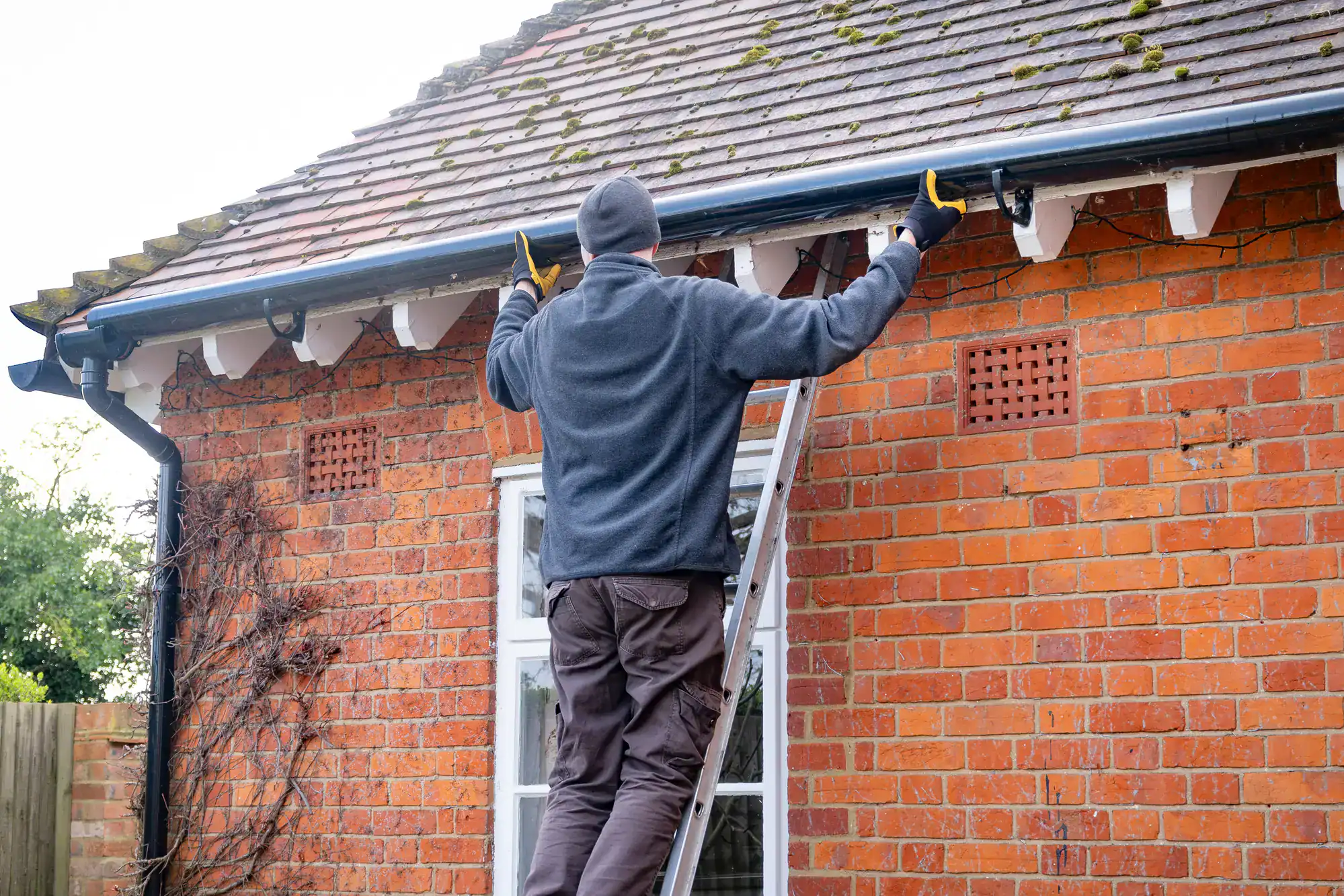
It starts with a free on-site consultation. We look at your existing gutters, the fascia and soffit condition behind them, your roofline pitch, and your downspout placement. On older Chatham homes especially the mid-century Colonials throughout the Borough we often find that the underlying fascia is the real issue, not just the gutters themselves. Installing new gutters over rotted wood is a short-term fix that creates the same problem two years later. We flag that upfront.
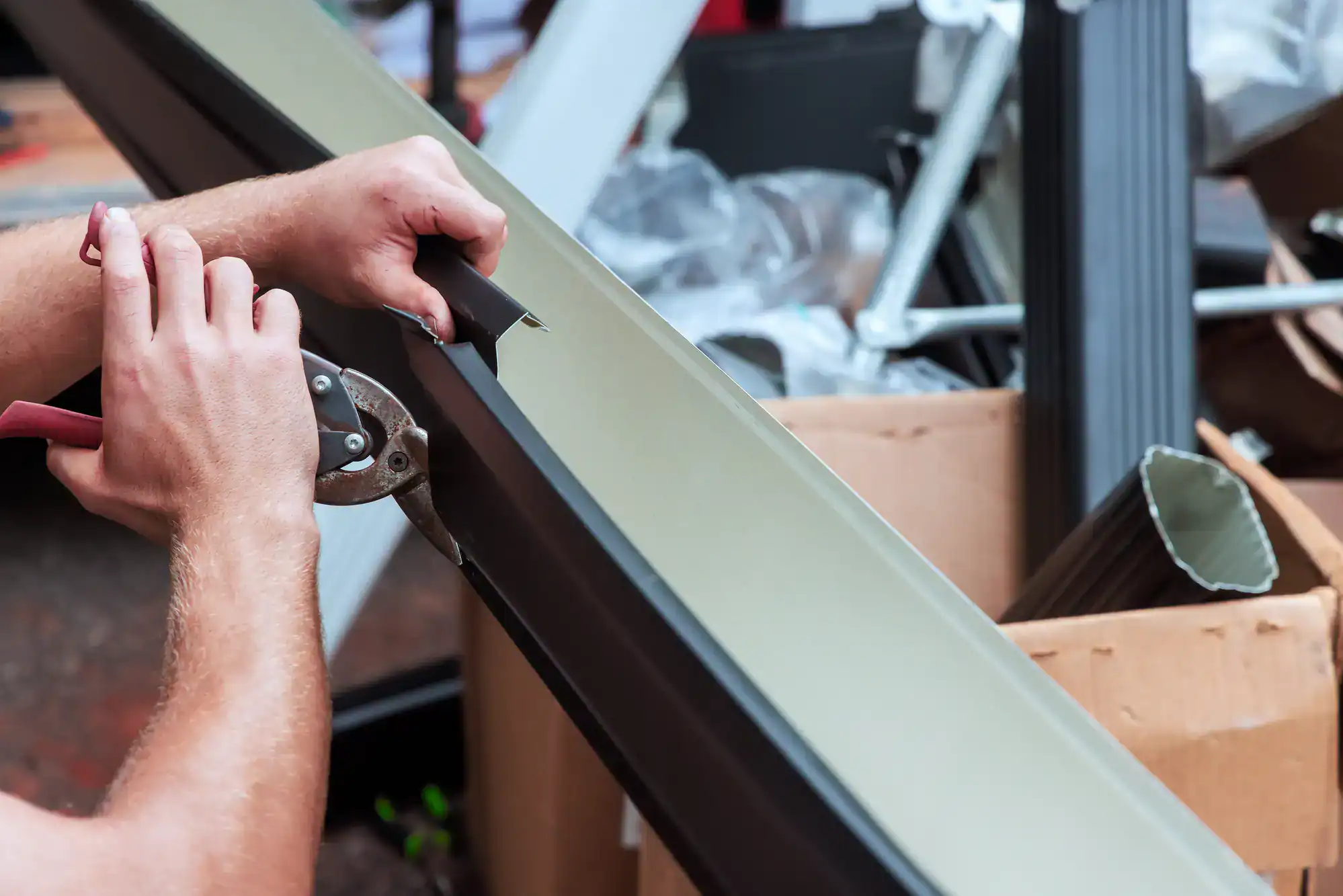
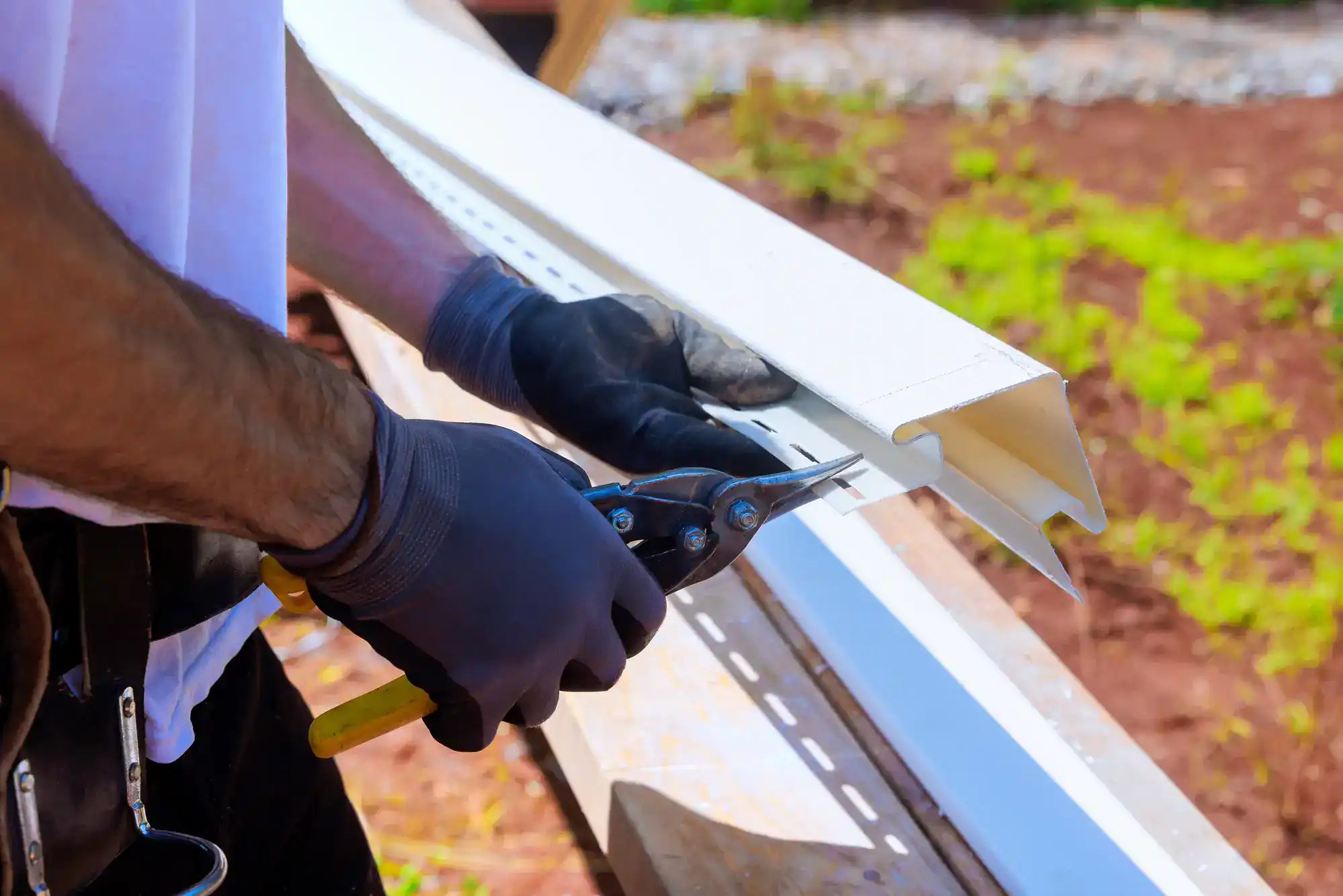
Once we have a clear picture, we fabricate your seamless gutters on-site, cut to the exact measurements of your home. No pre-cut sections, no seams along the run where leaks typically start. We size the system based on your roof’s square footage and pitch, which matters more than most homeowners realize an undersized gutter on a steep Colonial roofline will overflow in a heavy NJ thunderstorm regardless of how clean it is.
Standard gutter replacement in New Jersey typically doesn’t require a building permit when it’s a like-for-like swap, but if we’re addressing fascia or structural components alongside the gutters, we’ll walk you through what’s needed. Installation is clean, efficient, and we don’t leave until the system is tested and draining properly. You’ll know exactly what was done and why before we leave your property.
Ready to get started?
Request a callback

Gutter installation isn’t one-size-fits-all, and Chatham’s housing stock makes that especially clear. A Dutch Colonial in the Borough with overhanging street trees has different needs than a large Township property backing up to the Great Swamp. We handle both and everything in between.
Our gutter services cover full seamless installation for new builds and complete replacements, targeted repairs for leaks, sagging sections, and pulling fascia, downspout repair and repositioning, and clog removal. We also offer emergency service when something fails mid-storm and you can’t wait for a scheduled appointment. For Chatham homeowners near River Road or along the lower-lying streets that see Passaic River flooding, a fast response to an active gutter failure isn’t a convenience it’s a necessity.
Beyond the gutters themselves, we assess the fascia, soffit, and roofline as part of every job. If we find rot, improper pitch, or damage that will compromise a new installation, we tell you before we start not after. We work in aluminum, which holds up well against Morris County’s freeze-thaw cycles, and we can walk you through gutter guard options if your property’s tree canopy makes seasonal maintenance a recurring headache. Whatever your home needs, we scope it honestly and back the work with a full written warranty.
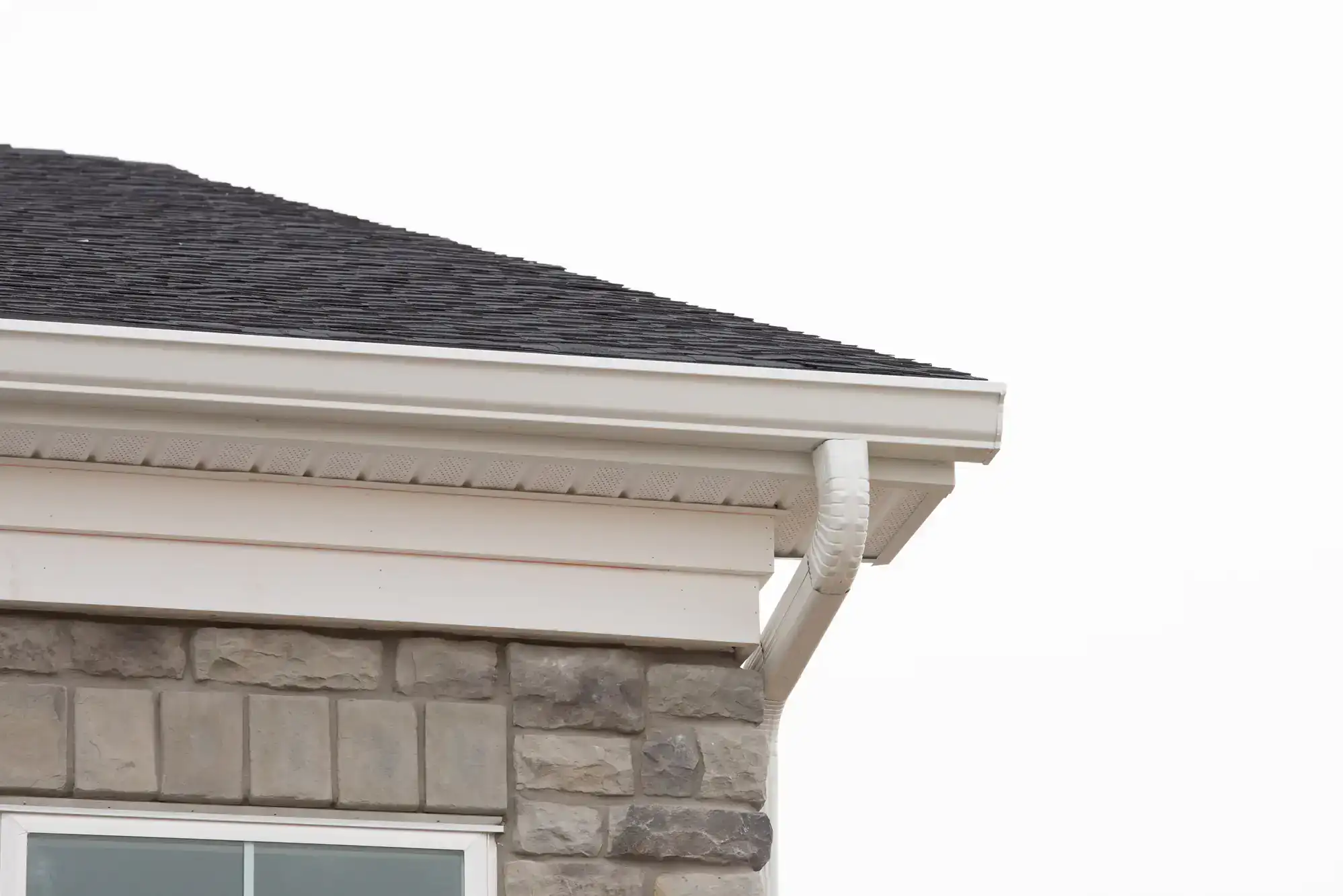
For a standard like-for-like gutter replacement same location, same configuration you generally don’t need a building permit under New Jersey’s Uniform Construction Code. That applies in both Chatham Borough and Chatham Township. The work falls under routine maintenance and doesn’t trigger a permit requirement on its own.
Where it gets more involved is when structural components are part of the scope. If we’re replacing rotted fascia boards, repairing soffit, or making any changes that affect the structural connection between your gutters and your roofline, a permit may be required. Chatham Township’s Construction Department actively follows up on open permits, so it’s worth doing this right the first time. We’ll walk you through what applies to your specific project during the consultation no guesswork on your end.
The honest answer is that it depends on what’s failing and why. If you’re dealing with a single leak at a seam, a section that’s pulling away from the fascia, or a downspout that’s disconnected, repair is often the right call. But if your gutters are original to a 1950s or 1960s home which is common throughout Chatham’s Borough and Township you’re likely looking at a system that’s 30 to 50 years past its useful life. Patching an aging sectional system is often throwing money at a problem that will resurface within a year or two.
The clearest signs that replacement makes more sense: gutters that are pulling away from the fascia along multiple sections, visible rust or corrosion throughout the system, persistent overflow during moderate rain despite clean channels, or fascia damage that indicates long-term water exposure. We’ll give you a straight read during the consultation repair if that’s what makes sense, replacement if that’s what the home actually needs.
This is one of the more common issues we see on older homes throughout Chatham, and the cause is almost always improper sizing or incorrect pitch. The gutters may have been installed decades ago to a standard that doesn’t account for your roof’s actual square footage or pitch angle. A steep Colonial roofline sheds water significantly faster than a low-slope ranch and if the gutter channel isn’t wide enough or deep enough to handle that volume, it will overflow in a heavy NJ thunderstorm regardless of how clean it is.
The fix isn’t cleaning it’s resizing. In some cases, the pitch has also shifted over time as hangers loosen and the gutter sags slightly in the middle, creating a low point where water pools instead of draining toward the downspout. We check both during every assessment. Getting the sizing and pitch right from the start is what separates a gutter that works from one that just looks like it should.
Significantly. Morris County has over 40% tree canopy coverage, and Chatham’s established neighborhoods particularly the mature-lot streets throughout the Borough and the wooded properties in the Township near the Great Swamp see heavy leaf and debris accumulation multiple times per year. Oak and maple debris in particular breaks down slowly and holds moisture in the gutter channel, which accelerates corrosion in older aluminum systems and creates the standing water that leads to ice dam formation in winter.
For most Chatham homes with significant tree coverage, gutters should be cleaned at minimum twice per year once in late fall after the leaves are down, and once in spring. If you have large oaks directly overhanging the roofline, three cleanings per year isn’t unreasonable. Gutter guards can reduce that frequency, but they don’t eliminate maintenance entirely and not every guard system is appropriate for every roof type. We’ll give you an honest recommendation based on your specific property, not a sales pitch for the most expensive option.
For most Chatham homes, aluminum is the right call. It handles New Jersey’s freeze-thaw cycle well, doesn’t rust, holds paint, and is available in a range of colors that work with the Colonial, Tudor, and Dutch Colonial exteriors common throughout Chatham. It’s also the standard material for seamless gutter fabrication, which means no seams along the run and significantly fewer leak points than older sectional systems.
Copper is a premium option that some homeowners choose for historic or high-end properties it’s extremely durable and develops a distinctive patina over time, which suits certain architectural styles in Chatham particularly well. The tradeoff is cost: copper gutters run significantly more than aluminum, though they also last considerably longer with minimal maintenance. Vinyl is generally not recommended for this climate it becomes brittle in cold temperatures and doesn’t hold up well through Morris County winters. We’ll walk you through the options based on your home’s style, your budget, and what will actually perform over the long term.
It’s a compounding problem. The Passaic River already raises the water table in low-lying areas of Chatham during heavy rain events the National Weather Service maintains a dedicated flood gauge for the river at Chatham, and streets like River Road and Edgewood Road see periodic flooding during significant storms. When your gutters are clogged, improperly pitched, or overflowing, they’re depositing water directly at your foundation at exactly the moment the surrounding ground is already saturated.
Water that pools at the foundation has nowhere to go but in. Over time, that repeated cycle causes hydrostatic pressure against foundation walls, cracks, efflorescence, and eventual water intrusion into the basement. The fix at that stage foundation waterproofing, crack injection, drainage systems runs anywhere from $5,000 to $25,000 or more. A properly installed gutter system that moves water away from the foundation is a fraction of that cost and eliminates the source of the problem before it becomes structural. For Chatham homes in lower-lying areas, this isn’t a worst-case scenario it’s a pattern we see regularly.
Other Services we provide in Chatham