
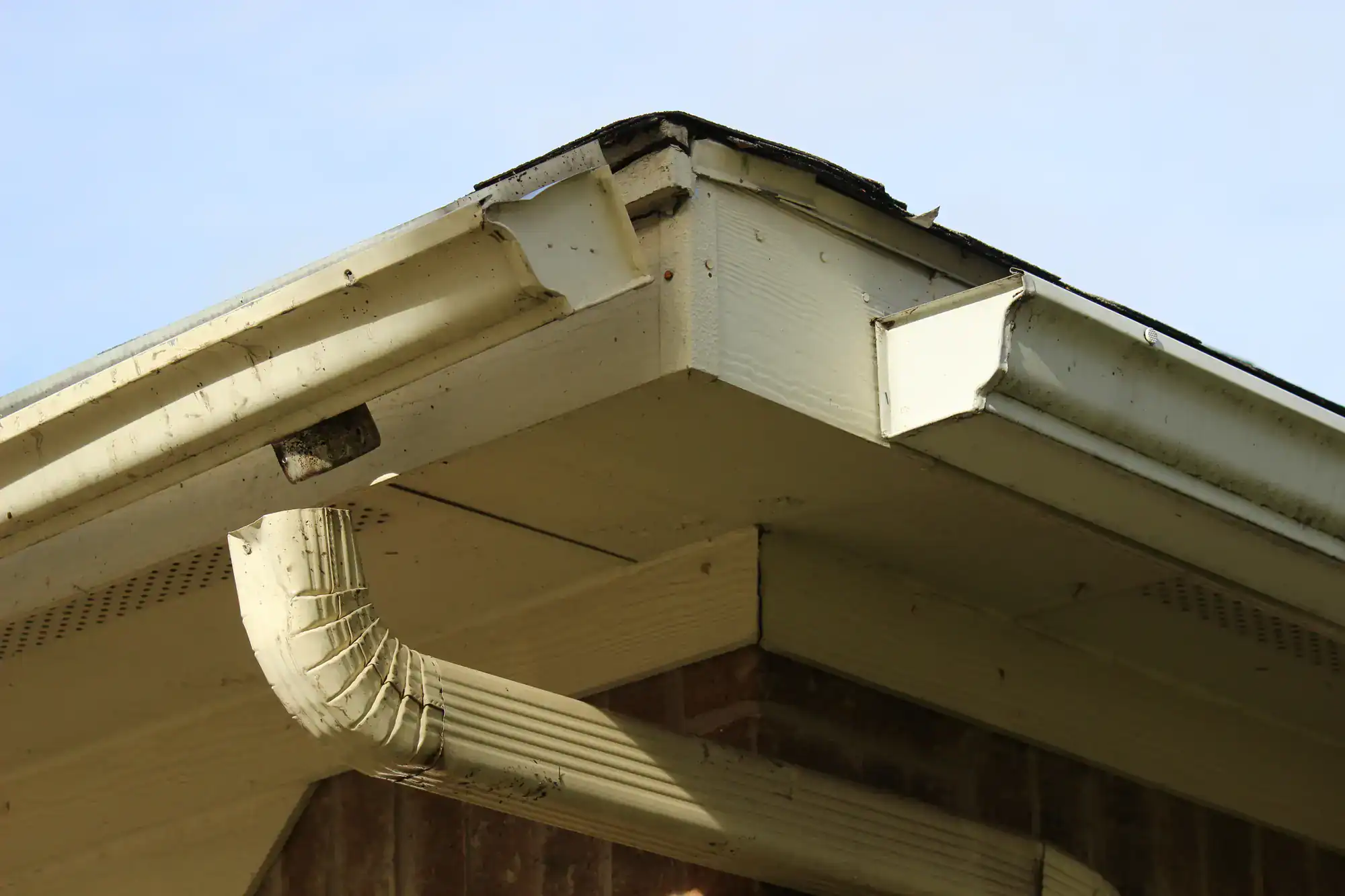
The homes in Llewellyn Park weren’t built for neglect. Victorian estates, Gothic Revival cottages, Tudor manor houses these are structures with original wood fascia, period masonry, and century-old foundations that have no tolerance for water that goes where it shouldn’t. When gutters fail here, the damage isn’t cosmetic. It works its way into materials that can’t be replicated at any price.
A properly installed gutter system changes that equation. Rainwater moves off the roof and away from the structure the way it’s supposed to. The fascia stays dry. The foundation stays protected. And the steep roof pitches common on Llewellyn Park’s historic homes which shed water faster and in higher volumes than anything you’d find on a modern suburban lot are finally matched with a system sized to handle that load.
The dense hardwood canopy throughout Llewellyn Park means debris accumulates fast, especially in fall. That’s not just a cleaning inconvenience it’s a structural risk when blocked gutters trap water at the roofline through Essex County’s freeze-thaw winters. Getting the installation right from the start, with correct pitch, appropriate sizing, and properly placed downspouts, is what keeps small maintenance issues from becoming five-figure repair bills.
We’ve been serving homeowners across Essex County since 2018. We’re a family-owned general contracting company, and the way we work reflects that clear communication, honest assessments, and work we’re willing to put our name behind with a full warranty.
We hold NJ Home Improvement Contractor License #13VH09838700, verifiable through the NJ Division of Consumer Affairs. We’re BBB accredited and a GAF Preferred Contractor. Those aren’t decorations they’re the baseline credentials any homeowner in a community like Llewellyn Park should require before letting someone work on their property.
Llewellyn Park sits within West Orange Township, and we know this area. We understand what it means to work on homes within a National Register Historic District, where the HOA has standards, where the architecture demands care, and where cutting corners on a gutter job can mean damaging something that’s been standing since before the Civil War. We don’t take that lightly.
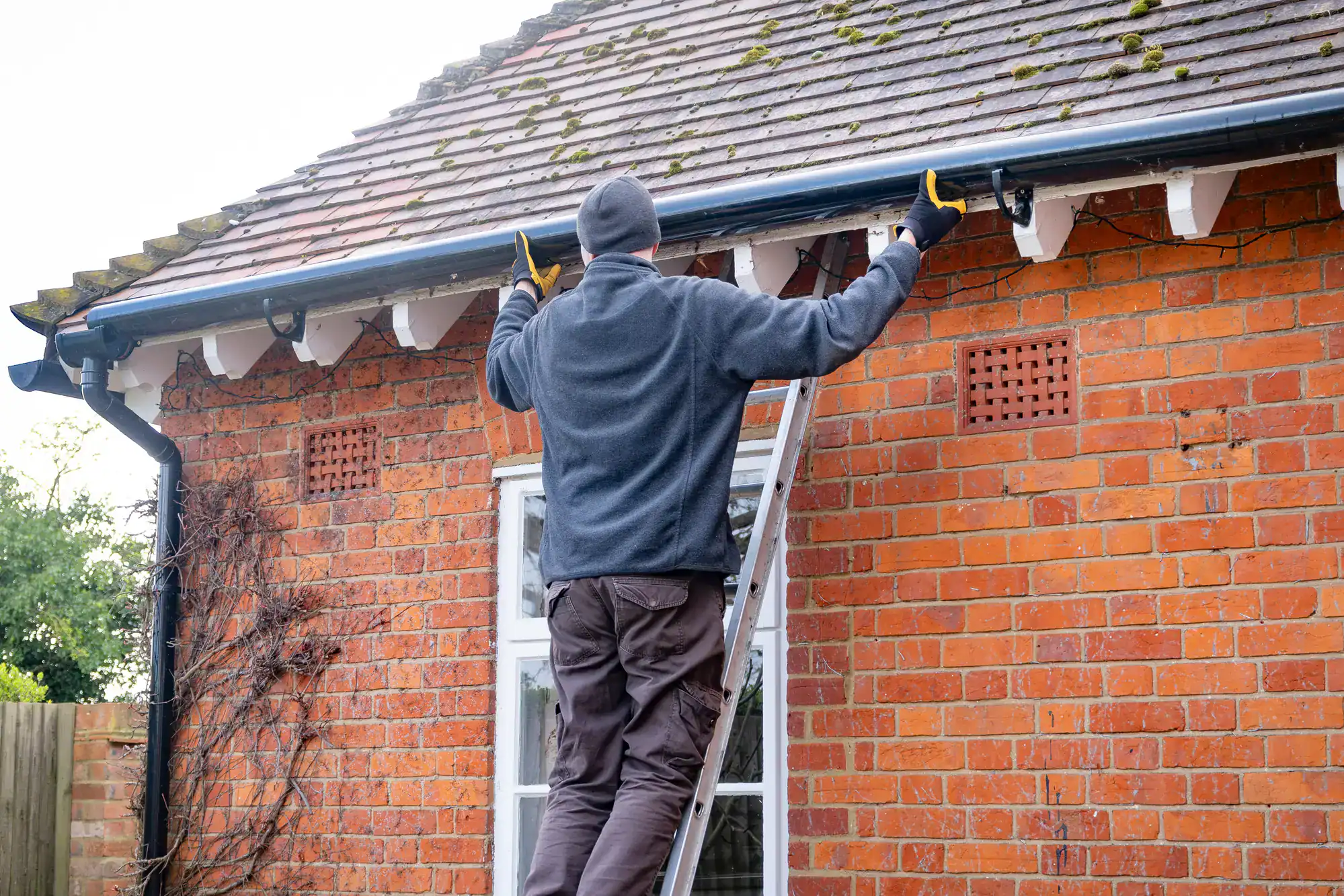
It starts with a free consultation. We come out, look at the full picture not just the gutters, but the fascia condition, the roofline geometry, the downspout placement, and how water is currently moving off the structure. For homes in Llewellyn Park, that assessment matters more than it does on a standard suburban property. Steep Victorian roof pitches, complex gable returns, and rooflines that can span hundreds of linear feet all affect how a gutter system needs to be designed to actually perform.
From there, we talk through your options. That includes material choices aluminum, copper, or other profiles appropriate to the architecture and whether your HOA or West Orange Township’s building requirements factor into the scope. If permits are needed, we help you understand that before work begins, not after. For homes within the Llewellyn Park Historic District, we approach every material and installation decision with the preservation context in mind.
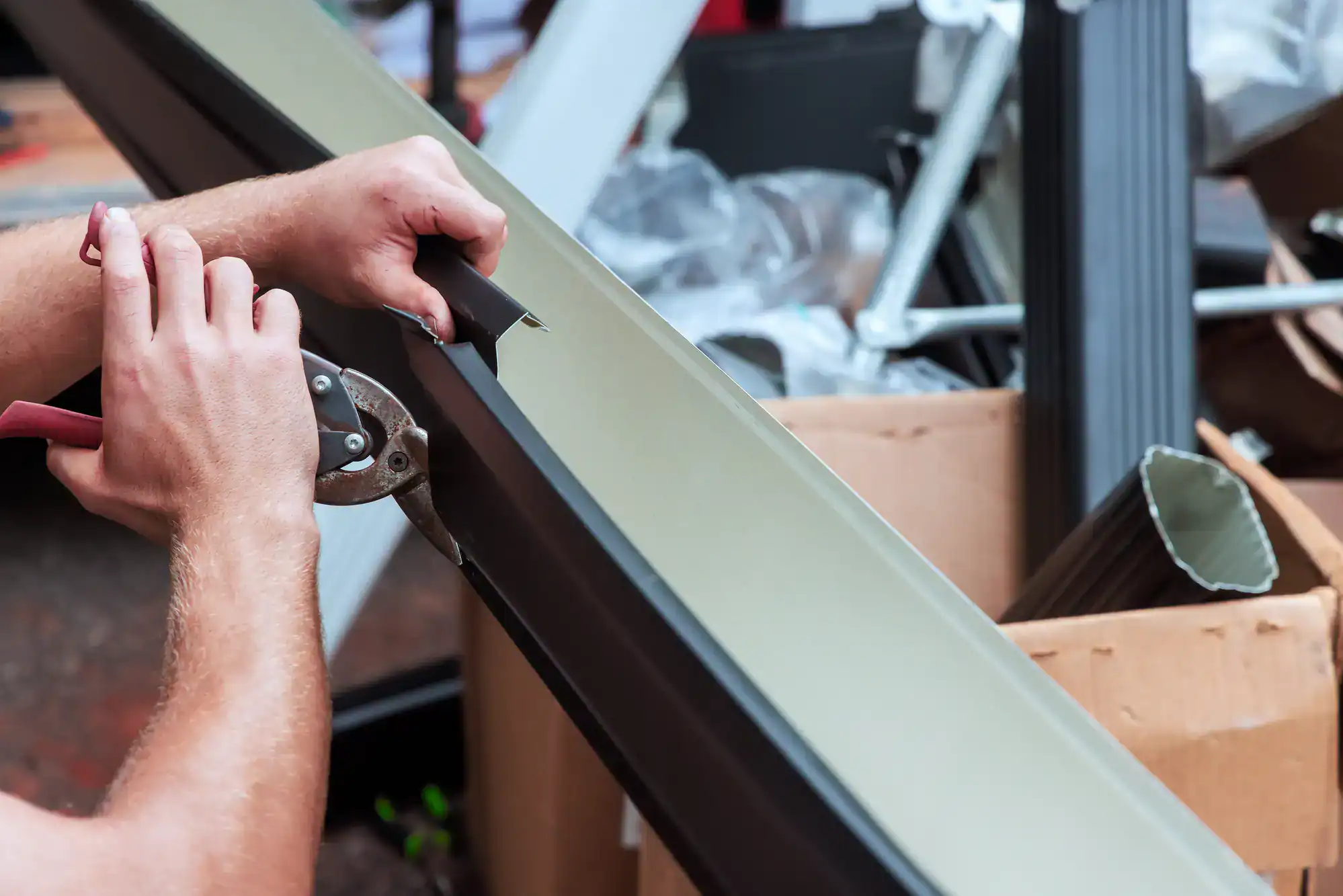
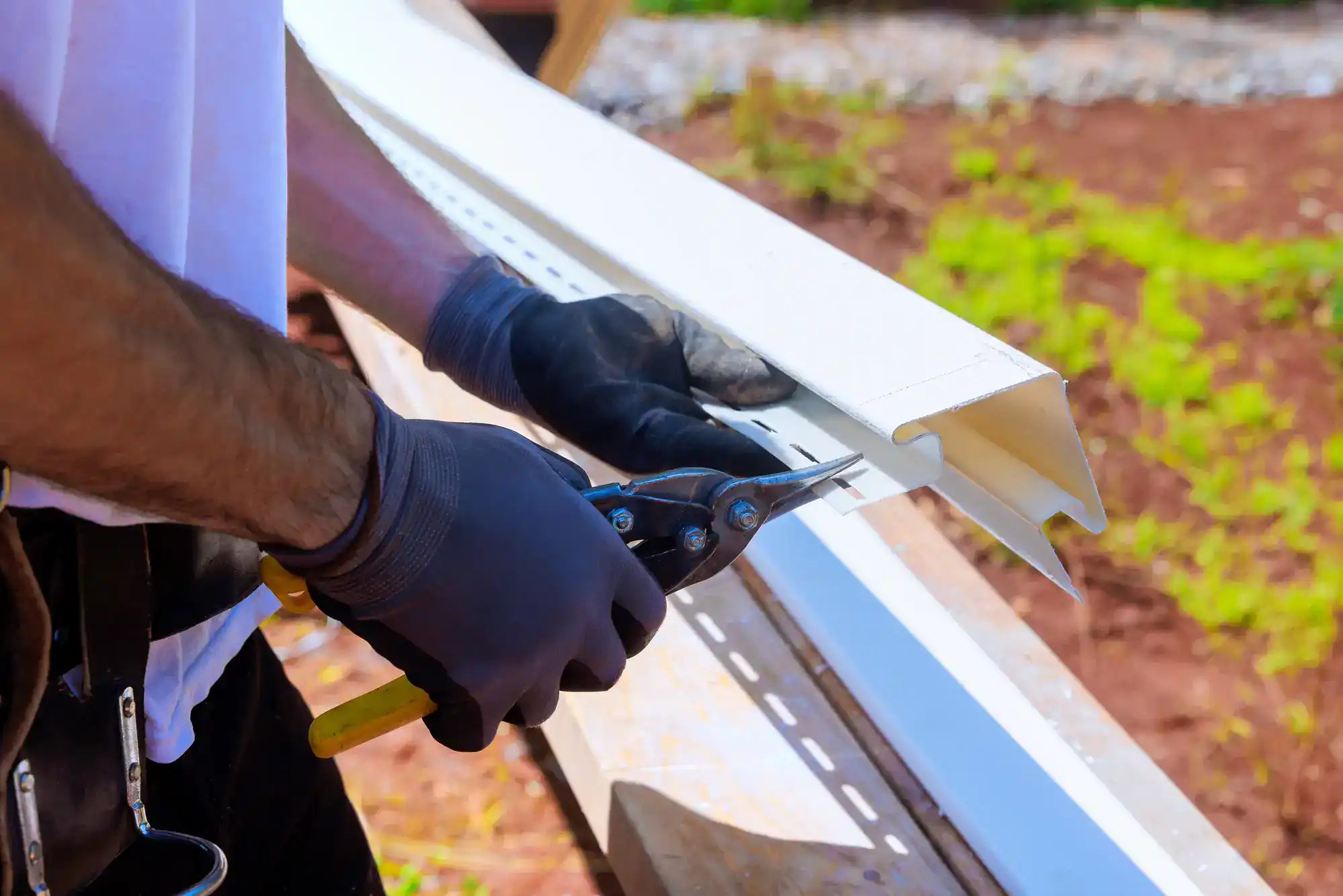
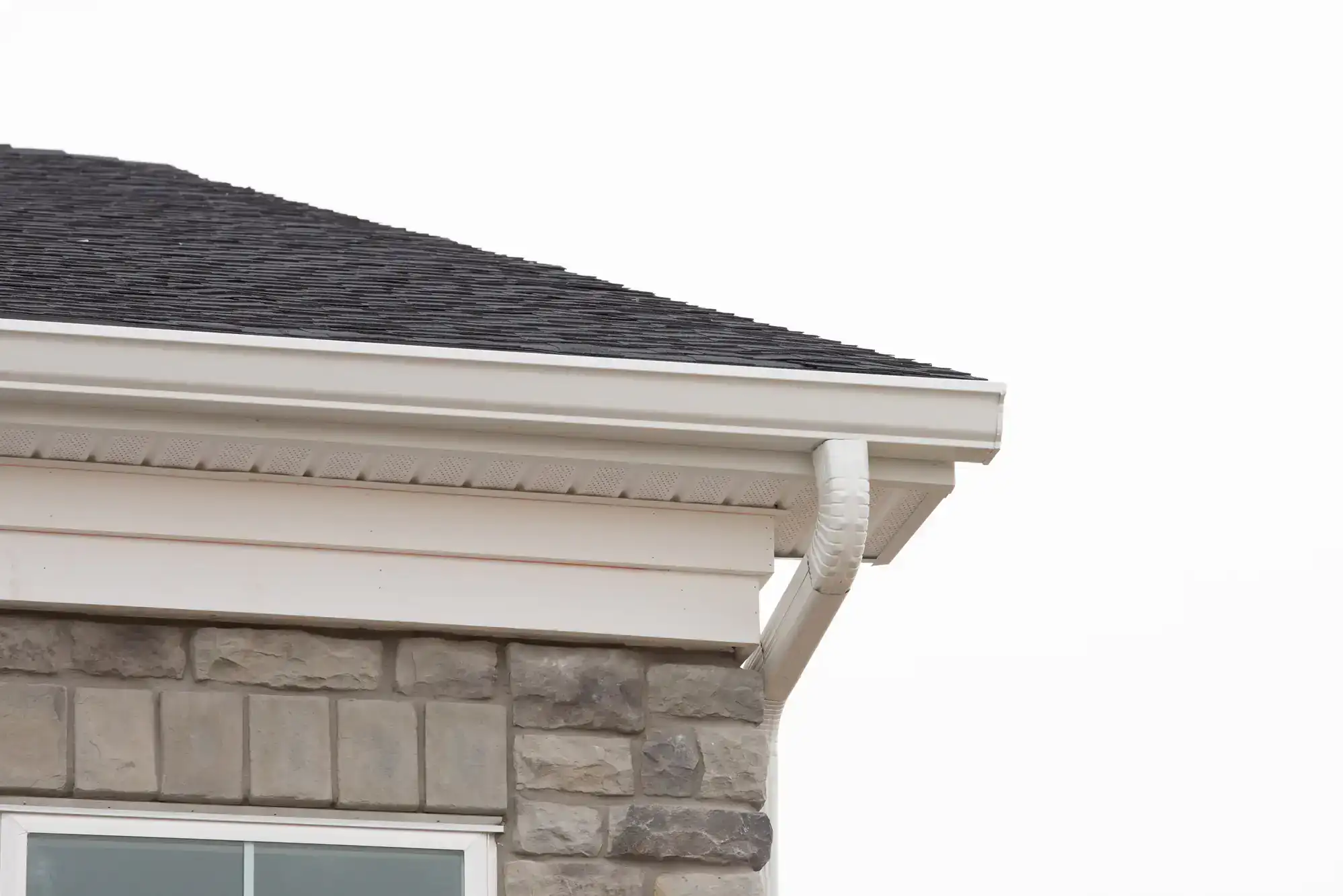
Installation is done with seamless gutters fabricated on-site to the exact dimensions of your home. No pre-cut sections, no unnecessary seam joints along the run. When the job is done, the site is clean, the system is tested, and you know exactly what was installed and why. If anything comes up after, the warranty is there and so are we.
Ready to get started?
Request a callback

Gutter installation in Llewellyn Park, NJ covers more ground than it does in most places. Beyond the installation itself, we handle gutter repair, full gutter replacement, seamless gutter fabrication, and emergency gutter service for active failures the kind that can’t wait when water is getting behind a fascia board on a 19th-century estate.
Because we’re a full-service exterior contractor, we’re also equipped to address what’s often hiding behind failing gutters: rotted fascia, damaged soffit, deteriorating chimney flashing, or masonry that’s been absorbing water for years. For Llewellyn Park homeowners, that matters. A gutter-only contractor who finds rot in your original wood fascia has to stop and refer you elsewhere. We don’t.
Material selection is part of every conversation we have with homeowners here. The community’s documented use of copper gutters at the historic Llewellyn Park Gatehouse as a preservation measure isn’t a coincidence copper is historically appropriate for many of the architectural styles found throughout Llewellyn Park, and we work with it. Whether the right answer is copper half-round gutters, seamless aluminum in a color matched to your trim, or a custom configuration for a complex roofline, we’ll tell you what makes sense for your specific home not just what’s easiest to install.
In most cases, yes and it’s worth confirming before any work starts. Llewellyn Park has one of the oldest homeowners’ associations in the country, and it actively governs exterior changes to homes within the community. Material choices, gutter profiles, and visible color changes can all fall under HOA review, particularly for homes that are contributing resources within the Llewellyn Park Historic District.
The process isn’t necessarily complicated, but skipping it can create problems after the fact. We recommend reaching out to the Llewellyn Park HOA directly to understand what requires approval for your specific property before scheduling installation. When you work with us, we’ll flag this in our initial consultation so you’re not caught off guard. We’re familiar with working in communities where architectural standards apply, and we approach material and installation decisions with that context in mind from the start.
It depends on the scope of work. West Orange Township requires a permit to construct, enlarge, or alter any structure, and depending on whether your project involves fascia replacement, structural changes to the roofline, or significant alterations beyond a straight gutter swap, a permit may be required. The West Orange Building Department, located at 66 Main Street, is the authoritative source for confirming what your specific project triggers.
For straightforward gutter replacement on an existing system, permits are often not required but for homes within the Llewellyn Park Historic District, it’s worth a quick confirmation before work begins. We help our customers understand permit requirements during the consultation phase so there are no delays once the job is scheduled. The last thing you want is to discover mid-project that something needed to be filed first.
For most of the architectural styles found in Llewellyn Park Queen Anne, Gothic Revival, Italianate, Tudor half-round gutters are the historically appropriate profile. They were the standard on homes built from the mid-1800s through the early 20th century, and they maintain the visual character of the roofline in a way that K-style gutters, which became common in post-war construction, simply don’t.
In terms of material, copper is the premium choice for historic preservation. It’s what was used on the Llewellyn Park Gatehouse during its documented restoration project, and it’s appropriate for homes that are part of the Historic District. Copper develops a natural patina over time, requires minimal maintenance, and can last 50 years or more. Painted seamless aluminum is a practical and cost-effective alternative when copper isn’t required or preferred. The right answer depends on your specific home, its architectural style, and what your HOA standards allow which is exactly why we walk through that conversation before recommending anything.
Significantly. Llewellyn Park’s 425 acres are densely wooded with mature hardwoods and ornamental trees the kind of canopy that was intentionally cultivated in the 19th-century Romantic landscaping tradition the community was founded on. That’s beautiful in every season, but it means gutters here are dealing with a debris load that far exceeds what you’d find in a typical suburban neighborhood. Leaves, seed pods, twigs, and organic matter accumulate quickly, especially in fall.
Gutters that fill with debris don’t drain. Standing water in a blocked gutter is dead weight pulling on your hangers and seams, and in winter, it becomes ice which adds even more stress to the system and accelerates the freeze-thaw damage that Essex County winters are known for. Most Llewellyn Park homeowners with significant canopy coverage should plan on cleaning gutters at least twice a year: once in late fall after the leaves are down, and once in spring after the winter debris has settled. Gutter guards can reduce the frequency, but they don’t eliminate maintenance entirely and not all guard systems are appropriate for historic rooflines.
Sectional gutters come in pre-cut lengths that are joined together on-site with connectors and sealant. Every one of those joints is a potential leak point, and over time especially through the kind of freeze-thaw cycling that Essex County winters deliver those joints fail. Sealant cracks, sections shift, and water starts getting behind the fascia instead of into the downspout.
Seamless gutters are fabricated on-site in a single continuous run, custom-cut to the exact length of your roofline with no seam joints along the way. The only connection points are at the corners and downspout outlets, which dramatically reduces the number of places where the system can fail. For a large historic estate in Llewellyn Park where rooflines can span hundreds of linear feet and where a leak against original wood fascia can cause serious damage seamless gutters aren’t just a preference. They’re the right call. Seamless systems reduce leak points by roughly 80% compared to sectional, and on a home of this age and value, that performance difference matters.
A few things point clearly toward replacement rather than repair. If the gutters are pulling away from the fascia in multiple spots, if you’re seeing rust, significant corrosion, or cracks along the runs, or if the system has been patched repeatedly and is still failing replacement is usually the more cost-effective path. Throwing repair money at a system that’s structurally compromised is a cycle that ends the same way every time.
For homes in Llewellyn Park, there’s an additional layer to consider. Many of the homes here have gutters that may be decades old, and in some cases the fascia boards beneath them are original wood from the 19th century. When we come out for a consultation, we’re looking at both the gutter system and the condition of what’s underneath it. If the fascia has absorbed water damage over the years, replacing the gutters without addressing the fascia means you’re installing a new system on a compromised base. We assess the full picture and give you an honest answer about what actually needs to happen repair, replacement, or both before any work begins.
Other Services we provide in Llewellyn Park