
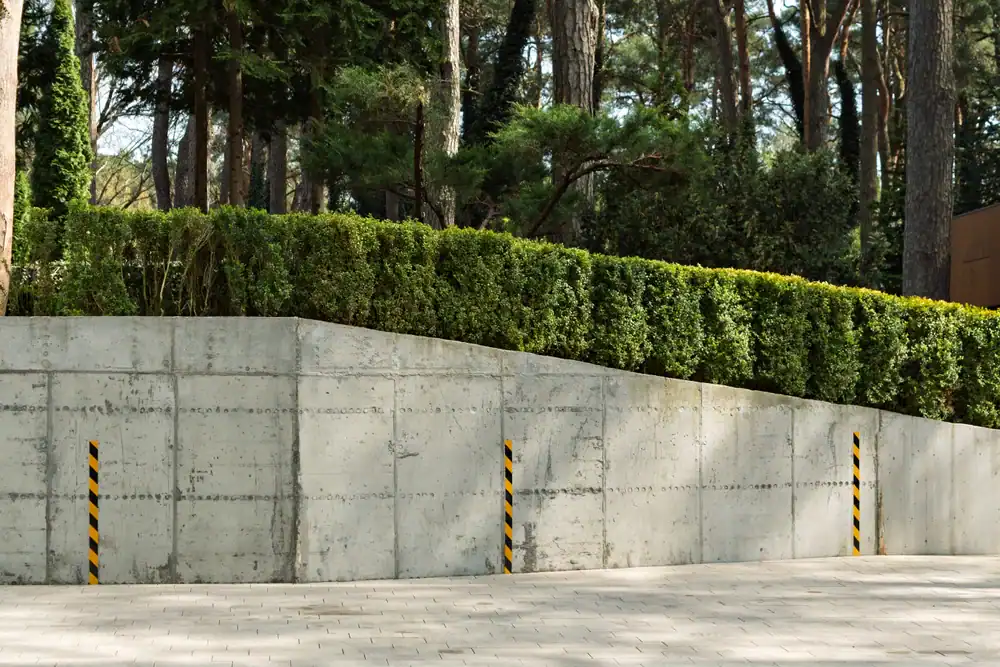

You’re watching soil wash away after every heavy rain. Your foundation stays damp longer than it should. Half your yard sits at an angle you can’t landscape or enjoy.
A retaining wall fixes that. It holds back soil where it belongs, redirects water away from your foundation, and turns steep grades into level ground you can use for patios, gardens, or just a flat lawn that doesn’t feel like a liability.
The right wall also increases your property value. Buyers in Short Hills expect functional outdoor spaces and solid drainage solutions. When your landscape shows both, it’s one less concern during inspection and one more reason your home stands out.
This isn’t decorative. It’s structural. And when it’s done right, it lasts decades without constant maintenance or expensive repairs.
We work throughout Short Hills and understand the terrain here. Homes built in the ’40s and ’50s often sit on slopes that weren’t designed with modern drainage standards in mind. We’ve handled everything from small garden walls to engineered block systems that stabilize entire hillsides.
We’re licensed, we pull permits when required, and we don’t skip steps. You’ll get a free estimate that breaks down material options, drainage plans, and realistic timelines. No upselling. No hidden costs after we start.
Short Hills properties deserve careful work. You’re not looking for the cheapest option—you’re looking for the one that holds up through freeze-thaw cycles, storm runoff, and settling. That’s what we build.

We start with a site visit. You show us the problem area, we measure slope, check drainage patterns, and talk through what you want the space to do. If your wall will be over four feet, we’ll handle the engineering and permits—that’s required in New Jersey, and we make sure it’s done right.
Next, we dig. The foundation trench goes below frost line and gets filled with compacted gravel. This base determines how long your wall lasts, so we don’t rush it. Then we set the first course of blocks level and start building up, backfilling with drainage stone as we go.
Every wall includes a drainage system. That means perforated pipe, filter fabric, and gravel backfill that moves water away from the wall and your foundation. Without it, hydrostatic pressure builds up and pushes the wall out of place within a few years.
Once the wall is up and backfilled, we finish the top course, compact everything, and clean up the site. You’re left with a stable structure that does its job quietly for decades.

Ready to get started?
You’re getting more than stacked blocks. Every retaining wall we install in Short Hills includes engineered drainage, compacted base material, and backfill designed to handle New Jersey’s wet springs and freeze-thaw winters.
We use concrete retaining wall blocks for most projects because they’re durable, cost-effective, and available in textures that don’t look industrial. If you want natural stone or need a segmental retaining wall system for taller installations, we’ll walk you through those options too. Material choice depends on height, soil type, and what’s already on your property.
Short Hills has strict erosion control requirements, especially for larger projects. We handle that. If your site needs sediment barriers, grading adjustments, or stormwater management plans, we coordinate it. You won’t get halfway through the job and find out you need a permit you don’t have.
Terraced walls are common here when slopes are steep. Instead of one tall wall, we build multiple shorter walls with level ground between them. It’s safer, easier to maintain, and gives you planting beds or walkways at each level.

Cost depends on height, length, material, and site access. A basic concrete block wall under three feet runs differently than an engineered segmental system with terracing and drainage work.
For most residential projects in Short Hills, expect to budget between $30 and $75 per square foot of wall face. That includes excavation, base prep, blocks, drainage stone, filter fabric, and labor. Natural stone costs more. Taller walls that need engineering and permits add to the total.
We give you a written estimate after seeing the site. No guessing, no ranges that double once we start. You’ll know what you’re paying before we dig.
In most cases, yes—if the wall is over three to four feet tall. Short Hills follows New Jersey building codes, and any retaining wall that holds back significant soil load requires a permit and sometimes an engineer’s stamp.
We handle that process. You don’t need to visit the township office or figure out which forms to file. We pull permits, submit plans if needed, and schedule inspections.
Even if your wall is under the height threshold, proper drainage and erosion control still matter. Skipping permits is one thing. Skipping the engineering that keeps your wall standing is another. We don’t cut corners on either.
Concrete retaining wall blocks work well here. They handle freeze-thaw cycles, they’re available in colors and textures that match most homes, and they’re cost-effective for walls up to six or seven feet.
Natural stone looks great and lasts forever, but it’s more expensive and takes longer to install. If aesthetics matter more than budget, stone is worth considering. For taller or heavily loaded walls, we use segmental retaining wall systems—interlocking blocks designed for structural performance.
Your soil type matters too. Clay-heavy soil holds water and puts more pressure on walls. Sandy soil drains fast but doesn’t compact as well. We adjust base depth, backfill material, and drainage design based on what we’re working with. There’s no one-size-fits-all answer, but we’ll tell you what makes sense for your site.
Most residential retaining walls take between three days and two weeks, depending on size and site conditions. A simple 20-foot garden wall goes faster than a terraced system with multiple levels and drainage tie-ins.
Weather affects timing. We can’t pour bases or compact backfill in heavy rain. If your project needs permits, add a few weeks for approval before we start.
We’ll give you a timeline during the estimate. If something changes—delivery delays, unexpected soil conditions, permit holdups—we’ll let you know immediately. You won’t be left guessing when we’re coming back.
Sometimes. If the wall is leaning, cracking, or showing signs of movement, we’ll assess whether it’s repairable or needs replacement.
Small cracks in concrete block walls can be stabilized if the foundation is still solid. But if the base has settled, drainage was never installed, or the wall is leaning more than a few inches, rebuilding is usually the better option. Repairing a failing wall often costs nearly as much as replacing it—and you’re still left with a compromised structure.
We’ll be honest about what makes sense. If your wall can be saved, we’ll fix it. If it can’t, we’ll explain why and give you a quote for a new one that’s built to last. Either way, you’ll know what you’re dealing with before we start any work.
Yes, if it’s designed with proper drainage. A retaining wall alone just holds back soil. But when we install one, we include perforated drain pipe, gravel backfill, and grading that directs water away from your foundation.
Short Hills gets heavy rain in spring and summer. Without a drainage system behind your wall, water builds up, saturates the soil, and eventually finds its way to your foundation or basement. That’s why every wall we build includes drainage—not as an add-on, but as standard.
If you’re already dealing with water problems, we’ll look at grading, downspout placement, and soil conditions during the estimate. Sometimes a retaining wall is part of the solution. Sometimes you need additional drainage work. We’ll tell you what’s actually going to fix the problem.
Other Services we provide in Short Hills