
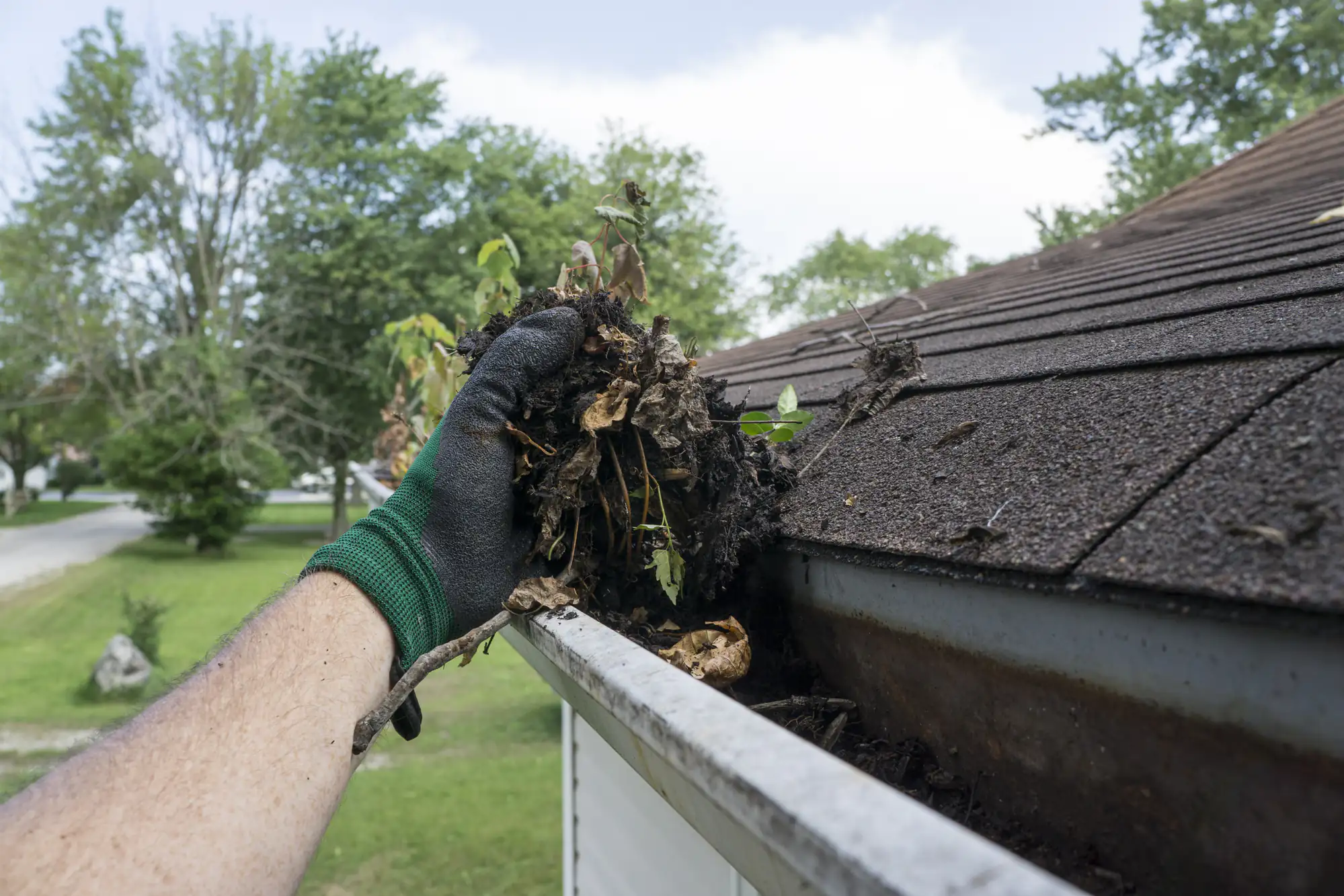
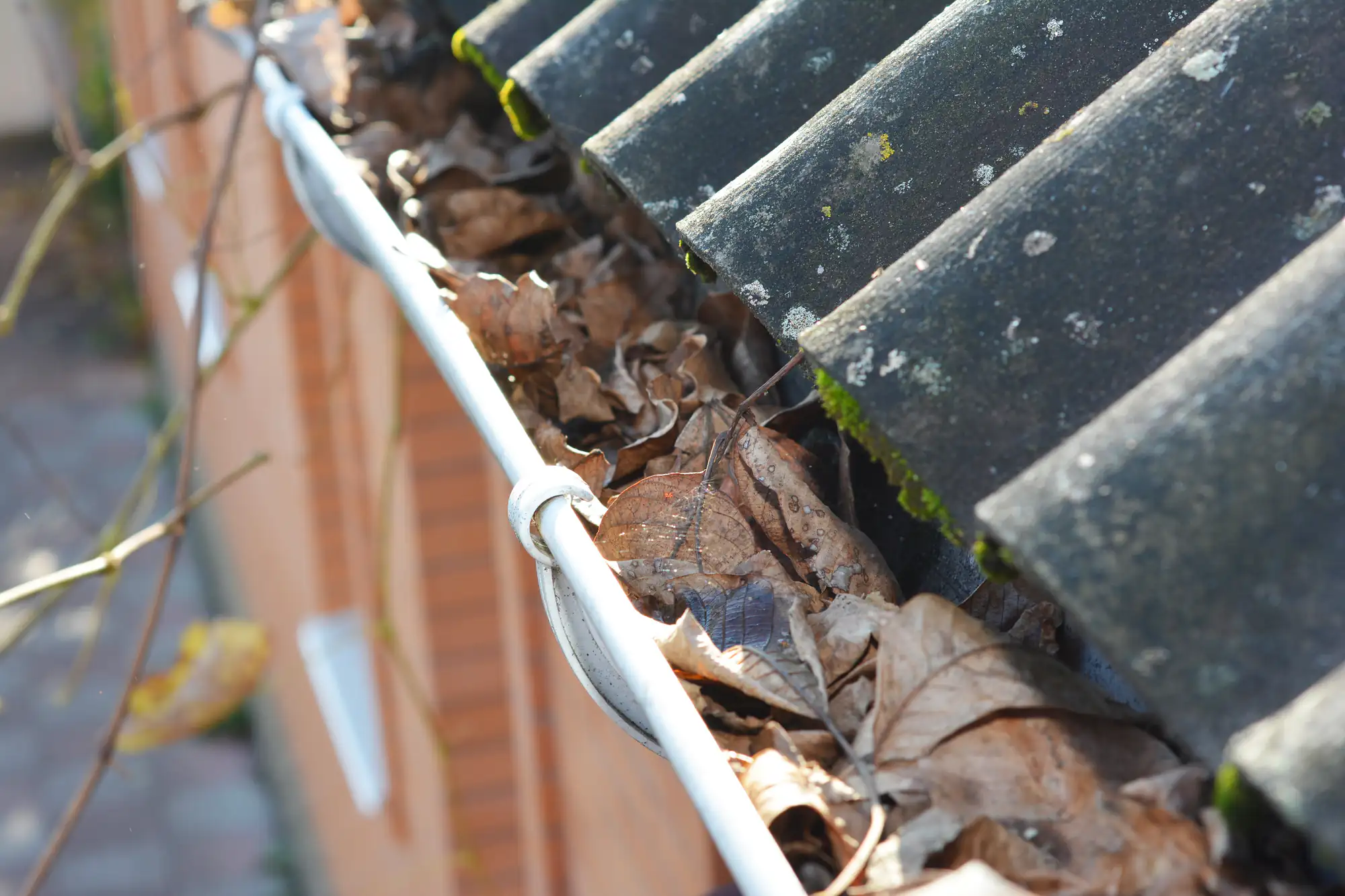
Livingston gets hit hard in both directions heavy spring thunderstorms and full fall leaf drop from some of the densest tree canopy in Essex County. When gutters are clogged, that water has nowhere to go except over the edge and straight down against your foundation. For homes in Collins, Bel Air, and the older sections near Town Center, that’s not a hypothetical it’s a pattern that shows up every season for homeowners who skip the cleaning.
The bigger issue is what you don’t see. Backed-up water sitting behind a gutter bracket will quietly rot the fascia board underneath. By the time you notice the gutter pulling away from the roofline, the wood behind it is already compromised. A thorough cleaning that includes a post-job inspection catches that early before it turns into a repair bill that dwarfs what the cleaning would have cost.
And for homes built between the 1940s and 1960s which covers a large portion of Livingston’s housing stock the gutter systems themselves are aging. Seams separate, hangers loosen, and older aluminum corrodes from the inside out. Knowing what you’re actually dealing with makes all the difference.
We’ve been serving homeowners across Livingston and Essex County since 2018 not as a franchise, not as a call center dispatching random crews, but as a family-owned operation where the work is done right because the name on the truck is the same name on the license. We’re BBB accredited and a GAF Preferred Contractor, which means there’s third-party verification behind our claims, not just a website.
For Livingston homeowners, that matters. You’re protecting a significant investment and you need a contractor who carries full liability and workers’ compensation insurance, shows up when we say we will, and doesn’t leave debris scattered across your lawn when we’re done. We back every job with a full warranty and offer free consultations with no pressure to commit. From the hillside properties near Riker Hill to the established colonials in Bel Air, we know what exterior maintenance looks like for homes in this area.
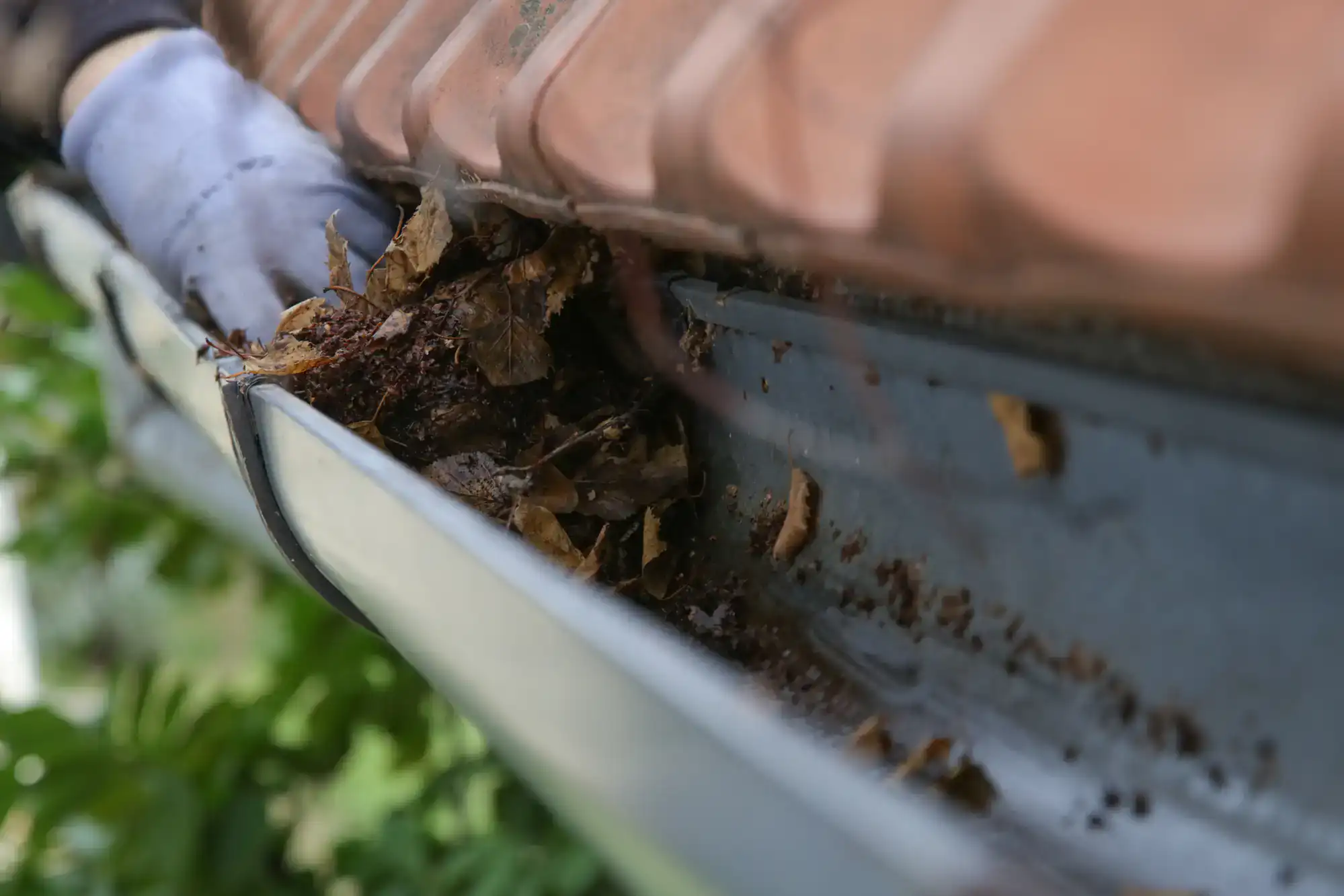
It starts with a visual assessment before anyone touches the gutters. We check the condition of the hangers, seams, and fascia because cleaning a gutter that’s already failing structurally without noting it does you no favors. In Livingston’s older neighborhoods, this step alone has caught problems that homeowners didn’t know existed.
Then comes the actual cleaning debris removed by hand from every gutter run, not just blown around or pushed toward the downspout. Every downspout gets flushed individually to confirm water is moving freely from the roofline all the way to the ground. This is the step most gutter-only companies skip, and it’s also where the real blockages live. Compacted leaves, acorn caps, and maple seeds pack into downspout elbows and create backups that fill the entire trough before anything overflows at the edge.
After the work is done, you get a straightforward report on what was found loose hangers, separating seams, soft fascia, anything that warrants attention. Because we also handle roofing, chimney, and siding, if something needs to be fixed, we can fix it. You’re not left with a list of problems and no one to call. Timing matters too: in Livingston, the most important cleaning window is late November after full leaf drop, followed by a spring cleaning before thunderstorm season ramps up.
Ready to get started?
Request a callback

Gutter cleaning from us isn’t a drive-by service. Every visit covers the full scope: hand removal of leaves, debris, and buildup from all gutter runs, individual downspout flushing to clear blockages at every outlet, a post-cleaning inspection of hangers, seams, and fascia condition, and full debris cleanup so your driveway and landscaping look exactly as they did before our crew arrived.
For Livingston properties specifically, the tree situation is more demanding than most. The oaks drop acorns and heavy leaf loads through fall. The maples release seed pods in spring that compact into downspout elbows like a cork. Evergreens deposit needles year-round. Homes in Collins, Bel Air Woods, and near Riker Hill often need at least two cleanings per year fall after full leaf drop and spring before the thunderstorm season and some properties with dense evergreen coverage benefit from more frequent service. We can help you figure out the right schedule based on your specific lot and tree coverage, not a one-size-fits-all plan.
Because we handle roofing, chimney, siding, and masonry in addition to gutters, any related issue spotted during a cleaning loose flashing, deteriorating shingles, soft fascia can be addressed in the same visit or scheduled promptly. One contractor, one call, no handoff.
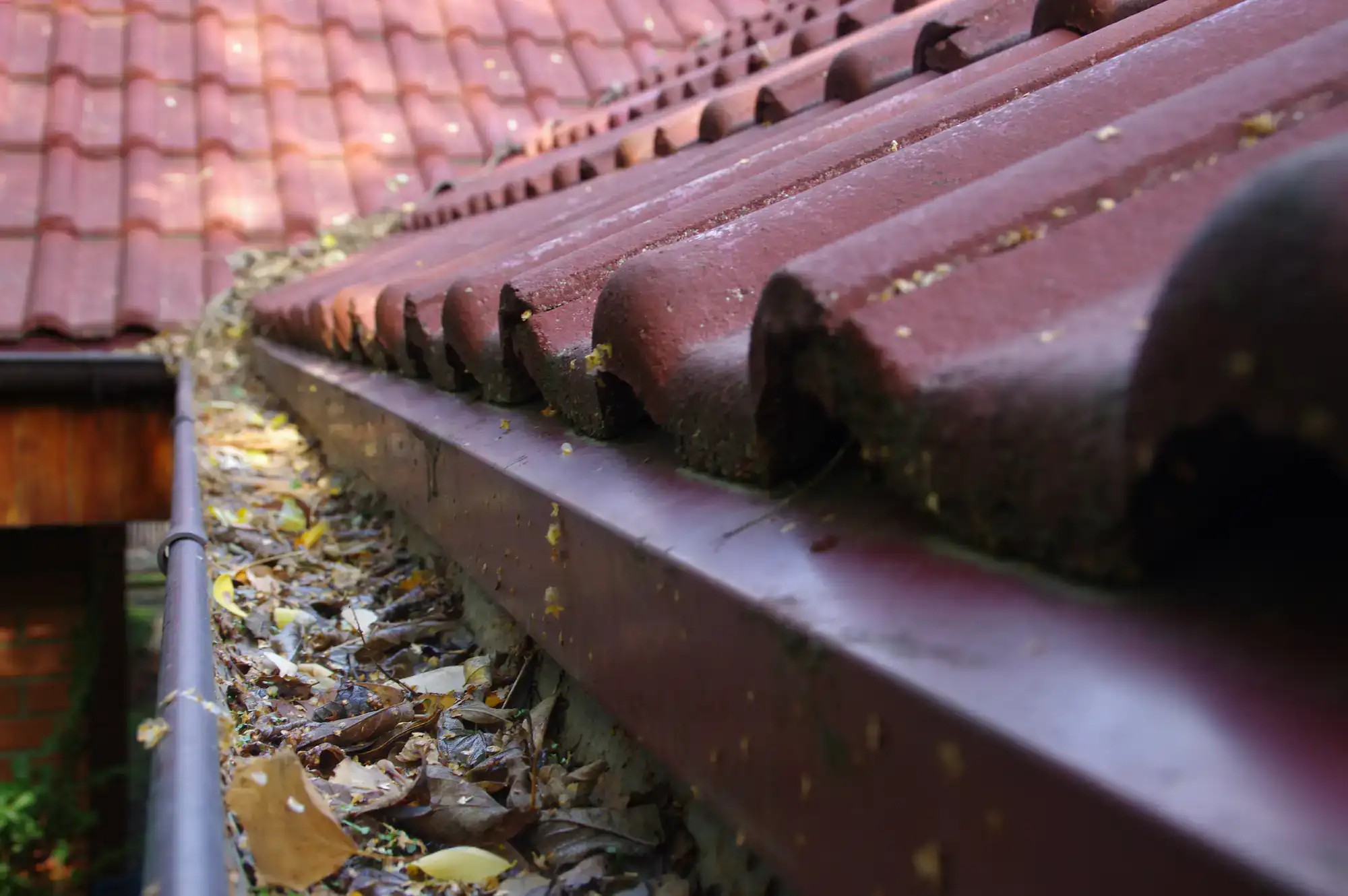
For most Livingston homes, twice a year is the baseline once in late fall after the oaks and maples have fully dropped, and once in spring after maple seed pods and pollen have cleared. The late November window is the most important one. Cleaning too early in fall means you’ll still have a full gutter by December, and cleaning after the first hard freeze means you may already have standing water turning to ice.
That said, the right frequency depends on your specific property. Homes near heavy evergreen coverage which deposits needles year-round often need three or four cleanings annually. Older homes in the Collins and Bel Air sections with large, mature oaks overhead tend to accumulate debris faster than newer builds on more open lots. If your gutters overflowed last season or you noticed water pooling near your foundation, that’s a sign your current schedule isn’t keeping up with what your trees are producing.
Clogged gutters going into a New Jersey winter create two separate problems. First, standing water trapped in debris-filled gutters freezes when temperatures drop, forming ice dams that force water backward under your shingles and into the interior of your home. Second, the weight of that ice puts significant stress on gutter hangers and brackets especially on older Livingston homes where the hardware is already aging which is how gutters end up pulling away from the fascia board in January.
Once an ice dam forms, the damage it can cause to ceilings, walls, and insulation can run well into the thousands of dollars. The repair costs dwarf what a fall cleaning would have cost by a wide margin. Livingston’s freeze-thaw cycle where temperatures drop and rise repeatedly through December, January, and February makes this worse, because partial melts and refreezes compound the pressure on the system. Getting the gutters clean and clear before the first hard freeze is one of the most straightforward ways to protect your home through the winter.
Yes, and it’s one of the more common causes of basement water intrusion in Essex County. When gutters overflow, water doesn’t just fall harmlessly to the ground it saturates the soil immediately adjacent to your foundation. Over time, that repeated saturation creates hydrostatic pressure against your foundation walls, which is what drives water through cracks, gaps, and block joints into your basement.
Livingston is in an area that receives regular severe thunderstorms and flash flood events the National Weather Service has named the township directly in flash flood warnings for Essex County. During a heavy rain, a clogged gutter can overflow at a rate that overwhelms even good drainage in a matter of minutes. For homes in lower-lying sections of town or properties where the grade slopes toward the house rather than away from it, the risk is even more direct. Clean, properly flowing gutters are the first line of defense before any basement waterproofing system ever needs to do its job.
The biggest difference isn’t the cleaning itself it’s the inspection that comes with it. A professional cleaning should include a post-job assessment of your hanger condition, seam integrity, fascia board health, and downspout flow. Most homeowners cleaning their own gutters are focused on removing what they can see from the top. They’re not checking whether the bracket behind the gutter is pulling away from a rotted fascia board, or whether the downspout elbow at the bottom has a compacted blockage that’s been building for two seasons.
For Livingston’s older housing stock particularly the colonials and split-levels built in the 1950s and 1960s this inspection piece is where real value gets created. These homes have gutter systems that may be decades old. Seams separate, aluminum corrodes from the inside, and hangers fail quietly before anything visually obvious happens. Catching a failing hanger during a routine cleaning costs almost nothing to fix. Catching it after the gutter has pulled away from the roofline and water has been running behind the fascia for a season is a much more expensive conversation.
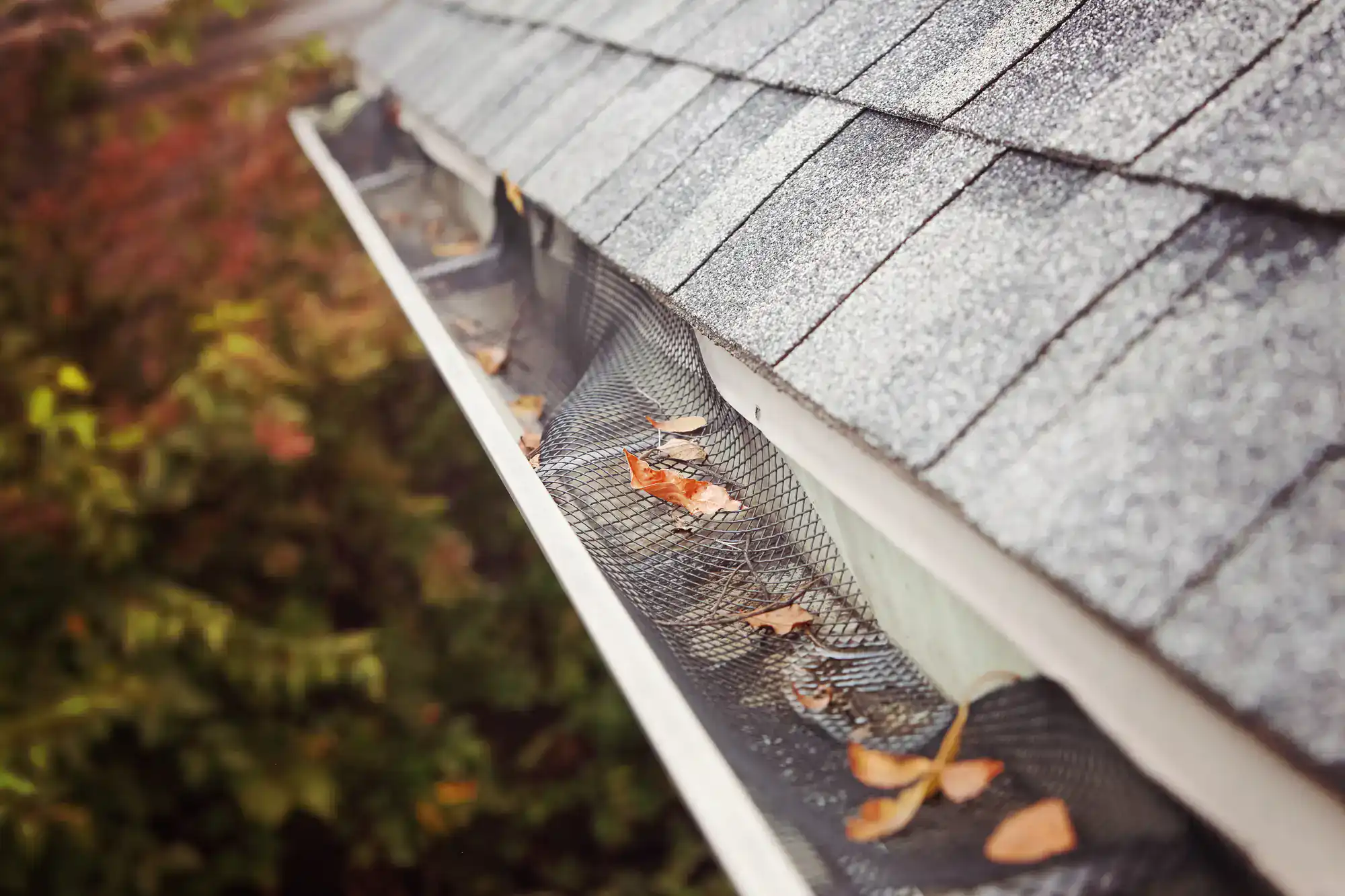
Gutter guards reduce how often you need cleaning they don’t eliminate it. In Livingston’s tree environment specifically, this is worth understanding before you invest in a guard system. Fine mesh guards handle large leaves reasonably well, but they struggle with the smaller debris that’s abundant here: maple samaras, oak tassels, evergreen needles, and shingle grit all find their way through or accumulate on top of most guard systems over time.
What typically happens is that the debris builds up on the surface of the guard rather than inside the trough, eventually creating a barrier that prevents water from entering the gutter at all. The overflow looks identical to a clogged gutter because functionally, it is one. Guards also don’t prevent downspout blockages from the debris that does get through. If you have guards installed, you still need periodic cleaning and inspection, just potentially less frequently. We can assess whether your current guard system is actually performing or whether it’s creating a false sense of security.
The most common sign is gutters that overflow at the trough even though they look relatively clean from the ground. If water is spilling over the edge during a rainstorm but you don’t see obvious leaf buildup, the blockage is almost certainly in the downspout usually at an elbow joint where debris compacts and hardens over time. Maple seeds and acorn caps are particularly bad for this in Livingston, because they’re dense enough to wedge tightly into downspout bends rather than flushing through.
You can do a basic check by running a garden hose into the top of the downspout and watching whether water flows freely out the bottom. If it backs up or trickles out slowly, there’s a blockage somewhere in the run. What you can’t easily check from ground level is whether the underground extension or buried drain line is also compromised which is more common in Livingston’s older homes where those components haven’t been serviced in years. A professional cleaning that includes individual downspout flushing will confirm the full system is clear, not just the visible section above grade.
Other Services we provide in Livingston