Summary:
The Physics of the "Pop": Freeze-Thaw Cycles in NJ
If you live in Morris County or Essex County, your retaining wall goes through a winter workout that would break a professional athlete. The freeze-thaw cycle is simple but brutal: water seeps into tiny cracks or porous areas in the wall, and when temperatures drop, it freezes. Since ice takes up about 9% more space than water, it acts like a slow-motion crowbar prying your masonry apart.
Then comes the thaw. The ice melts, leaves an even bigger gap, and allows even more water to move in for the next round. This isn’t a one-and-done event; it’s a heavyweight championship fight that lasts four months. Each cycle widens cracks, shifts blocks, and pushes entire sections forward until your wall looks less like a barrier and more like a suggestion.
If your wall already has drainage issues or wasn’t built with proper backfill, the damage accelerates faster than a New York City taxi. Trapped water is the enemy. Without a way to “sweat” that moisture out, the internal pressure becomes high enough to pop the face off bricks or move thousands of pounds of concrete.
Why Northern NJ Soil Makes Everything Harder
Not all dirt is created equal, and northern New Jersey is blessed with an abundance of clay-heavy soil. Clay is essentially nature’s sponge—it holds moisture for an eternity. When that clay freezes, it creates “hydrostatic pressure,” which is just a fancy engineering term for “thousands of pounds of mud trying to punch a hole through your wall.”
Snow adds another layer to the problem. A foot of wet, heavy snow is basically a soaking wet blanket draped over your yard. As it melts during those brief Jersey “heat waves” (you know, when it hits 40 degrees and everyone wears shorts), it saturates the soil and refreezes overnight. It’s a constant cycle of soaking and squeezing that tests the limits of your wall’s foundation.
If your wall’s drainage system—those vital weep holes or perforated pipes—is clogged with old mulch or ice, that water has nowhere to go. It just sits there, freezing and expanding, cycle after cycle. This is why walls that looked perfectly fine in October can suddenly look like they’ve had a mid-life crisis by April.
Early Warning Signs: Play Detective Before the Snow Flies
Start by playing a little private eye with your masonry. Walk the length of the wall and look for “stair-step” cracks or horizontal lines. Horizontal cracks are the “code red” of retaining walls; they usually mean the wall is bowing under the weight of the soil behind it. If you see cracks that weren’t there last year, your wall is officially asking for a doctor.
Leaning or bulging is the next big red flag. Stand at one end of the wall and squint down the line like you’re checking a fence. Does it bow outward in the middle? If the wall isn’t perfectly vertical anymore, it’s losing the battle against gravity. Even a slight tilt means the structure is moving, and unlike your New Year’s resolution, this movement won’t stop on its own.
Finally, look for the “white chalky stuff” known as efflorescence. It looks like your wall has developed a salt habit, but it’s actually a sign that water is traveling through the masonry and bringing minerals to the surface. It’s not structural damage yet, but it’s a neon sign saying, “Hey, I’m soaking wet inside and I’m probably going to freeze tonight!”
The Great Debate: Patching the Hole vs. Starting Over
Not every crack means you need to call in the wrecking ball. But not every “quick fix” is actually a fix. The decision comes down to whether the problem is skin-deep or soul-deep. Patching a wall that’s fundamentally failing is like putting a band-aid on a leaky pipe—it might look okay for a minute, but you’re still going to have a wet floor eventually.
Minor surface chips or a few loose stones can often be repaired with some quality mortar and a little “TLC.” If the foundation is solid and the drainage is still doing its job, reinforcing weak spots can buy you another decade. However, if the wall is leaning more than a few degrees or the base is sinking, you’re in “replacement territory.”
Trying to “cheap out” on a structural failure is the most expensive thing a homeowner can do. If you spend $2,000 on a patch job this year, only for the wall to collapse under a heavy snow load in February, you’ve just thrown that money into a frozen hole. A professional assessment can tell you if a “surgical strike” repair will work or if it’s time for a full-scale rebuild.
The "Wall of Shame": Why Systems Fail
Most retaining wall disasters can be traced back to “The Big Three”: zero drainage, zero depth, or just being plain old. Drainage is the #1 killer. Without a proper “exit strategy” for water, the wall becomes a dam. And as any beaver will tell you, dams take a lot of pressure. If your wall doesn’t have gravel behind it, it’s only a matter of time before physics wins.
Construction shortcuts are the second culprit. Walls built without a solid, level base or enough “bury” (the part of the wall that lives underground for stability) will eventually shift. In New Jersey, if you don’t dig below the frost line, the ground will literally kick your wall out of the soil during the first deep freeze.
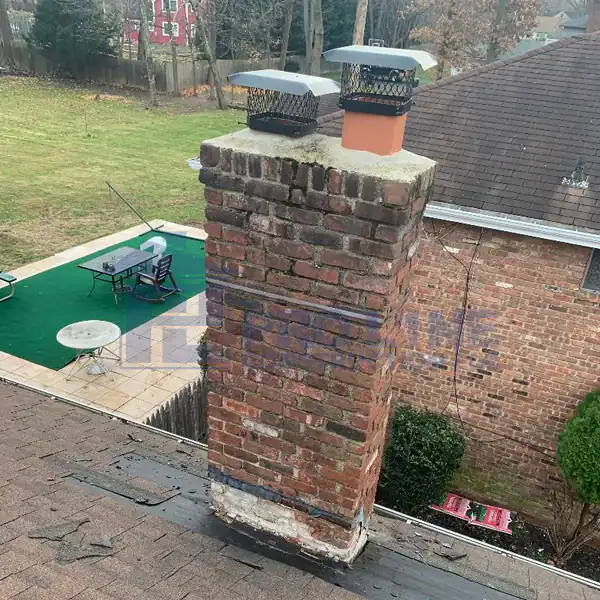
Then there’s the age factor. Timber walls rot. Mortar dissolves. Bricks “spall” (the face pops off). Even the best-built wall has a shelf life. If your wall is made of old railroad ties and has been standing since the 80s, it’s probably time to give it a dignified retirement before it decides to retire itself onto your driveway.
Materials That Actually Like New Jersey
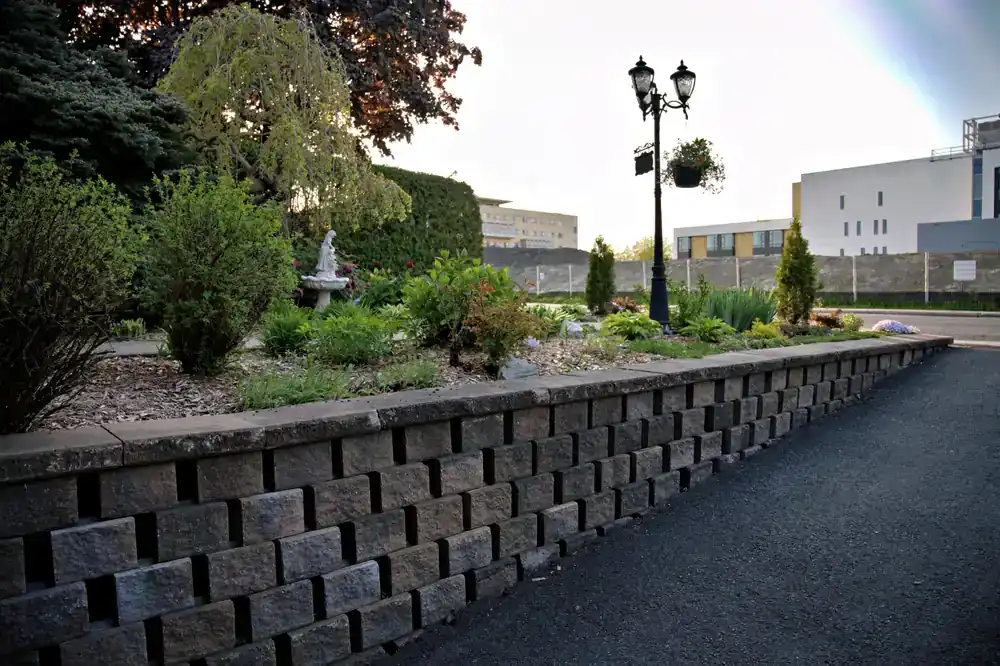
If you’re looking at a rebuild, choose materials that think a Jersey winter is a vacation. Interlocking concrete blocks (segmental systems) are the kings of the North. They are engineered to move slightly with the ground without cracking, and they don’t rot or attract termites. Plus, they come in colors that actually match your house, which is a nice bonus.
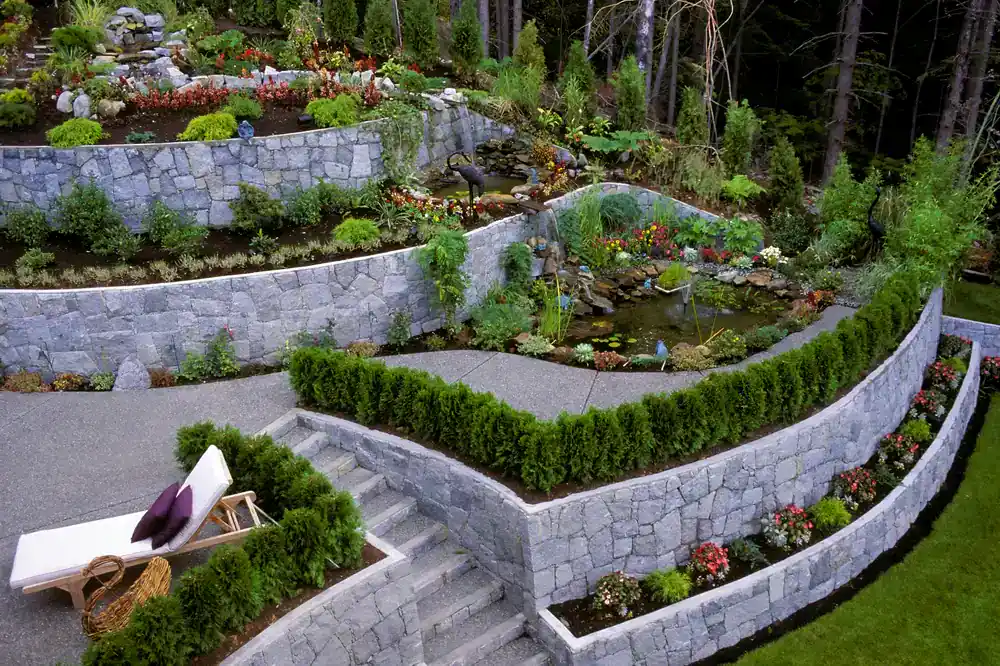
Natural stone is the “Elite” option. It’s heavy, durable, and looks better as it ages. A well-built stone wall is basically a permanent fixture that will outlast your mortgage, your car, and probably your kids’ college years. It costs more upfront, but when you consider the “cost per year,” it’s often the smartest financial move you can make.
Whatever you choose, the “Secret Sauce” is always the drainage. Weep holes, clean crushed stone, and perforated pipes are the holy trinity of retaining wall longevity. You want a system that treats water like a guest that’s overstayed its welcome—show it the door as quickly as possible so it doesn’t have time to freeze and cause trouble.
Don't Let Your Wall Become a Spring Project
The best time to deal with a retaining wall problem is right now, while you can still see the ground and your toes aren’t numb. Freeze-thaw cycles don’t take holidays, and a small crack in October can easily become a major structural failure by the time the daffodils show up in April. A professional inspection is the only way to know if you’re looking at a $500 maintenance task or a $15,000 emergency. We can identify drainage clogs before they turn into ice dams and reinforce shifting stones before they become falling hazards. It’s about peace of mind—and keeping your backyard exactly where you put it.
If you’re in Morris or Essex County and your wall is looking a little “tired” or “leaning,” give us a shout. We provide honest talk and free consultations, helping you stay ahead of the New Jersey weather.