Summary:
Water staining your ceiling. A drip that started during last night’s storm. A musty smell in the attic you can’t quite place. If any of these sound familiar, you’re dealing with a roof leak—and the clock is already ticking. What looks like a minor issue today can become a major structural problem within weeks if water keeps finding its way inside. The question isn’t whether you should address it. It’s how quickly, and what the right approach looks like for your situation. This guide breaks down what you actually need to know about roof leak repair in Essex County, NJ, from spotting the warning signs to understanding what different fixes cost.
Signs You Need Roof Leak Repair
Most leaks don’t announce themselves with water pouring through the ceiling. They start quietly. A faint stain that wasn’t there last month. Peeling paint near a corner. Damp insulation you only notice when you’re in the attic looking for something else.
Water moves. It enters your roof at one point, travels along the underside of shingles or down rafters, and eventually drips somewhere completely different. That brown spot above your living room might be coming from a failed flashing seal fifteen feet away near the chimney.
The earlier you catch it, the less it costs to fix. A leak caught in the first week typically runs $150 to $500. The same leak ignored for three months often involves replacing rotted decking, pulling out soaked insulation, and dealing with mold remediation—costs that can multiply the original repair by five to ten times.
Leak in Roof Repair: Where Problems Start
Not all parts of your roof are equally vulnerable. Some areas handle more water flow, endure more thermal stress, or simply wear out faster than others. Knowing where leaks typically start helps you spot trouble before it spreads.
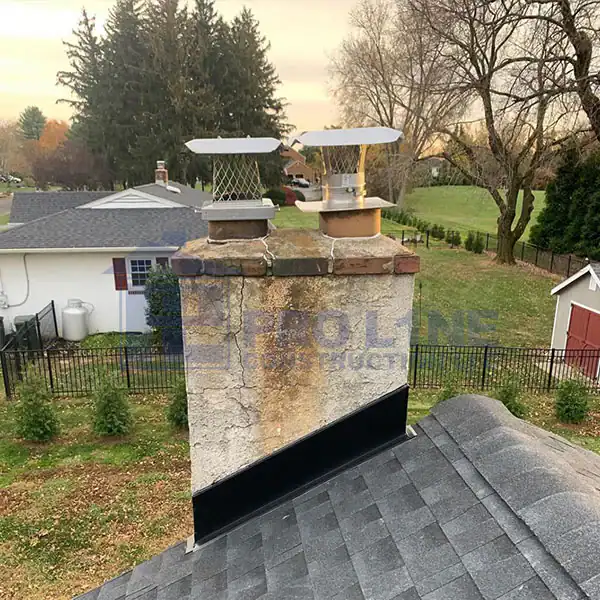
Flashing failures top the list in Essex County, NJ. Flashing is the thin metal installed where your roof meets a wall, chimney, skylight, or vent pipe. It’s designed to redirect water away from these joints, but sealant dries out, metal corrodes, and thermal expansion causes it to pull away from surfaces over time. In areas like Newark, Montclair, and Livingston, where freeze-thaw cycles are routine and coastal wind drives rain sideways during storms, flashing takes a beating. Chimneys, skylights, and wall step flashing are the most common culprits when leaks appear near vertical transitions.
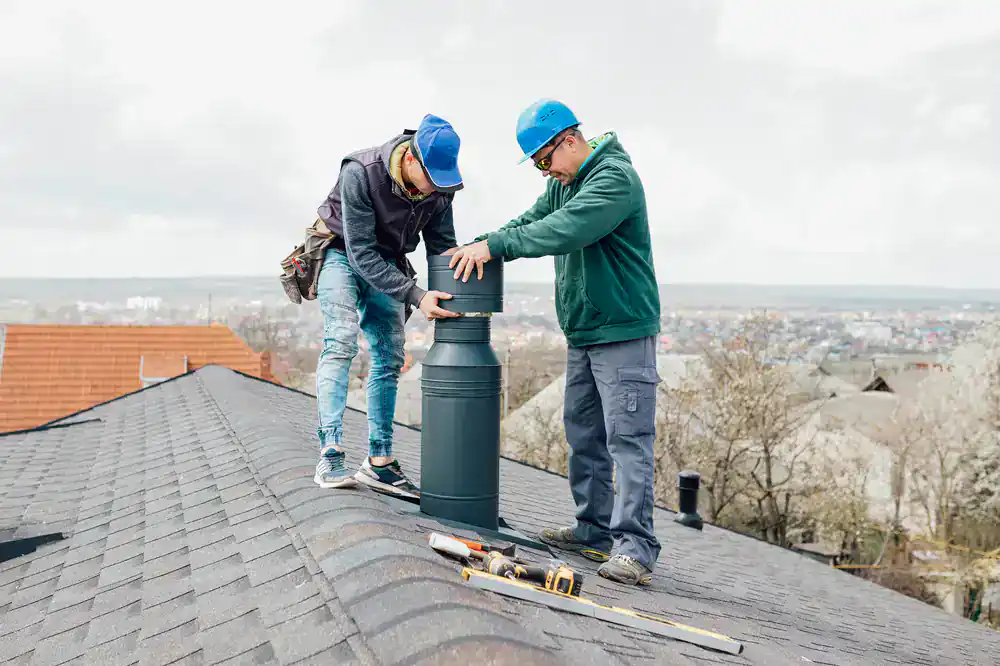
Pipe boots come next. Every plumbing vent that sticks up through your roof has a rubber or metal boot sealing the gap around it. Rubber cracks from UV exposure and temperature swings after eight to twelve years. When it fails, water runs straight down the pipe into your attic. These are the most common roof leaks we see, and also the easiest to repair. Replacing a pipe boot usually takes thirty to sixty minutes and costs $150 to $400.
Valley flashing handles the highest volume of runoff on most roofs. Valleys are where two roof planes meet, funneling water down toward the gutters. If the flashing in a valley deteriorates, gets clogged with debris, or was installed incorrectly, water backs up and seeps under shingles. Valley leaks often show up during heavy rain and can be tricky to diagnose without getting into the attic to trace the water’s path.
Missing or damaged shingles create obvious entry points. Wind lifts shingle tabs, hail cracks them, and age makes them brittle. After a nor’easter or strong thunderstorm, it’s worth doing a visual check from the ground. Look for dark patches where underlayment is exposed, curling edges, or shingle pieces in your gutters or yard. Even a few missing shingles leave your roof vulnerable to water penetration.
Ice dams form along eaves when snow melts on the warmer upper sections of your roof, then refreezes at the colder edge. The ice creates a dam that forces meltwater back up under shingles. This is a seasonal issue in New Jersey, but it can cause significant damage in a short time. If you see icicles hanging from your gutters or notice leaks that only appear during winter, ice dams are likely the cause.
Roof Leak Repair Cost: What to Expect in 2026
Repair costs depend on what’s leaking, how long it’s been leaking, and how much damage has already occurred. There’s no single price for “fixing a roof leak,” but there are ranges that apply to the most common scenarios homeowners face in Essex County, NJ.
Pipe boot replacements run $150 to $400 for standard repairs. The part itself is inexpensive, and the labor is straightforward—remove the shingles around the pipe, pull the old boot, install a new one, and re-shingle. If you upgrade to a stainless steel or aluminum boot instead of rubber, expect to add $50 to $150, but these last three to four times longer.
Shingle replacement costs $200 to $500 for small areas, typically covering one to twenty shingles. Wind, hail, and age cause the most shingle damage. The price varies depending on whether you have standard three-tab shingles or architectural (dimensional) shingles, and whether we need to special-order a color match for older roofs.
Flashing repairs range from $300 to $950, depending on location and complexity. Chimney flashing involves multiple pieces and often requires masonry work, pushing costs toward the higher end. Skylight flashing sits in the middle, while simple step flashing along a wall tends to be less expensive. The repair process usually involves removing the old flashing, cleaning and prepping the surface, installing new flashing, and sealing everything properly with high-quality materials designed to withstand New Jersey weather.
Most homeowners in Essex County spend between $350 and $1,500 for professional roof leak repair in 2026. Minor fixes stay under $500. Moderate repairs involving flashing or multiple problem areas run $500 to $1,000. Major repairs that include decking replacement, structural work, or extensive water damage climb above $1,500.
The biggest cost variable is time. A leak caught early stays manageable. A leak left alone for months requires fixing not just the roof, but also the damage the water caused—rotted wood, compromised insulation, mold growth, and stained or sagging drywall. Quick action saves money.
Emergency repairs during storms or after hours may carry a premium of $100 to $300 on top of standard pricing. That’s the cost of immediate mobilization and availability when you need it most. For active leaks causing interior damage, that premium is often worth paying to stop the problem before it gets worse.
Want live answers?
Connect with a Proline Construction expert for fast, friendly support.
Emergency Roof Leak Repair: When to Call Now
Not every leak demands a middle-of-the-night call, but some absolutely do. Knowing the difference helps you respond appropriately without either panicking unnecessarily or waiting too long.
Water actively pouring through your ceiling is an emergency. If you’re placing multiple buckets to catch streams of water, or if water is pooling on floors and running down walls, you need professional help immediately. Large volumes of water can quickly damage flooring, furniture, electronics, and structural framing.
Leaks near electrical wiring or fixtures create serious safety hazards. Water conducts electricity. If you see water coming through a ceiling fan, recessed light, or anywhere near outlets, turn off power to that area at the breaker panel and call for emergency service. Don’t touch switches or fixtures in wet areas.
Sagging or bulging ceilings indicate water has pooled above the drywall. The weight of accumulated water can cause ceilings to collapse. Move everyone away from the area, and if you’re comfortable doing so, carefully puncture the bulge with a small tool to let the water drain into a bucket. This relieves pressure and reduces the risk of a sudden collapse, but it’s a temporary measure—you still need us to find and fix the source.
Roof Flashing Repair: The Hidden Leak Source
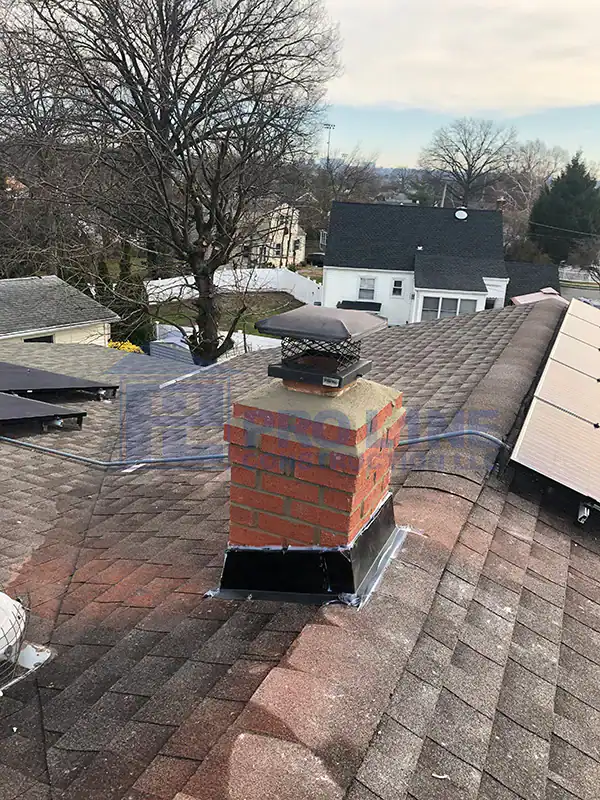
Flashing doesn’t get much attention until it fails, but it’s one of the most critical components of your roofing system. It’s installed at every point where your roof meets a vertical surface or penetration—chimneys, walls, skylights, vent pipes, and valleys. When flashing works correctly, you never think about it. When it fails, you get leaks.
Flashing fails for several reasons. Sealant dries out and cracks over time, especially under constant exposure to sun, temperature swings, and moisture. Metal flashing corrodes, particularly in areas where salt air from the coast reaches inland communities. Thermal expansion and contraction cause flashing to move against fasteners, creating gaps. Poor installation during the original roof build can leave vulnerabilities that don’t show up until years later.
New Jersey weather is especially hard on flashing. Winter freeze-thaw cycles force metal to expand and contract repeatedly, weakening seams and sealant. Snow piles up around chimneys and walls, adding pressure exactly where flashing already works hardest. Nor’easters push rain sideways under flashing edges that would normally shed water just fine. Summer heat swings metal temperatures quickly, which stresses the material over time.
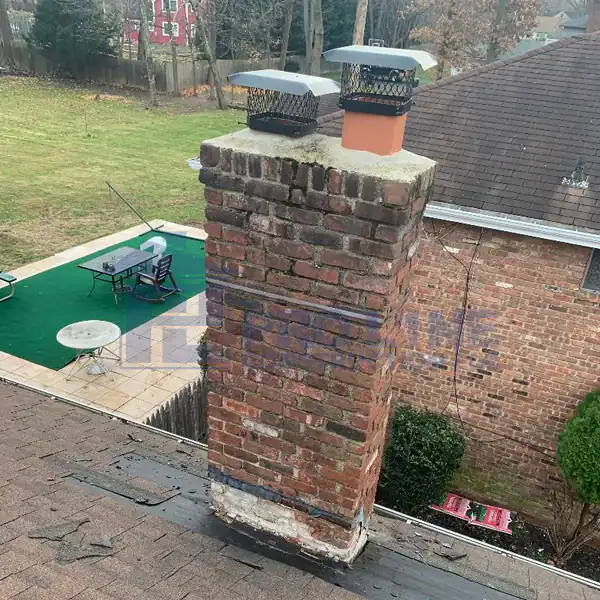
Chimney flashing is a two-part system: base flashing at the bottom and counter flashing tucked into the chimney mortar. Both pieces need to be intact and properly sealed. When either fails, water runs down the chimney exterior and into your home. Chimney leaks often show up as water stains on ceilings or walls near the fireplace.
Step flashing is installed in layers along walls where the roof meets siding. Each piece overlaps the one below it, similar to how shingles work. If step flashing gets damaged, separates from the wall, or was never installed correctly, water sneaks behind it and into the wall cavity. These leaks can be difficult to trace because water travels inside the wall before appearing as interior damage.
Skylight flashing is one of the most common sources of interior roof leaks. Skylights have flashing on all four sides, and any of those seals can fail. Age, improper installation, and debris accumulation around the skylight all contribute to leaks. If you have skylights, they deserve special attention during routine roof inspections.
Valley flashing handles more water than almost any other part of your roof. When two roof planes meet, all the runoff from both sections funnels down through that valley. If the flashing deteriorates, gets clogged, or wasn’t installed with enough overlap, water backs up under the shingles. Valley leaks often worsen during heavy rain and can cause significant damage quickly.
Vent pipe flashing seals around the plumbing vents that stick up through your roof. These are usually fitted with rubber boots that crack and shrink over time. When the rubber fails, water follows the pipe straight down into your attic. Replacing vent pipe flashing is one of the simplest and most cost-effective roof repairs, but it needs to be done before the leak causes interior damage.
Preventing Roof Leaks Before They Start
Prevention costs less than repair, and it’s a lot less stressful than dealing with water dripping into your living room during a storm. Regular maintenance and a few proactive steps can catch problems before they turn into leaks.
Schedule inspections twice a year—once in spring and once in fall. We can spot early warning signs that you’ll miss from the ground. Cracked sealant, loose flashing, missing granules on shingles, and small gaps around penetrations are all easy to fix when they’re caught early. Left alone, they become leak sources.
Clean your gutters and downspouts regularly. Clogged gutters force water to back up under shingles and around flashing. In areas with mature trees like Maplewood, South Orange, and Montclair, debris accumulation happens quickly. Plan on cleaning gutters at least twice a year, and more often if you have heavy tree coverage.
Trim overhanging branches before they cause damage. Branches scraping against shingles wear down the protective granule layer. Falling branches during storms can puncture roofing materials or damage flashing. Keeping trees trimmed back reduces both ongoing wear and storm damage risk.
Address small issues immediately. A single missing shingle, a small crack in flashing sealant, or a visibly deteriorated pipe boot might seem minor, but these are the issues that turn into leaks during the next heavy rain. Fixing them costs far less than dealing with the water damage they cause if ignored.
Consider protective upgrades if your roof is aging or you’re in a high-exposure area. Ice and water shields along eaves help prevent ice dam damage. Improved attic ventilation reduces heat buildup that accelerates shingle aging. Upgrading to more durable materials during your next roof replacement—metal roofing, architectural shingles, or better flashing systems—can extend your roof’s lifespan and reduce future leak risk.
Know your roof’s age and condition. Asphalt shingle roofs in New Jersey typically last fifteen to twenty years, shorter than the twenty to twenty-five years you’d see in milder climates. If your roof is approaching that age, start planning for replacement rather than pouring money into repeated repairs. A roof that’s near the end of its lifespan will develop multiple leak points, and patching them one at a time becomes more expensive than replacing the whole system.
Getting Roof Leak Repair Done Right in Essex County, NJ
Roof leaks don’t fix themselves, and they don’t get better with time. Water finds its way into smaller and smaller gaps, spreads to new areas, and causes damage that compounds the longer it goes unaddressed. The key is catching problems early, understanding what you’re dealing with, and working with someone who’s going to give you straight answers about what actually needs to be done.
Whether you’re dealing with an active emergency or a slow drip that’s been bothering you for weeks, the right approach is the same: document what you’re seeing, take immediate steps to minimize interior damage, and get a professional assessment. Most leak repairs are straightforward when addressed promptly. It’s the delays that turn simple fixes into expensive projects.
If you’re in Essex County, NJ and dealing with a roof leak, we provide honest evaluations, clear communication, and repairs that actually solve the problem. Free consultations, transparent pricing, and a family-owned approach that treats your property the way we’d treat our own.