Summary:
Patio Materials That Actually Survive New Jersey Winters
Not all patio materials are built for New Jersey’s climate. Some crack when temperatures drop. Others shift when the ground freezes and thaws. The right material doesn’t just look good on day one—it holds up year after year without turning into a maintenance headache.
Concrete pavers, brick pavers, and natural stone are the three most common choices among outdoor patio contractors in Essex County and Morris County for a reason. Concrete pavers are durable, affordable, and come in dozens of styles. Brick offers a classic look and handles freeze-thaw cycles better than most people expect. Natural stone like bluestone or travertine brings a high-end feel and ages in a way that actually improves over time.
What matters most isn’t just the material itself—it’s how it’s installed. A poorly prepped base will ruin even the best paver stones. But when done right by an experienced masonry company, these materials give you a patio that works as hard as it looks.
Why Concrete Pavers Are the Top Choice for NJ Homeowners
Concrete pavers dominate patio installation projects in Essex and Morris Counties, and it’s not hard to see why. They’re versatile, cost-effective, and engineered to handle the kind of weather swings that make New Jersey a tough place for outdoor hardscaping.
Unlike poured concrete, which can crack under pressure, individual patio pavers have flexibility. When the ground shifts during freeze-thaw cycles, pavers move slightly without breaking. That’s a big deal when you’re looking at long-term durability. They also come in a massive range of colors, shapes, and textures—everything from sleek modern styles to designs that mimic natural stone patios.
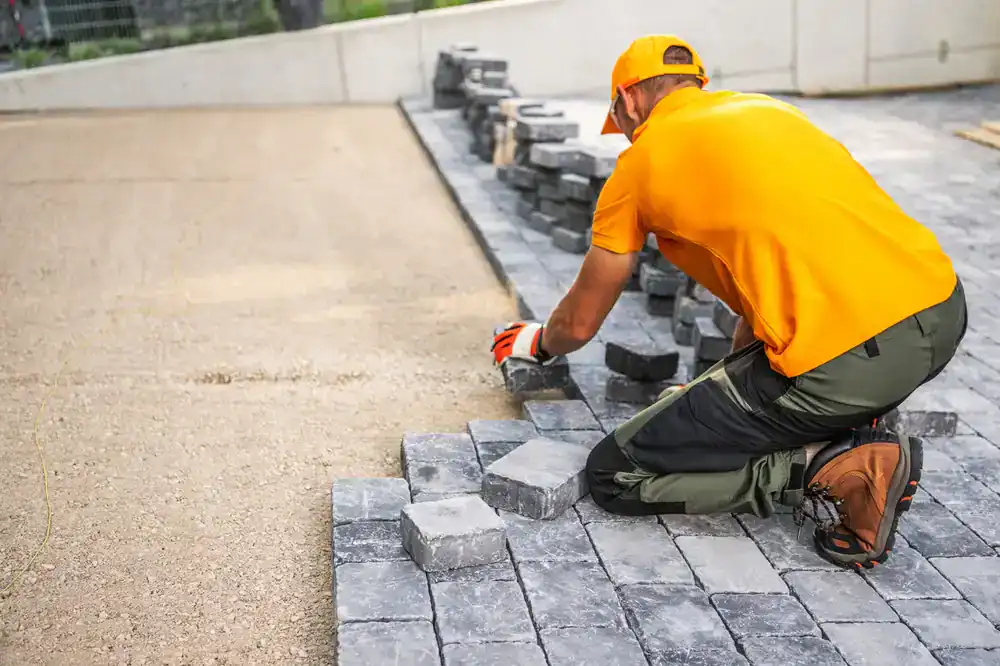
Installation matters here more than anywhere else. A proper base with crushed stone, correct compaction, and adequate drainage keeps those pavers locked in place. Skip those steps, and you’ll see settling, shifting, and uneven surfaces within a year. That’s why DIY paver patio projects often look great at first but start failing after one winter.
Another advantage is repairability. If a paver cracks or stains, you can replace just that one piece. Try doing that with poured concrete. For most homeowners balancing patio installation cost, performance, and design flexibility, concrete pavers hit the sweet spot. They’re not the cheapest option, but they’re far from the most expensive—and they deliver results that last.
The cost for a professionally installed concrete paver patio in NJ typically runs between $8 and $15 per square foot, depending on the style and complexity. For a standard 400-square-foot patio, you’re looking at $8,000 to $12,000. That includes proper excavation, base prep, and installation by qualified patio builders. Cutting corners on labor might save money up front, but it almost always costs more in repairs down the road.
Stone Patio NJ: When Natural Materials Make Sense
Natural stone costs more than concrete pavers. There’s no way around that. But for homeowners who want a patio that looks better with age and adds serious curb appeal, it’s worth considering. Bluestone, flagstone, and travertine are the most popular choices for stone patio projects in New Jersey, and each brings something different to the table.
Bluestone is the most common natural stone used for patios in this area. It’s durable, slip-resistant, and comes in shades of blue-gray that complement almost any home style. You can get it in a smooth thermal finish or a more textured natural cleft surface. Both work well, but the cleft version tends to hide wear better over time.
Flagstone offers an irregular, organic look that works beautifully in more casual or rustic settings. It’s typically laid with wider joints filled with gravel or ground cover, which gives it a softer, less formal appearance. Travertine, on the other hand, brings a Mediterranean or resort-style vibe. It stays cooler underfoot in summer, which makes it a smart pick if your patio gets full sun.
The installation process for natural stone is more labor-intensive than standard patio pavers. Each piece is unique, so there’s more cutting, fitting, and leveling involved. That drives up the cost—expect to pay anywhere from $15 to $30 per square foot installed, depending on the stone type and complexity of the layout.
But here’s the payoff: a well-installed stone patio can last 50 years or more with minimal maintenance. It won’t fade, and it develops a patina that actually enhances its character. If you’re planning to stay in your home long-term or you’re focused on resale value, natural stone is one of those investments that pays you back. Just make sure whoever installs it knows how to prep the base correctly—because even stone won’t perform if the foundation isn’t solid.
Patio Design Ideas That Work for How You Actually Live
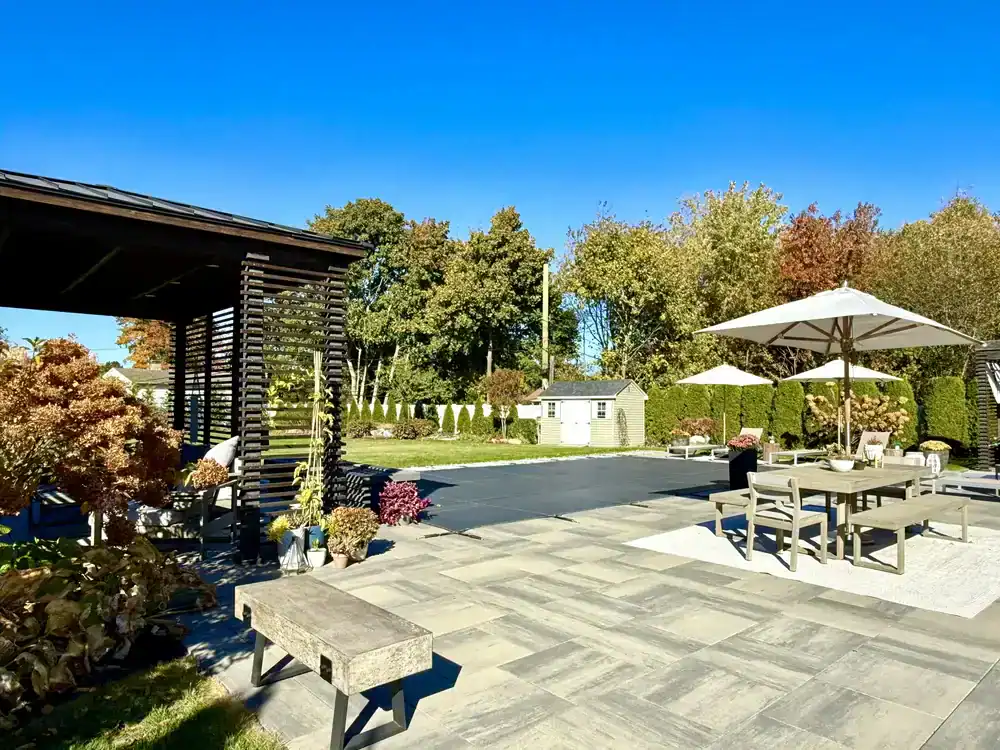
Layout is where function meets design. You can have the best materials in the world, but if your patio doesn’t fit how you actually use your space, it’s wasted. In 2026, homeowners in Essex County and Morris County are moving away from basic rectangular slabs and toward layouts that create zones, flow naturally, and make outdoor living feel intentional.
Think about how you’ll use the space. Are you hosting dinners? Do you want a fire pit area? Is this a spot for morning coffee or evening cocktails? Your answers shape the layout. Multi-level patios are gaining traction because they let you separate dining from lounging without walls or fences. A few steps down to a fire pit area, for example, creates a natural gathering spot that feels distinct but connected.
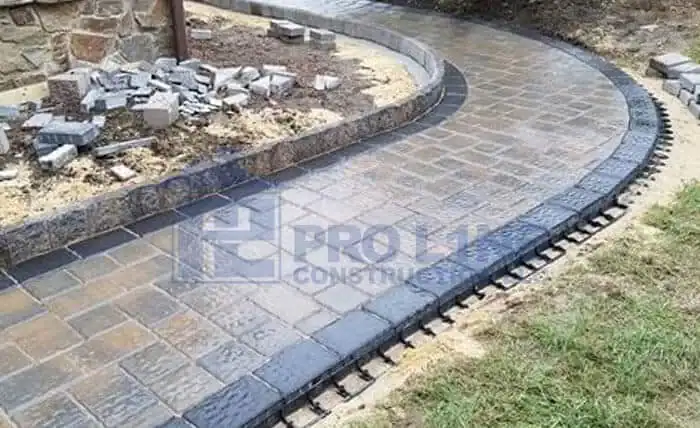
Curved edges and organic shapes are also trending in patio design ideas, especially when paired with landscaping that softens the hardscape. Straight lines still work—they’re clean and modern—but adding a curve here or there makes the space feel less rigid and more livable.
How We Handle Drainage So You Don't Have Problems
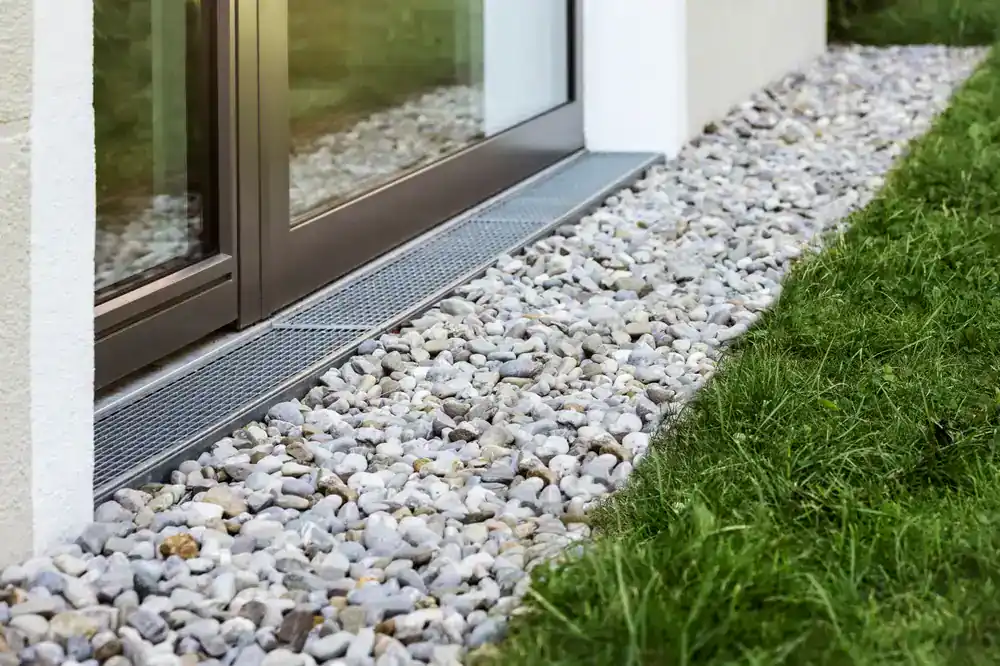
Drainage isn’t sexy, but it’s the difference between a patio that lasts and one that becomes a headache. In New Jersey, where we get heavy rain, snowmelt, and freeze-thaw cycles, water is your biggest enemy. If it pools on your patio or flows toward your foundation, you’re setting yourself up for expensive problems.
The standard slope for a patio is about 1/4 inch per foot, angled away from your house. That’s enough to move water off the surface without making the patio feel tilted. Some contractors skip this step or eyeball it, and that’s where things go wrong. Proper grading during installation ensures water doesn’t sit—it moves.
Beyond slope, the base itself plays a role. A well-compacted crushed stone base allows water to filter through rather than sitting on top. That’s why skipping base prep or using dirt instead of stone is such a common mistake. Dirt shifts, holds moisture, and leads to settling. Stone drains, stays stable, and supports the pavers above it.
For properties with heavy runoff or clay soil, you might need additional drainage solutions like French drains or a dry well. These systems collect and redirect water away from both the patio and your home’s foundation. It adds to the upfront cost, but it’s a fraction of what you’d pay to fix water damage later.
If you’re in a town with strict stormwater regulations—and many in Morris County and Essex County are—you may also need to consider permeable pavers. These allow water to pass through the surface and into the ground below, reducing runoff and helping you stay compliant with local codes. They look just like regular driveway pavers or patio pavers but function differently underneath. It’s a smart option if you’re adding a lot of impervious surface and want to avoid permitting issues.
Bottom line: don’t treat drainage as an afterthought. It’s foundational. A patio that drains well will outlast one that doesn’t, every single time. That’s why working with an experienced outdoor patio contractor who understands local conditions matters.
What Patio Installation Cost Looks Like in Essex and Morris Counties
Let’s talk numbers. Professional patio installation in New Jersey isn’t cheap, but it’s also not as expensive as some people fear—especially when you factor in how long it lasts and what it adds to your property value.
For a mid-range concrete paver patio, expect to pay between $8,000 and $12,000 for a 400-square-foot space. That includes excavation, a proper crushed stone base, compaction, paver installation, edge restraints, and polymeric sand in the joints. If you go with premium pavers or add features like a built-in fire pit or seating walls, that number climbs toward $15,000 or more.
Natural stone pushes costs higher. A bluestone patio of the same size might run $12,000 to $18,000, depending on the stone quality and installation complexity. Flagstone and travertine fall into a similar range. The labor is more intensive, and the materials themselves cost more per square foot.
Brick pavers tend to fall somewhere in between—usually $10 to $16 per square foot installed. They’re durable, timeless, and a solid middle-ground option if you want something more refined than basic concrete but don’t want to go full natural stone.
Here’s what drives the patio installation cost: base preparation, grading, drainage work, and labor. Materials are only part of the equation. A contractor who rushes the base or skips proper compaction might quote you less, but you’ll pay for it later in repairs. That’s why the lowest bid isn’t always the smartest choice when hiring patio builders.
DIY installation can save you 40 to 50 percent on labor, but it comes with risk. If you don’t have experience with grading, compaction, and drainage, you’re likely to make mistakes that cost more to fix than you saved. Most homeowners who go the DIY route either have construction experience or tackle very small projects—like a simple walkway. For a full patio, especially one attached to your home, professional installation is worth it.
One more thing: factor in long-term costs. A poorly installed patio might need repairs or replacement within five to ten years. A well-installed one can last 20, 30, even 50 years with minimal maintenance. When you look at cost per year of use, quality installation is almost always the better investment.
Get a Patio That Actually Lasts in New Jersey's Climate
A patio is more than a place to put furniture. It’s an extension of your home, a space where you’ll spend time with family, host friends, and enjoy being outside. But in New Jersey, it also has to stand up to weather that tests every material and every installation method.
The right materials, proper base preparation, smart drainage, and professional installation—those are the things that separate a patio that lasts from one that becomes a problem. Trends come and go, but durability never goes out of style. Whether you choose concrete pavers for their versatility, natural stone for its timeless appeal, or brick pavers for their classic look, what matters most is that it’s done right.
If you’re ready to move forward with a patio project in Essex County or Morris County, we bring the masonry expertise, local knowledge, and commitment to quality that make the difference. Reach out to discuss your project and get a clear, transparent estimate based on what you actually need—not what sounds good on paper.