
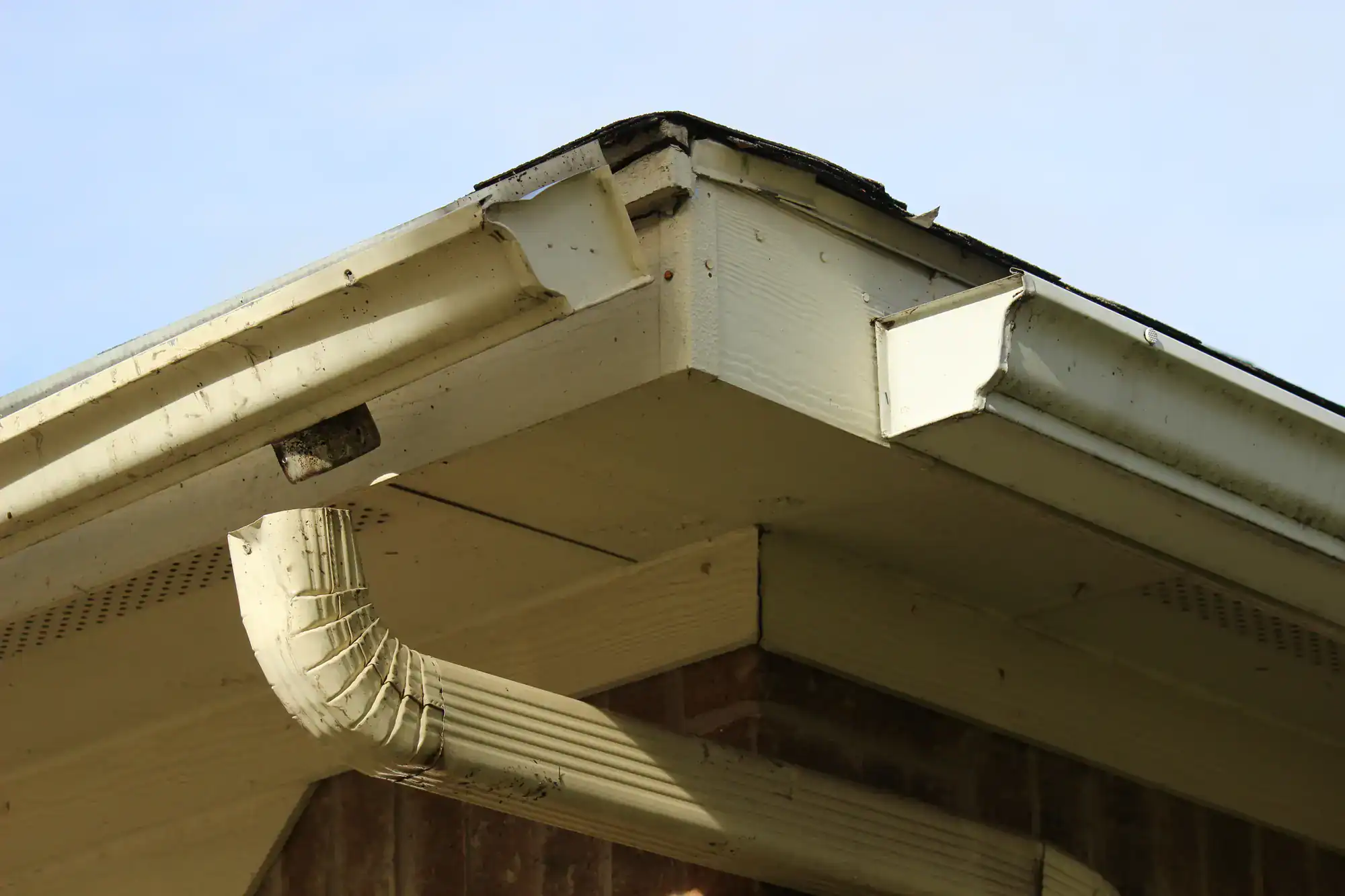
Most homeowners don’t think about their gutters until something goes wrong and by then, the damage is already happening behind the scenes. Fascia rotting out. Water pooling at the foundation. A basement that keeps taking on moisture every time it rains. On a Short Hills home worth $1.5 million or more, that’s not a minor inconvenience. Foundation repairs alone can run $5,000 to $25,000. A proper gutter system costs a fraction of that.
Short Hills has one of the densest mature tree canopies in Essex County a direct result of Stewart Hartshorn’s original vision when he designed this community in the late 1800s around preserving natural vegetation. Those beautiful oaks and maples shed an enormous amount of debris every fall, and gutters here clog faster than almost anywhere else in the region. When that happens on a home with a complex Colonial or Tudor roofline, water doesn’t just overflow it backs up, sits, and works its way into places it was never supposed to reach.
The homes in neighborhoods like Old Short Hills Estates and Mountaintop also deal with sloped lots where drainage direction matters more than it does on flat terrain. Gutters that aren’t pitched correctly or placed strategically on a hillside property can send water straight toward the foundation instead of away from it. Getting this right isn’t complicated but it does require someone who actually knows what they’re looking at.
We’re a family-owned general contracting company that has been serving Short Hills and northern New Jersey homeowners since 2018. We’re BBB-accredited, a GAF Preferred Contractor, and licensed through the NJ Division of Consumer Affairs license number 13VH09838700, which you can verify yourself at any time. Every job comes with a full written warranty and starts with a free consultation, no pressure attached.
What sets us apart in a market like Short Hills is that we’re not a gutter-only company. When we’re on a roof inspecting your gutters and we find rotted fascia, damaged siding, or a chimney issue we can handle it. You don’t get handed off to a second contractor or left to figure out who’s responsible for what. One company, one point of contact, full accountability.
We work throughout Essex County, and we know the Short Hills housing stock well the older construction, the architectural complexity, the drainage challenges that come with this specific terrain. When we show up at a home near Hartshorn Drive or along the wooded streets off Great Hills Road, we’re not figuring it out on the fly.
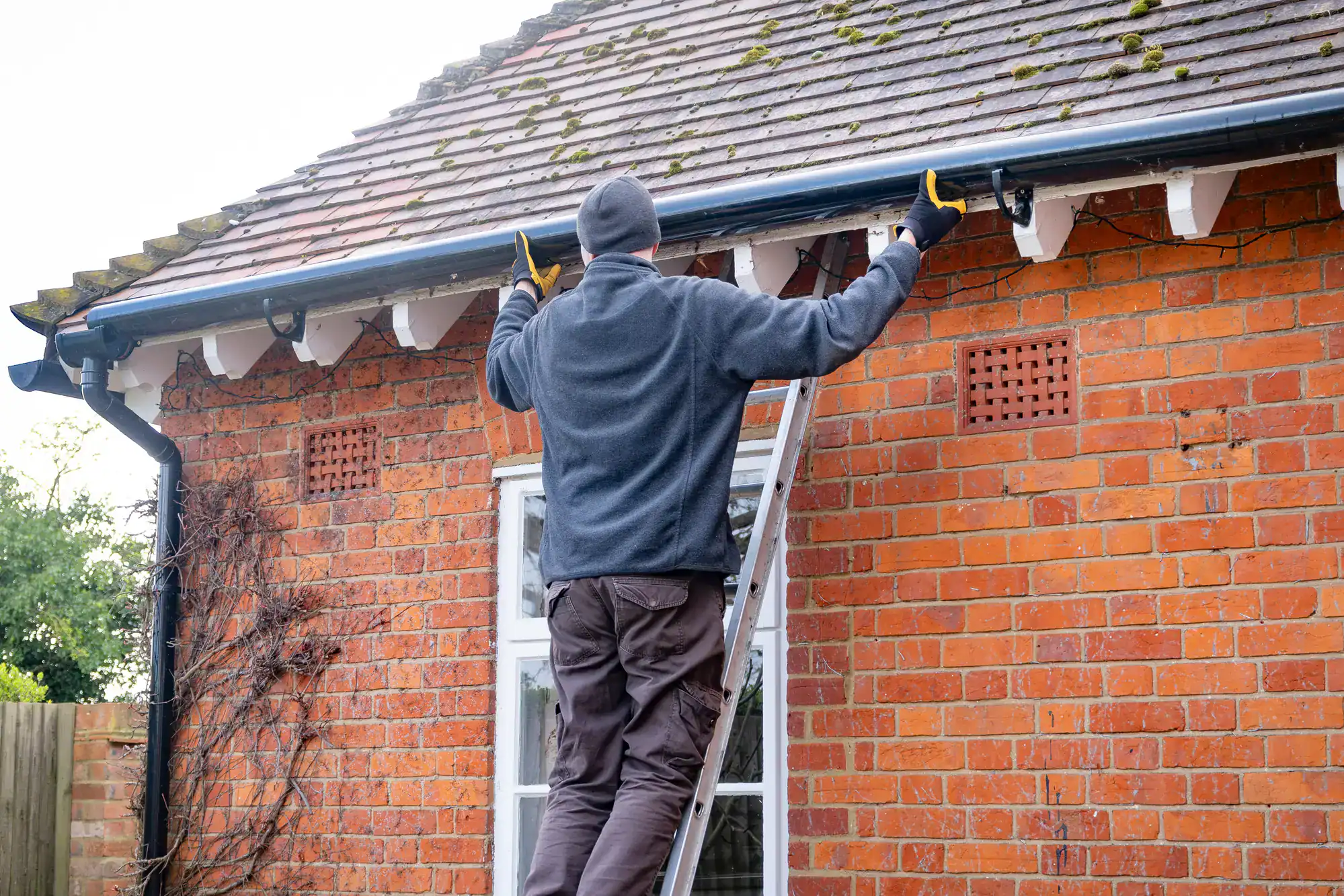
It starts with a free on-site consultation. We come out, take a real look at your existing gutters, the roofline, the fascia condition, and how water is currently moving or not moving around your home. You get a clear written estimate before anything happens. No vague quotes, no bait-and-switch.
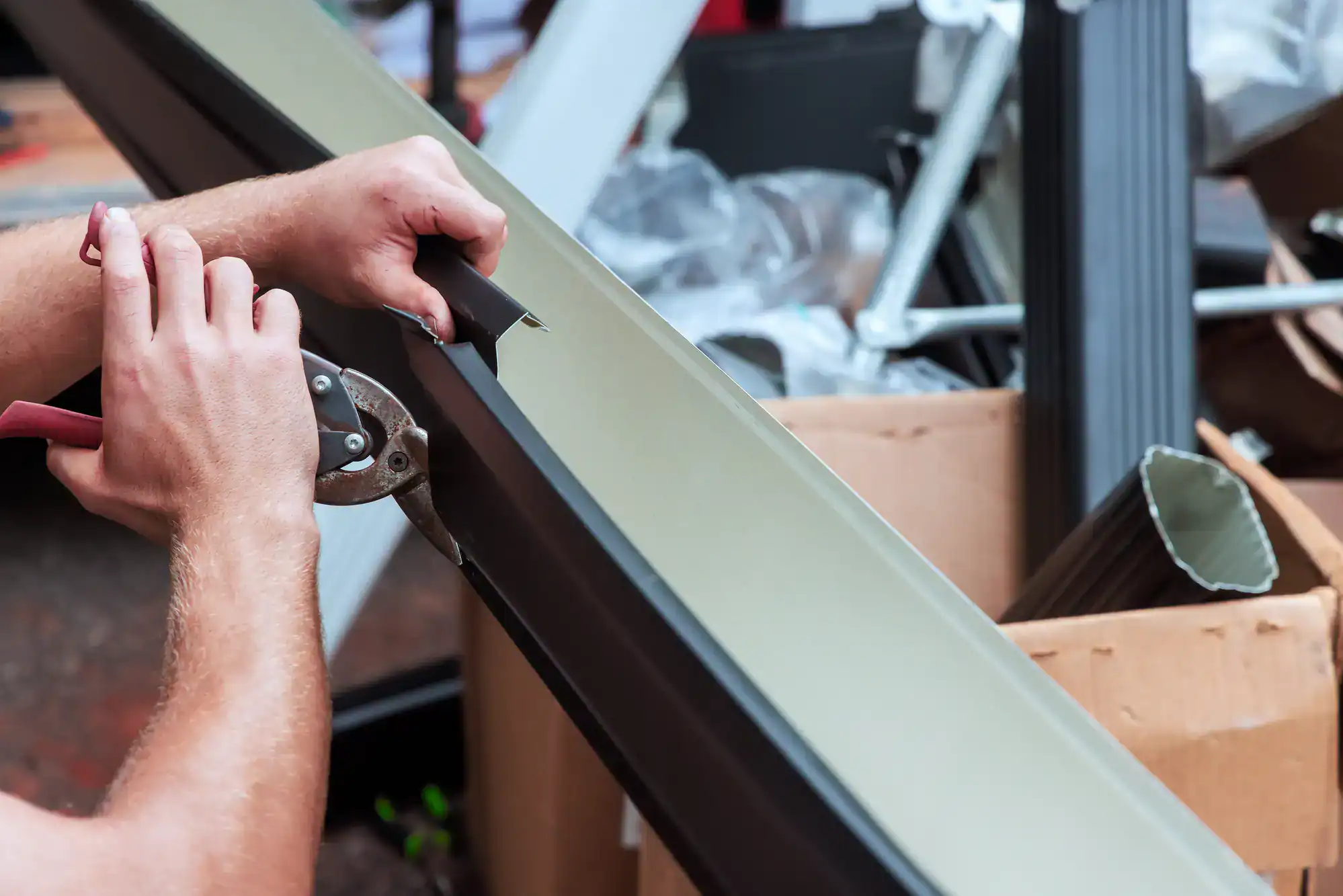
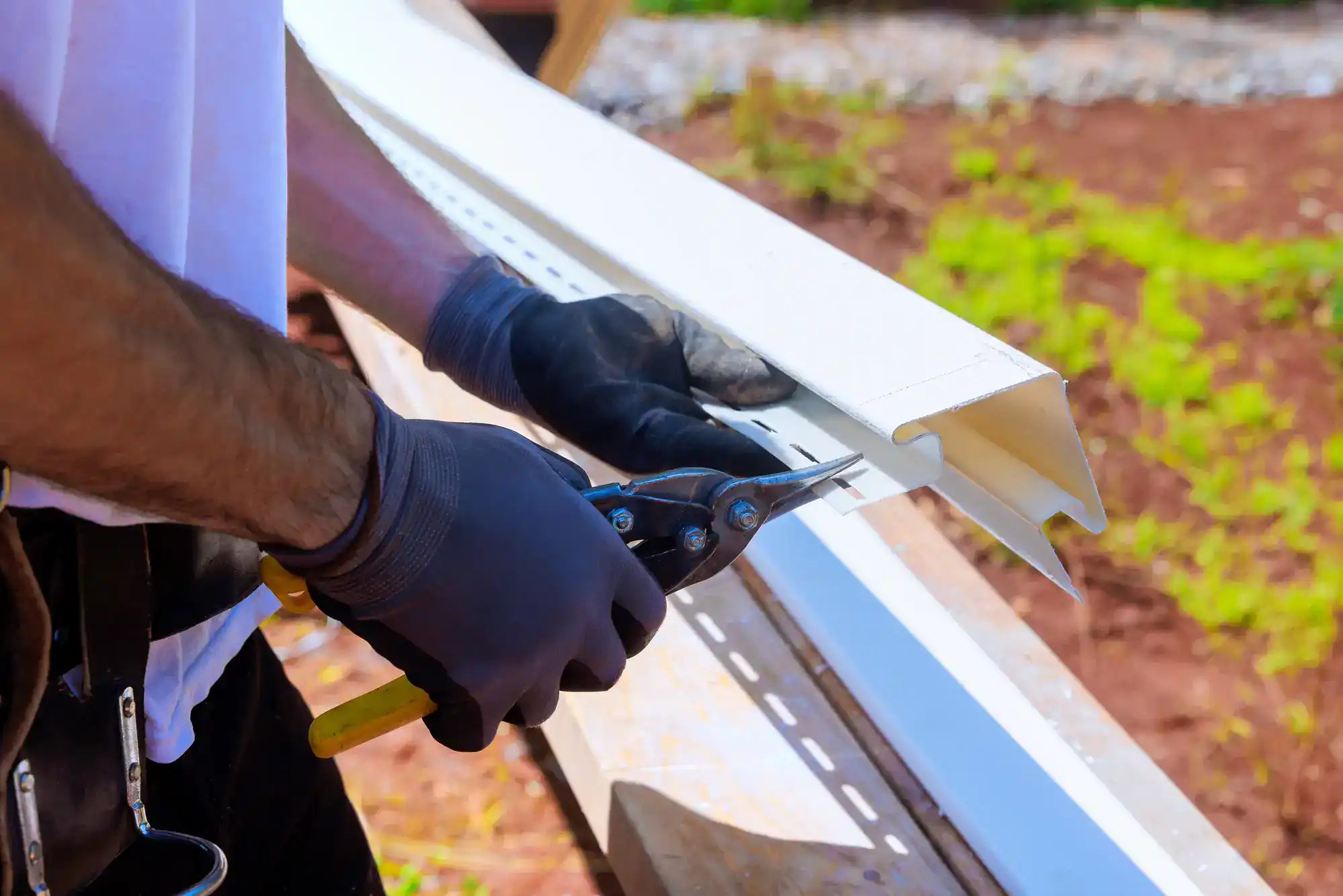
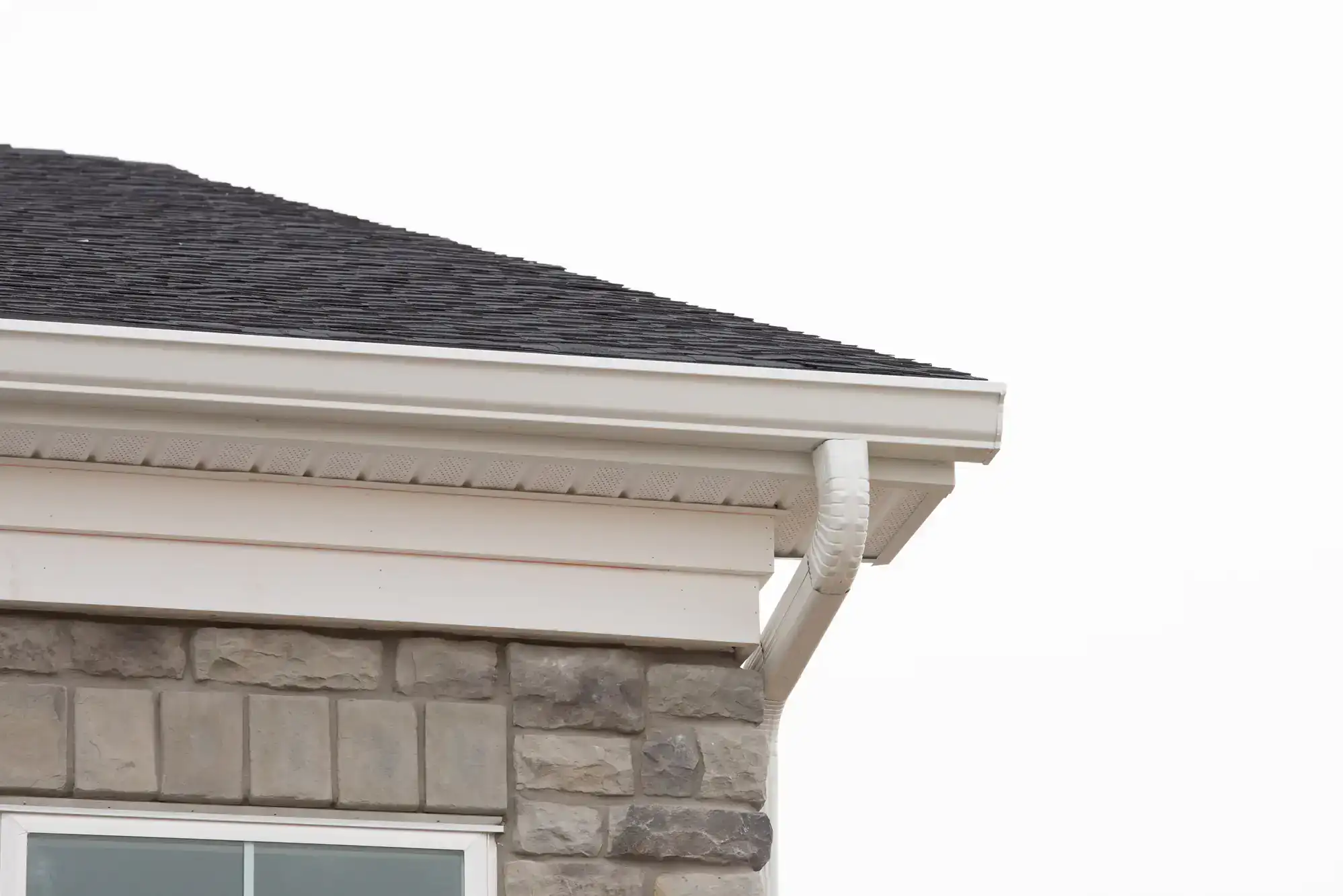
If you’re moving forward with installation, we fabricate seamless gutters on-site to the exact dimensions of your home. This isn’t off-the-shelf material cut to approximate length it’s custom-formed aluminum matched to your specific roofline. For the large, architecturally varied homes throughout Short Hills, that precision matters. Seams are where gutters fail, and seamless construction eliminates most of them. Hangers are spaced correctly, pitch is calculated to move water efficiently, and downspouts are placed where they’ll actually do the job not just where they’re easiest to install.
For standard gutter replacement on an existing home, a full building permit may not be required under New Jersey’s ordinary repair and maintenance provisions but if your project involves structural changes or new construction, Millburn Township’s Building Department at 375 Millburn Avenue handles permitting under the Uniform Construction Code of NJ. We can walk you through what applies to your specific project before work begins. Once the job is complete, the site is cleaned up, the system is tested, and you know exactly what was done and why.
Ready to get started?
Request a callback

We handle the full range of gutter work new seamless gutter installation, repair of failing or storm-damaged sections, full system replacement, downspout work, and emergency service when active leaks or storm damage can’t wait. If your gutters are pulling away from the fascia, leaking at the seams, or simply not moving water the way they should, that’s a repair conversation. If they’re more than 20 years old or the damage is widespread, replacement usually makes more financial sense.
For Short Hills homes, we typically recommend 6-inch K-style seamless aluminum gutters over the standard 5-inch profile. The larger capacity handles the higher debris and water volume that comes with the community’s dense tree canopy especially during fall when leaves from mature oaks and maples accumulate quickly. The freeze-thaw cycle from November through March also puts real stress on gutter seams and hangers, and Short Hills winters regularly see temperatures drop to the low 20s. A system installed and pitched correctly before winter is your first line of defense against ice dam formation on the complex rooflines that define this community’s older homes.
We also assess the fascia and soffit condition during every gutter job. On homes built between the 1930s and 1960s which account for the majority of Short Hills’ housing stock hidden rot behind the gutter line is common and worth catching before it becomes a structural issue. If something needs attention, you’ll hear about it clearly and honestly.
For a straight gutter replacement on an existing Short Hills home same footprint, no structural changes a full building permit typically isn’t required under New Jersey’s ordinary repair and maintenance provisions. That said, if your project involves any changes to the structure, drainage configuration, or you’re adding gutters to a previously unequipped roofline, Millburn Township’s Building Department may require zoning approval before a permit is issued. The Building Department is located at 375 Millburn Avenue and is open Monday through Friday, 8:30 a.m. to 3:30 p.m.
The safest approach is to confirm with the township before any work begins and a knowledgeable contractor should be able to tell you upfront what your specific project requires. We review this with every Short Hills homeowner during the initial consultation so there are no surprises mid-project. Getting it right from the start protects your investment and keeps the project on schedule.
At minimum, twice a year once in late spring after seed pods and early growth have dropped, and once in late fall after the leaves are fully down. Short Hills is genuinely one of the more demanding environments for gutters in Essex County because of the density and maturity of the tree canopy. Stewart Hartshorn’s original conservation vision created a community defined by large, old deciduous trees, and those trees shed a significant volume of debris every season. Gutters here clog faster than in communities with younger or less dense canopy.
If you have large oaks or maples directly over the roofline, you may need a third cleaning in early summer when seed pods and organic debris are at their peak. Skipping fall cleaning is the highest-risk move compacted wet leaves in a gutter add weight, hold moisture against the fascia, and can cause gutters to pull away from the house over winter. The cost of cleaning twice a year is minor compared to what deferred maintenance leads to.
For most homes in Short Hills, 6-inch K-style gutters are the better choice over the standard 5-inch profile. The reason comes down to volume both water volume during heavy rain events and debris volume from the community’s mature tree canopy. A 6-inch gutter moves roughly 40% more water than a 5-inch, which matters when a summer thunderstorm or a nor’easter is dumping rain on a large, multi-slope roofline.
Short Hills’ housing stock skews toward larger Colonial, Tudor, and Georgian-style homes with complex rooflines, dormers, and extended eaves exactly the kind of architecture where water concentrates at specific points and overwhelms undersized gutters quickly. Paired with the right downspout sizing and correct pitch, a 6-inch seamless system handles the load that these homes generate. If your current gutters are 5-inch and you’re having overflow issues, upsizing during replacement is often the most cost-effective fix.
Repair makes sense when the problem is isolated a single leaking seam, a section that’s come loose from a hanger, a downspout that’s disconnected or clogged. Those are fixable issues that don’t require pulling the whole system. But if you’re seeing multiple problems at once gutters sagging in several places, visible rust or corrosion, cracks running along the gutter body, or water consistently pooling at the foundation despite cleaning that’s usually a sign the system has reached the end of its useful life.
For Short Hills homes built in the 1940s through 1960s, which make up the majority of the community’s housing stock, original or early-replacement gutters are often 30 to 40 years old. At that age, even gutters that look intact from the ground may have compromised seams, deteriorated hangers, and fascia damage working behind them. A full inspection will tell you which situation you’re actually in. We assess both during the free consultation so you’re not guessing.
Yes and it’s more common than most homeowners expect. When gutters overflow or downspouts discharge too close to the foundation, water saturates the soil at the base of the house and follows the path of least resistance, which is often through foundation walls or basement window wells. This is a particular concern in Short Hills given the community’s documented flooding history Tropical Storm Ida in September 2021 caused widespread basement flooding across Millburn Township, and the Rahway River corridor remains an active water management concern for the area.
On sloped lots common in neighborhoods like Mountaintop and along the higher ridgelines of Short Hills the risk is compounded. Water moving downhill toward a foundation has more momentum and more volume. Properly installed gutters with correctly placed downspouts and downspout extensions that direct water at least four to six feet away from the foundation are a basic but critical layer of protection. If your basement takes on water regularly, the gutter system is one of the first things worth evaluating.
For a typical Short Hills home, seamless aluminum gutter installation generally runs between $1,000 and $3,500 depending on the linear footage, the number of downspouts, the gutter profile size, and whether any fascia repair is needed before installation. Larger homes with complex rooflines which are common throughout Short Hills given the architectural scale of the community will sit toward the higher end of that range simply because there’s more material and more labor involved.
The cost of doing it right is a small fraction of what deferred maintenance leads to on a home of this value. Foundation repairs in this area can run $5,000 to $25,000. Fascia and soffit replacement can add another $900 to $6,800 depending on the extent of the damage. A properly installed seamless system that lasts 20-plus years is one of the more straightforward investments you can make in protecting a Short Hills property. We provide a written estimate after the free consultation no vague ranges, no hidden line items.
Other Services we provide in Short Hills