Summary:
Your retaining wall is showing cracks. Maybe it’s leaning a bit more than it used to, or water pools near the base after every storm. Now you’re wondering what retaining wall repair will actually cost—and whether you can trust the estimates you’ll receive.
That’s a fair concern. Retaining wall repair pricing can feel like a mystery, especially when every property presents different challenges. But most repairs in Morris and Essex County fall into predictable cost ranges once you understand what you’re paying for. This guide walks you through real pricing data, the factors affecting your quote, and what to expect when you’re ready to address that failing wall.
What Retaining Wall Repair Actually Costs in Morris County
Let’s start with the numbers that matter. Minor retaining wall repairs—patching small cracks, resealing sections, or resetting a few loose blocks—typically run between $250 and $600 in Morris and Essex County, NJ. These straightforward fixes catch problems early before they escalate into expensive structural failures.
Moderate repairs tell a different story. When you’re dealing with structural issues like rebuilding wall sections, adding reinforcement, or addressing drainage failures, expect costs between $1,000 and $3,000 or more. The final price depends on how much of the wall needs attention and what’s causing the failure.
Labor represents a significant portion of any retaining wall repair cost. Most licensed contractors in New Jersey charge $50 to $75 per hour, and project complexity determines total hours. A wall that’s easily accessible on level ground costs considerably less to repair than one tucked into a steep slope or surrounded by established landscaping.
How Material Choice Affects Your Retaining Wall Repair Cost
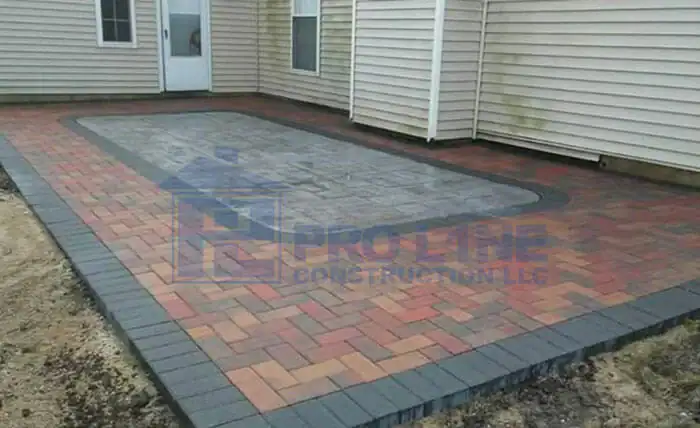
The material your wall is constructed from plays a major role in repair costs. Concrete retaining walls cost between $20 and $55 per square foot when you factor in both materials and labor. Concrete handles freeze-thaw cycles well, which matters in northern New Jersey where winter weather stresses outdoor structures.
Stone walls typically run higher, especially when working with natural stone that needs matching to existing materials. Dry-stacked stone walls can often be dismantled and reassembled with new stones and proper drainage materials, but the labor is intensive and requires skilled masons. Mortared stone walls require repointing—replacing crumbling mortar between stones—which adds both time and specialized labor costs.
Timber retaining walls offer lower upfront material costs but present their own challenges. Wood is vulnerable to rot and insect damage, so repairs often involve replacing decaying timbers and treating remaining wood with preservatives. Steel reinforcement rods may be necessary for additional stability, particularly on taller walls that bear significant soil pressure.
Vinyl represents one of the more budget-friendly options at $10 to $15 per square foot, but it’s best suited for shorter walls that don’t need to support heavy loads. If your vinyl wall is failing, consider whether upgrading to a more durable material during the repair process makes financial sense for long-term stability.
The key is matching the repair approach to your wall’s specific construction. A skilled contractor understands how to work with each material’s unique properties to deliver results that last without unnecessary material replacements that inflate costs.
What Drives Retaining Wall Repair Costs Beyond Materials
Materials represent just one piece of the cost puzzle. Several other factors can significantly affect your final quote depending on your property’s specific conditions. Site accessibility ranks as a major cost driver. When contractors can bring equipment directly to your wall, work progresses faster and costs less. But when they’re hauling materials through tight spaces, navigating steep slopes, or working around established landscaping, you’re paying for the additional time and physical effort.
Drainage issues often represent the hidden cost factor that catches homeowners off guard. Poor drainage is the leading cause of retaining wall failure in Morris and Essex County. When water accumulates behind your wall with no escape route, it creates hydrostatic pressure that literally pushes the wall out of alignment. Addressing this might require installing French drains, adding weep holes, or replacing clogged drainage pipes. Expect to invest $60 to $70 per linear foot for excavation work specifically addressing drainage problems.
Permits add unavoidable costs to most retaining wall projects. Most municipalities in New Jersey require permits for retaining walls exceeding 3 to 4 feet in height. Permit fees range from $50 to $450 depending on your specific location and the scope of work. Your contractor should handle permit applications, but verify it’s included in your written estimate before work begins.
When you’re replacing an existing wall rather than repairing it, demolition costs enter the equation. Removing an old retaining wall runs $10 to $20 per linear foot, plus disposal fees for the removed materials. Some contractors offer modest discounts when you bundle demolition with new construction, which can help offset total project costs.
Soil type matters more than most property owners realize. Morris and Essex County feature clay-heavy soils that expand when saturated and contract during dry periods. This constant expansion and contraction cycle puts extraordinary stress on retaining walls. Rocky soil containing numerous boulders requires extensive excavation work, directly increasing labor costs. Your contractor may need considerable time clearing land or properly compacting soil before repairs can even begin.
Wall height and structural engineering needs also impact costs. Walls over 4 feet typically require more skilled labor, deeper excavation, and potentially scaffolding or heavy equipment. Some complex projects need structural engineer involvement to ensure stability and code compliance, adding $100 to $220 per hour for engineering services.
Want live answers?
Connect with a Proline Construction expert for fast, friendly support.
Getting an Accurate Estimate From Licensed Contractors
Getting an accurate estimate for any exterior repair project—whether it’s retaining walls, roofing, or masonry work—starts with a thorough site visit. No reputable contractor provides firm numbers over the phone without inspecting your property in person. We need to assess damage extent, check drainage systems, evaluate soil conditions, and measure the actual scope of work required.
During the consultation, expect us to ask detailed questions about when you first noticed problems, whether issues worsen after rainfall, and if previous repairs have been attempted. This information helps us identify root causes instead of simply treating visible symptoms.
A detailed written estimate should clearly break down materials, labor, and any additional costs like permits or site preparation. It should include a realistic timeline and explain what’s covered under warranty. If a contractor hands you a single-line quote with no itemization or explanation, consider that a significant red flag worth walking away from.
What Licensed Contractor Requirements Mean for Your Project in New Jersey
New Jersey maintains specific requirements for contractors performing home improvement work, and understanding these regulations protects you from unlicensed operators who cut corners or disappear when problems arise. Any contractor performing retaining wall repair, roofing work, or other home improvements must register with the New Jersey Division of Consumer Affairs. The registration fee is $110, and contractors must renew their registration annually to maintain legal standing.
Licensed contractors are legally required to carry general liability insurance with minimum coverage of $500,000 per occurrence. This insurance protects you if something goes wrong during the project—whether that’s property damage, worker injuries, or issues affecting neighboring properties. They also need workers’ compensation coverage for all employees working on your property.
Here’s what this means for your project: municipalities throughout New Jersey won’t issue construction permits to contractors who aren’t properly registered with the state. If someone shows up without proper registration, they legally cannot pull permits for your project. This puts you at serious risk if the completed work doesn’t meet building codes or if you need to file insurance claims later.
Penalties for working without proper licensing are substantial. Contractors face fines of $10,000 for a first offense and $20,000 for each additional violation. But those penalties don’t help you if you’ve already paid for substandard work that fails within months. That’s exactly why credential verification matters before you sign any contract or hand over any money.
Ask to see their registration certificate. It should be prominently displayed in their workplace and include a unique registration number. Verify that this number appears on their business cards, company vehicles, and any contracts or advertising materials. You can independently verify their registration status through the New Jersey Division of Consumer Affairs website—a step that takes minutes but can save thousands.
Licensed contractors should readily provide references from recent projects and photos documenting completed work. Actually call those references and ask specific questions: Did the project finish on schedule? Were there unexpected costs not included in the original estimate? How did the contractor handle unforeseen issues? Has the wall or repair held up properly since project completion? These conversations reveal far more than any sales pitch.
Beyond state registration, look for contractors with additional credentials like Better Business Bureau accreditation or manufacturer certifications. These aren’t legally required but demonstrate a commitment to professional standards and ongoing training.
How to Find Affordable Retaining Wall Services Without Sacrificing Quality
Affordable doesn’t mean cheap—it means getting fair value for quality work that delivers long-term performance. The lowest bid often signals serious problems: contractors who cut corners on materials, skip proper drainage installation, don’t pull required permits, or lack adequate insurance coverage. Those apparent “savings” cost you significantly more when the wall fails again within a few years or when unpermitted work creates problems during home sales.
Start by collecting at least three to four in-person quotes from properly licensed contractors. Insist that each one visits your property and provides a detailed written estimate. This allows you to compare equivalent scopes of work instead of guessing what’s actually included in each price quote.
Project timing can meaningfully affect costs. Contractors typically face higher demand during spring and summer when weather conditions are ideal for outdoor work. If your wall isn’t in immediate danger of collapse, scheduling repairs during fall or early winter might secure better rates. Just ensure the work can be completed before ground freezes, which can complicate excavation and drainage work.
Ask directly about repair versus complete replacement options. Some contractors automatically push for full replacement when targeted repairs would solve the underlying problem at a fraction of the cost. A trustworthy contractor presents both options and honestly explains the pros and cons of each approach. If repairs cost at least 50 to 75 percent less than replacement and the wall’s foundation can sustain the fixes, repair typically represents the smarter financial choice.
Consider long-term value rather than just upfront costs. Investing somewhat more initially for proper drainage installation prevents recurring failures that cost far more over time. Clay-heavy soils throughout Morris and Essex County make water management absolutely critical for retaining wall longevity. A contractor who includes comprehensive drainage solutions in their estimate is thinking about your wall’s long-term performance, not just completing the immediate fix.
Look for contractors offering free consultations without sales pressure. This gives you valuable opportunity to ask questions, understand your options thoroughly, and evaluate their communication style before committing. Clear communication from initial contact—including prompt responses, straightforward explanations, and willingness to address all concerns—usually indicates how the entire project relationship will unfold.
Some contractors include warranties covering their workmanship. A warranty demonstrates they stand behind their repairs and gives you clear recourse if problems develop after project completion. Make absolutely sure you understand exactly what’s covered, what’s excluded, and for how long before signing any agreement. Get warranty terms in writing as part of your contract.
Don’t hesitate to ask about the specific products and materials they plan to use. Quality materials cost more upfront but deliver better performance and longevity. A contractor willing to discuss material options and explain why they recommend specific products is usually more trustworthy than one who provides no details.
Making Your Retaining Wall Repair Decision With Confidence
Retaining wall repair costs in Morris and Essex County, NJ depend on damage severity, construction materials, drainage requirements, and site-specific conditions. Minor fixes typically run $250 to $600, while structural repairs addressing foundation issues or extensive damage can reach $3,000 or more. Understanding these cost factors helps you budget realistically and avoid unpleasant surprises.
What matters most is partnering with a licensed contractor who provides transparent pricing, maintains clear communication throughout the project, and carries proper credentials and insurance. Always verify their registration with the New Jersey Division of Consumer Affairs, confirm adequate insurance coverage, and get detailed written estimates before any work begins.
If you’re dealing with a failing retaining wall and want straightforward answers about your repair options without sales pressure, we offer free consultations throughout Morris and Essex County. Our family-owned team approaches every project with the same care and attention we’d give our own property.